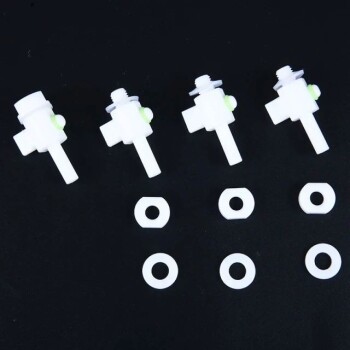
Precise atmospheric control is critical. The significance of using a needle valve to inject pure oxygen lies in its ability to completely purge the reaction vessel before the heating phase begins. This ensures the internal gas phase consists of 100% oxygen, establishing the exact initial partial pressure required for the process.
By using a needle valve to displace the existing atmosphere, you guarantee a sufficient supply of oxidant is present from the start. This step is a core requirement for the oxidative corrosion necessary to achieve the selective dissolution of gallium.
Establishing the Correct Reaction Environment
Purging for Purity
Before any heat is applied to the system, the reaction vessel must be cleared of ambient air.
A needle valve is utilized to inject pure oxygen, effectively purging the vessel.
This ensures that the gas phase inside the vessel is composed entirely of 100% oxygen, eliminating other gases that could interfere with the reaction or dilute the oxidant.
Setting Initial Partial Pressure
The injection process is not just about purity; it is about pressure control.
Using the valve establishes the necessary initial oxygen partial pressure required for the thermodynamics of the reaction.
Without this specific pressure baseline, the reaction kinetics may not proceed as calculated once heating begins.
Ensuring Sufficient Oxidant Supply
The chemical process relies on oxidative corrosion to break down the target material.
Injecting pure oxygen provides the sufficient amount of oxidant needed to drive this corrosion.
In the specific context of processing gallium arsenide, this abundance of oxidant is essential for the reaction to occur efficiently.
The Risks of Improper Gas Control
Incomplete Oxidation
If the vessel is not properly purged, the concentration of oxygen will be insufficient.
This leads to a lack of oxidant, which prevents the effective oxidative corrosion of the material.
Consequently, the selective dissolution of gallium will fail or result in poor yields.
Variable Reaction Conditions
Failing to establish a 100% oxygen atmosphere introduces variables into the experiment.
If the gas phase contains impurities or atmospheric air, the partial pressure of oxygen becomes unpredictable.
This lack of control makes it impossible to standardize the leaching process or replicate results accurately.
Optimizing Your Leaching Setup
To ensure successful oxidative leaching, you must prioritize the initial gas phase preparation.
- If your primary focus is high chemical yield: Ensure the needle valve is used to purge the vessel until the environment is strictly 100% oxygen to provide ample oxidant.
- If your primary focus is process consistency: Use the injection phase to establish a precise and repeatable initial oxygen partial pressure before every run.
Control the atmosphere before you control the temperature to guarantee the selective dissolution of your target metals.
Summary Table:
| Feature | Significance in Oxidative Leaching |
|---|---|
| Gas Purity | Replaces ambient air with 100% pure oxygen to prevent dilution. |
| Pressure Control | Establishes critical initial oxygen partial pressure for thermodynamics. |
| Oxidant Supply | Provides sufficient oxygen concentration for efficient oxidative corrosion. |
| Process Yield | Ensures successful selective dissolution of metals like gallium. |
| Consistency | Standardizes reaction kinetics by eliminating atmospheric variables. |
Elevate Your Chemical Processing with KINTEK Precision
Achieving the perfect reaction environment requires more than just high temperatures; it demands absolute control over your laboratory atmosphere. At KINTEK, we specialize in providing the high-performance tools necessary for complex oxidative leaching and material synthesis.
Whether you are performing selective dissolution or advanced battery research, our comprehensive range of high-temperature high-pressure reactors, autoclaves, and crushing systems ensures your lab maintains the highest standards of accuracy and yield. From precision needle valves for atmospheric control to durable crucibles and ceramics, KINTEK delivers the reliability your research demands.
Ready to optimize your leaching setup? Contact our laboratory equipment experts today to discover how our tailored solutions can enhance your process consistency and chemical yields.
References
- Benedikt Flerus, Bernd Friedrich. Recovery of Gallium from Smartphones—Part II: Oxidative Alkaline Pressure Leaching of Gallium from Pyrolysis Residue. DOI: 10.3390/met10121565
This article is also based on technical information from Kintek Solution Knowledge Base .
Related Products
People Also Ask
- What are the specific applications of PTFE in micro-batch slug flow systems? Enhance Your Microfluidic Reaction Purity
- How is PTFE utilized for insulation in Alloy 22 corrosion setups? Ensure Signal Purity & Accuracy
- Is PTFE corrosion resistant? Discover the Ultimate Chemical Resistance for Your Lab
- What is the function of PTFE in a gas diffusion electrode? Mastering CO2 Electrolyzer Stability
- What is the primary function of PTFE in Gas Diffusion Electrodes (GDE)? Ensure Peak Electrochemical Performance