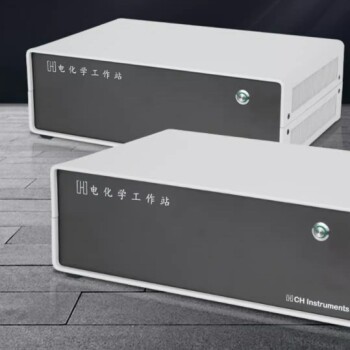
Battery testing systems for Zinc-air prototypes are sophisticated diagnostic tools that monitor real-time electrochemical responses to evaluate material performance. These systems primarily record open-circuit voltage (OCV), specific capacity, and charge-discharge overpotentials during long-term cycling. By tracking these variables, researchers can quantify the energy conversion efficiency and structural durability of catalysts under actual working conditions.
The central takeaway of a battery testing system is its ability to translate laboratory-scale material properties into measurable device performance. By monitoring voltage dynamics and capacity retention over hundreds of hours, these systems provide the empirical evidence needed to determine a prototype's commercial viability.
Electrochemical Stability and Voltage Dynamics
Open-Circuit Potential (OCP) and Voltage Plateaus
The system continuously monitors the open-circuit potential (OCP), which indicates the battery's thermodynamic state when no current is flowing. During active discharge, it records the discharge plateau voltage, representing the stable voltage level where the battery delivers the majority of its energy.
Charge-Discharge Overpotentials
Testing systems measure the overpotential, which is the difference between the theoretical equilibrium voltage and the actual operating voltage. High-precision monitoring of these overpotentials allows researchers to assess the catalytic activity of the air electrode and identify energy losses during the oxygen reduction and evolution reactions.
Evolution of the Voltage Gap
As a Zinc-air battery cycles, the voltage gap between the charging and discharging curves typically widens. The system tracks this evolution over hundreds of hours (often exceeding 140 hours) to detect activity attenuation or the structural collapse of the catalyst.
Capacity and Energy Performance Metrics
Specific Capacity and Rate Performance
The system calculates specific capacity (often in mAh g⁻¹) by measuring the total charge delivered relative to the mass of the active material. By varying the current densities (e.g., from 0.1 A g⁻¹ to 20 A g⁻¹), the system evaluates rate performance, which determines how well the battery maintains capacity under high-power demands.
Power Density and Energy Efficiency
By recording current and voltage simultaneously, the system generates power density curves. These metrics are essential for understanding the maximum output the battery can sustain, while energy conversion efficiency is calculated by comparing the energy input during charging to the energy output during discharge.
Coulombic Efficiency and Capacity Retention
Coulombic efficiency tracks the ratio of the discharge capacity to the charge capacity for each cycle. Testing systems monitor capacity retention over thousands of cycles to determine how much of the initial energy storage capability remains as the battery ages.
Long-Term Durability and Reliability
Cycling Stability and Life Span
Battery testing systems are designed for galvanostatic charge-discharge (GCD) cycling, often running for weeks or months. This long-term monitoring (sometimes over 1,300 hours) reveals the cycling stability of the catalyst and the overall lifespan of the battery assembly.
Detection of Internal Short Circuits
In zinc-based systems, dendrite penetration can lead to internal short circuits. Multi-channel testing systems monitor for sudden voltage drops in voltage-time curves, which serve as an immediate signal of anode failure or separator breach.
Polarization Voltage and Electrolyte Assessment
The system measures polarization voltage to evaluate the internal resistance of the cell. This data is critical when testing different electrolyte formulations, as it reflects how the chemical environment influences ion transport and electrode stability.
Understanding the Trade-offs
Laboratory Precision vs. Real-World Noise
While high-precision systems capture minute performance degradation, laboratory environments often lack the environmental stressors of real-world applications. Temperature fluctuations and CO2 exposure from the ambient air can affect Zinc-air chemistry in ways that a controlled cycling test might not fully capture.
Current Density vs. Catalyst Longevity
There is a fundamental trade-off between testing at high current densities for rapid data collection and the long-term health of the catalyst. High-rate testing can accelerate degradation mechanisms, such as carbon corrosion or catalyst leaching, which might not occur at lower, more stable operating points.
How to Apply These Metrics to Your Evaluation
Making the Right Choice for Your Goal
To get the most value from your battery testing data, align your primary monitored metrics with your specific development objectives.
- If your primary focus is commercial longevity: Prioritize monitoring the voltage gap evolution and capacity retention over cycles exceeding 500 hours.
- If your primary focus is high-power applications: Focus on power density curves and rate performance at current densities above 10 A g⁻¹.
- If your primary focus is catalyst efficiency: Closely analyze the charge-discharge overpotentials and the stability of the discharge plateau voltage.
- If your primary focus is anode safety: Implement high-frequency sampling to detect sudden voltage drops indicative of zinc dendrite growth.
By systematically tracking these metrics, you can move beyond simple observation and gain a deep, technical understanding of your Zinc-air prototype’s performance limits.
Summary Table:
| Metric Category | Key Parameters Monitored | Research Objective |
|---|---|---|
| Voltage Dynamics | OCV, Discharge Plateau, Overpotentials | Evaluate catalytic activity and energy loss. |
| Capacity & Power | Specific Capacity, Rate Performance | Assess energy density and high-power viability. |
| Efficiency | Coulombic Efficiency, Energy Conversion | Measure charge-discharge cycle effectiveness. |
| Durability | Cycling Stability, Capacity Retention | Determine lifespan and long-term reliability. |
| Safety & Health | Voltage Drops, Polarization Voltage | Detect internal short circuits and dendrite growth. |
Elevate Your Battery Research with KINTEK Precision
To move from laboratory material discovery to a commercially viable Zinc-air prototype, you need precision-engineered equipment that delivers reliable, repeatable data. KINTEK specializes in providing advanced laboratory solutions tailored for high-performance energy research.
Our comprehensive portfolio supports every stage of battery development:
- Electrode Preparation: High-precision hydraulic pellet presses and crushing/milling systems.
- Material Synthesis: Advanced muffle, tube, and CVD furnaces for high-temperature catalyst production.
- Cell Characterization: Specialized electrolytic cells, electrodes, and a full range of battery research tools and consumables (including PTFE and ceramics).
- Performance Stability: High-temperature reactors and autoclaves for testing structural durability.
Ready to accelerate your Zinc-air battery development? Contact KINTEK today to discuss your specific testing requirements and discover how our equipment can enhance your research accuracy and efficiency.
References
- Iram Aziz, S. Arshad. Growth of carbon nanotubes over carbon nanofibers catalyzed by bimetallic alloy nanoparticles as a bifunctional electrode for Zn–air batteries. DOI: 10.1039/d3ra00352c
This article is also based on technical information from Kintek Solution Knowledge Base .
Related Products
- Customizable Swagelok Type Test Cells for Advanced Battery Research Electrochemical Analysis
- Battery Lab Equipment 304 Stainless Steel Strip Foil 20um Thick for Battery Test
- Button Battery Case for Battery Lab Applications
- Cylindrical Battery Steel Case for Battery Lab
- Laboratory Hydraulic Press Lab Pellet Press for Button Battery
People Also Ask
- How does a standardized electrochemical test cell assist in MOx/CNTf electrode screening? Optimize Material Ratios
- Why is a dedicated electrochemical test cell necessary for carbon steel? Ensure Precise Geothermal Corrosion Data
- What is the difference between a voltaic cell and an electrochemical cell? Understand the Two Types of Energy Conversion
- How do the electrochemical cell and three-electrode testing system collaborate? Optimize Zinc Anode Deposition Control
- Why must the electrochemical cell be continuously purged with nitrogen? Ensure Precision in Ni-Cr Corrosion Tests