Using an autoclave requires strict adherence to safety protocols. The most critical precautions involve wearing appropriate Personal Protective Equipment (PPE), correctly preparing and loading materials, and respecting the machine's operational cycle, particularly waiting for pressure and temperature to return to safe levels before opening the door.
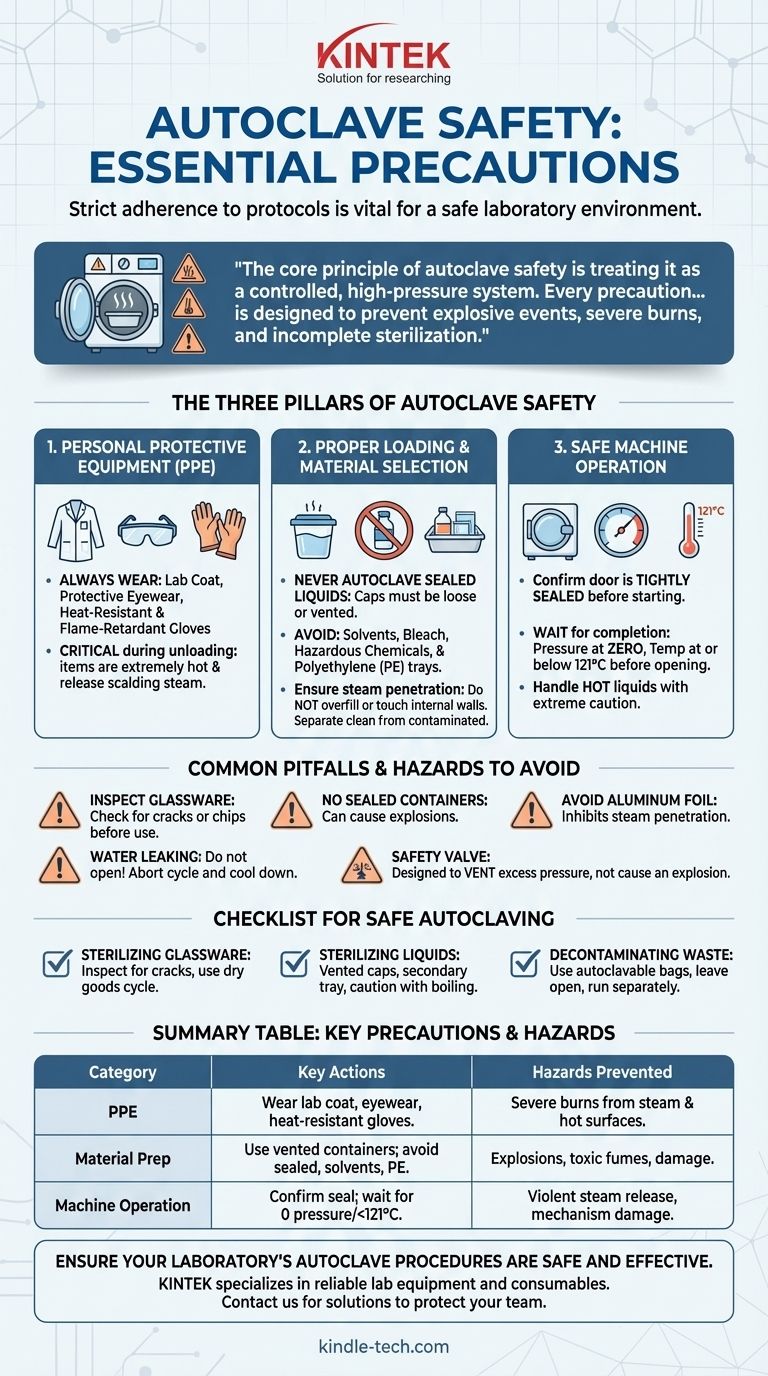
The core principle of autoclave safety is treating it as a controlled, high-pressure system. Every precaution, from selecting the right container to wearing heat-resistant gloves, is designed to prevent explosive events, severe burns, and incomplete sterilization.
The Three Pillars of Autoclave Safety
Proper autoclave use can be broken down into three fundamental areas: personal protection, material preparation, and machine operation. Mastering each is essential for ensuring both your safety and the integrity of your work.
Pillar 1: Personal Protective Equipment (PPE)
Your first line of defense is always proper PPE. Autoclaves operate at high temperatures and pressures, creating significant hazards from steam and superheated materials.
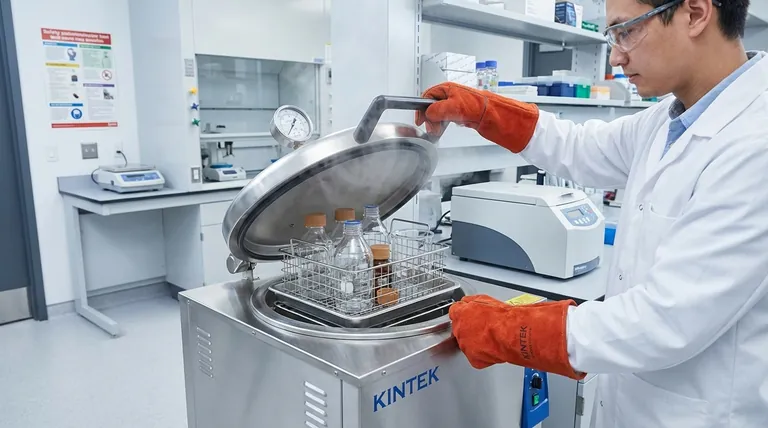
Always wear a lab coat, protective safety eyewear, and heat-resistant, flame-retardant gloves. This is especially critical when unloading the autoclave, as items will be extremely hot and can release scalding steam.
Pillar 2: Proper Loading and Material Selection
What you put into an autoclave is as important as how you operate it. Placing prohibited items inside can lead to explosions, the release of toxic fumes, or damage to the unit.
Never autoclave liquids in sealed containers. The buildup of steam pressure can cause the container to crack or explode violently. Always ensure caps are loose or vented.
Avoid autoclaving certain chemicals and materials. Do not place solvents, bleach-containing materials, or hazardous chemicals in the autoclave, as they can release toxic fumes or cause corrosion.
Ensure materials are loaded to allow for steam penetration. Do not overfill the chamber or allow items to touch the internal walls. Separate clean items from contaminated waste into different cycles.
Pillar 3: Safe Machine Operation
Understanding the autoclave's cycle is key to avoiding injury. The most dangerous moments are often right before opening the door after a cycle is complete.
Confirm the door is tightly sealed before starting a cycle. Never attempt to open the door while the machine is operating, as it is mechanically locked under pressure.
Wait until the cycle is complete and both the pressure and temperature have returned to safe levels (pressure at zero, temperature at or below 121°C). Forcing the door can damage the locking mechanism and create a severe safety hazard.
Handle hot liquids with extreme caution after removal. They can be superheated and may boil violently or spray when agitated.
Common Pitfalls and Hazards to Avoid
Beyond the basic operating procedures, several common mistakes and misconceptions can lead to dangerous situations or failed sterilization.
Inspecting Glassware is Crucial
Always inspect glassware for cracks or chips before placing it in the autoclave. The intense pressure and temperature changes can easily cause compromised glass to shatter.
Choosing the Right Containers
Do not use polyethylene (PE) trays, such as Nalgene pans. The high temperatures can cause them to melt, damaging your materials and the autoclave itself.
Wrapping items completely in aluminum foil is not recommended, as it can inhibit the necessary steam penetration required for effective sterilization.
Responding to Malfunctions
If you see water leaking from the bottom of the unit, do not open the door. This can indicate an obstructed steam line and a dangerous buildup of boiling water. Abort the cycle and wait for the system to cool and depressurize completely before investigating.
Understand the function of safety features. The safety valve is designed to automatically vent excess pressure to prevent a catastrophic failure or explosion, not to cause one.
A Checklist for Safe Autoclaving
Use this guide to ensure you are taking the correct precautions for your specific task.
- If your primary focus is sterilizing glassware or lab equipment: Inspect every piece for cracks, ensure items do not touch the chamber walls, and use a standard "dry goods" cycle.
- If your primary focus is sterilizing liquids or media: Use vented caps or loose lids, place the container in a secondary tray to contain spills, and be extremely cautious of boiling over when unloading.
- If your primary focus is decontaminating biohazardous waste: Use designated, autoclavable waste bags and containers, leave the bag open for steam penetration, and run this load separately from all clean items.
Ultimately, treating the autoclave with deliberate care is fundamental to ensuring your safety and the validity of your results.
Summary Table:
| Precaution Category | Key Actions | Common Hazards Prevented |
|---|---|---|
| Personal Protection (PPE) | Wear lab coat, safety eyewear, heat-resistant gloves. | Severe burns from steam and hot surfaces. |
| Material Preparation | Use vented containers; avoid sealed bottles, solvents, PE trays. | Explosions, toxic fume release, equipment damage. |
| Machine Operation | Confirm door seal; wait for zero pressure/temp (<121°C) before opening. | Violent steam release, damage to locking mechanism. |
Ensure your laboratory's autoclave procedures are safe and effective. KINTEK specializes in providing reliable lab equipment and consumables, including autoclaves and safety accessories, to meet your specific sterilization and decontamination needs. Our experts can help you select the right equipment and establish best practices to protect your team and your work. Contact us today to discuss how we can support your laboratory's safety and efficiency!
Visual Guide
Related Products
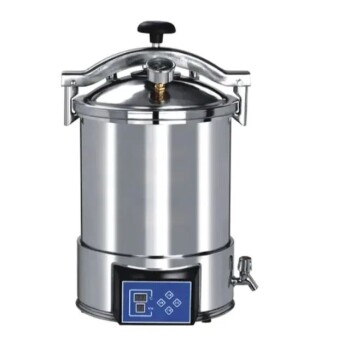
- Desktop Fast Laboratory Autoclave Sterilizer 20L 24L for Lab Use
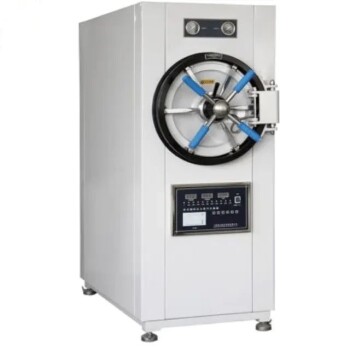
- Laboratory Horizontal Autoclave Steam Sterilizer Lab Microcomputer Sterilizer
- Desktop Fast Laboratory Autoclave Sterilizer 35L 50L 90L for Lab Use
- Desktop Fast High Pressure Laboratory Autoclave Sterilizer 16L 24L for Lab Use
- High Pressure Laboratory Autoclave Reactor for Hydrothermal Synthesis
People Also Ask
- What is the primary function of a laboratory autoclave in the pre-treatment of medical plastic waste for liquid fuel?
- What are the two types of autoclave used in the laboratory? Gravity vs. Pre-Vacuum Explained
- What extreme conditions does a laboratory autoclave simulate? Testing Wear Resistance of Nuclear Fuel Cladding
- What role does a laboratory autoclave play in HEA corrosion research? Key to Validating Advanced Reactor Materials
- Why is a laboratory autoclave necessary for Postgate Medium B (PMB)? Ensure Pure SRB Cultures & Accurate MIC Research