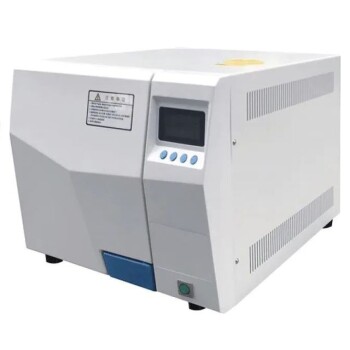
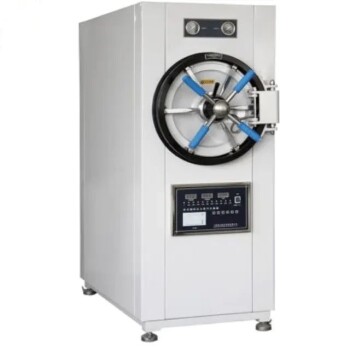
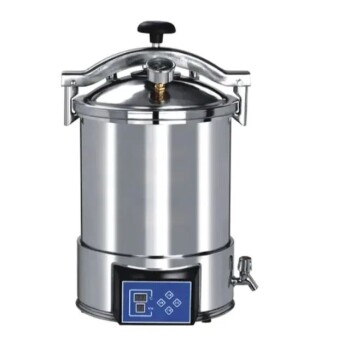
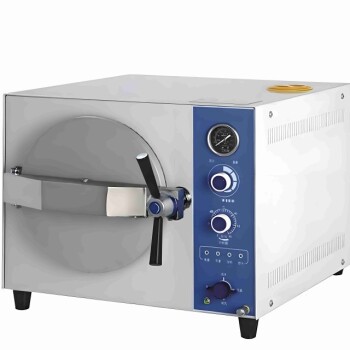
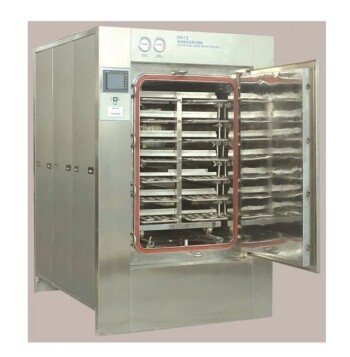
A laboratory autoclave simulates the hostile operating environment of a Pressurized Water Reactor (PWR) to rigorously test nuclear fuel cladding.
Specifically, it subjects materials to pressures of approximately 15.5 MPa and coolant temperatures ranging from 320°C to 350°C. Within this high-pressure water chemistry environment, the equipment replicates continuous thermal loads and mechanical stresses to evaluate wear and corrosion resistance.
By reproducing the extreme thermal-hydraulic and chemical conditions of a nuclear reactor, autoclaves provide essential validation data for Accident Tolerant Fuel (ATF). This ensures that new cladding materials and protective coatings can withstand long-term operational stresses before deployment.
Reproducing Reactor Conditions
Extreme Thermal and Hydraulic Parameters
The primary function of the autoclave is to mimic the thermal-hydraulic limits of a Light Water Reactor (LWR).
It maintains water in a liquid state well above its standard boiling point by applying immense pressure (approx. 15.5 MPa).
This combination of high heat (320–350°C) and high pressure is necessary to test materials under realistic PWR service conditions.
Specific Water Chemistry
Beyond simple heat and pressure, the autoclave controls the specific water chemistry found in reactor coolant systems.
This chemical environment is critical for studying how materials react to the coolant over long periods.
It allows researchers to observe the formation of oxide layers, such as Cr2O3 (chromium oxide), on materials like Type 348 stainless steel.
Analyzing Material Degradation
Tribological Performance Testing
The autoclave is specifically designed to test tribological performance, which refers to how materials behave under friction, lubrication, and wear.
It simulates debris fretting, a common wear mechanism where small particles vibrate against the fuel cladding.
This realistic simulation exposes the cladding to the same mechanical attrition it would face inside an active reactor core.
Evaluating Protective Coatings
Researchers use this environment to validate the durability of zirconium alloy cladding and advanced protective coatings.
Specific coatings tested include TiN (Titanium Nitride) and CrN (Chromium Nitride).
The goal is to determine if these anti-wear coatings can maintain their integrity under continuous pressure and thermal loads.
Understanding the Limitations
The Challenge of Long-Duration Accuracy
While autoclaves provide vital kinetic data, simulating the long-term service status of a reactor requires extended experiment durations.
Maintaining precise stability in temperature (320-350°C) and pressure (15.5 MPa) over these long periods is technically demanding but essential for valid results.
Isolated Variables
Autoclave testing isolates specific environmental factors—thermal, hydraulic, and chemical—to validate fuel performance codes.
However, it focuses on these specific physical stressors to validate safety margins, specifically for Accident Tolerant Fuel (ATF) candidates.
Applying Autoclave Data to Fuel Safety
To effectively utilize data derived from high-pressure autoclave testing, consider your specific development goals:
- If your primary focus is Material Selection: Prioritize kinetic data on oxide layer formation (e.g., Cr2O3) to predict long-term corrosion resistance.
- If your primary focus is Safety Validation: Use the debris fretting results to verify that anti-wear coatings (TiN/CrN) will not delaminate under PWR pressure and thermal loads.
Ultimately, the laboratory autoclave serves as the critical bridge between theoretical fuel design and the physical reality of reactor operation.
Summary Table:
| Parameter | Simulated Reactor Condition |
|---|---|
| Operating Pressure | Approximately 15.5 MPa |
| Coolant Temperature | 320°C to 350°C |
| Environment | High-pressure water chemistry (PWR simulation) |
| Wear Mechanisms | Debris fretting, friction, and mechanical attrition |
| Key Materials Tested | Zirconium alloys, CrN/TiN coatings, Stainless Steel |
| Primary Objective | Validation of Accident Tolerant Fuel (ATF) durability |
Advance Your Nuclear Material Research with KINTEK
Precise simulation of extreme reactor environments requires equipment engineered for reliability and safety. KINTEK specializes in high-performance laboratory solutions, offering state-of-the-art high-temperature high-pressure reactors and autoclaves designed to meet the rigorous demands of nuclear fuel and material science.
Whether you are evaluating tribological performance, testing anti-wear coatings, or validating Accident Tolerant Fuel (ATF) designs, our comprehensive portfolio—from precision crushing systems to advanced cooling solutions—empowers your lab to achieve accurate, reproducible results.
Ready to enhance your research capabilities? Contact KINTEK experts today to find the perfect autoclave for your application!
References
- Magdalena Podolak, Anna Bielawska. Anticancer properties of novel Thiazolidinone derivatives tested in MDA-MB-231 breast cancer cell lines.. DOI: 10.21175/rad.abstr.book.2023.10.3
This article is also based on technical information from Kintek Solution Knowledge Base .
Related Products
- Desktop Fast Laboratory Autoclave Sterilizer 20L 24L for Lab Use
- Laboratory Horizontal Autoclave Steam Sterilizer Lab Microcomputer Sterilizer
- Desktop Fast Laboratory Autoclave Sterilizer 35L 50L 90L for Lab Use
- Desktop Fast High Pressure Laboratory Autoclave Sterilizer 16L 24L for Lab Use
- High Pressure Laboratory Autoclave Reactor for Hydrothermal Synthesis
People Also Ask
- What are the two types of autoclave used in the laboratory? Gravity vs. Pre-Vacuum Explained
- What is a laboratory autoclave? A Guide to Sterilization with Pressurized Steam
- What precautions should be taken during autoclave in laboratory? A Complete Safety Guide to Prevent Burns and Explosions
- What role does a laboratory autoclave play in HEA corrosion research? Key to Validating Advanced Reactor Materials
- Why is a laboratory autoclave necessary for Postgate Medium B (PMB)? Ensure Pure SRB Cultures & Accurate MIC Research