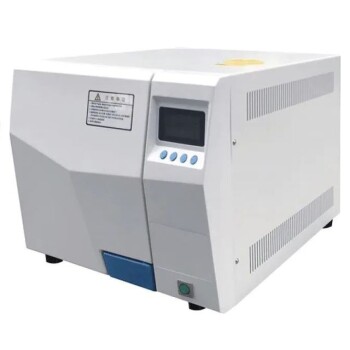
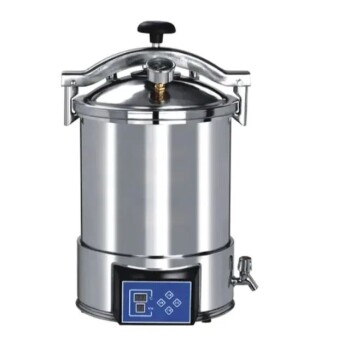
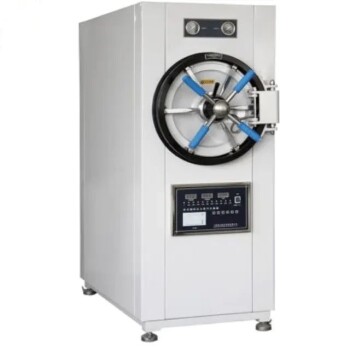
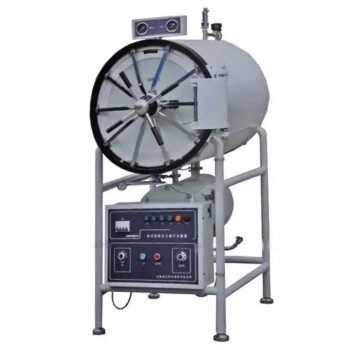
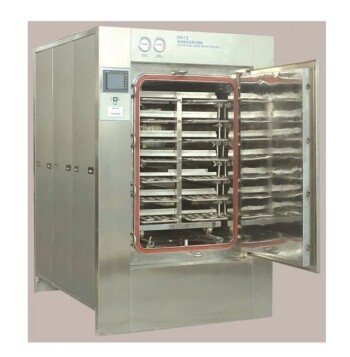
The laboratory autoclave functions as a high-intensity reaction vessel used to facilitate the extraction of lignin from Prosopis juliflora pods. By creating an environment of controlled high temperature (typically 121 °C) and pressure, it drives the acid hydrolysis process significantly faster and more completely than standard atmospheric heating methods.
By subjecting the biomass to pressurized heat, the autoclave ensures the complete breakdown of carbohydrates into soluble sugars, leaving behind a distinct, acid-insoluble lignin residue that can be easily separated.
Creating the Optimal Reaction Environment
The Role of Temperature and Pressure
The primary function of the autoclave is to maintain a stable environment at 121 °C.
To achieve this temperature without the reagents boiling off, the system operates under pressure. This combination creates thermodynamic conditions that are impossible to achieve with open-air heating.
Accelerating the Reaction Kinetic
In the context of processing Prosopis juliflora pods, speed is critical.
Compared to atmospheric heating, the autoclave significantly accelerates the hydrolysis reaction. This reduces the total processing time required to break down the complex lignocellulose structure.
The Mechanism of Separation
Driving Acid Hydrolysis
The autoclave is utilized specifically during the acid hydrolysis phase.
While the strong acid provides the chemical potential to break bonds, the thermal energy from the autoclave provides the activation energy. This synergy forces the chemical breakdown of the plant matter.
Solubilizing Carbohydrates
The goal of this process is to strip away the non-lignin components.
Under these autoclave conditions, the carbohydrates within the pods undergo complete conversion into soluble sugars. Because these sugars dissolve in the liquid, they detach from the solid structure.
Isolating the Lignin Residue
Once the carbohydrates are solubilized, the physical state of the mixture changes.
The lignin remains as an acid-insoluble residue. Because the autoclave ensures the carbohydrates are fully converted and dissolved, the remaining solid material is high-purity lignin that can be mechanically separated (filtered) from the liquid.
Understanding the Operational Trade-offs
Autoclave vs. Atmospheric Heating
It is important to understand why the autoclave is preferred over simpler heating methods.
Atmospheric heating often results in incomplete conversion. Without the pressure and elevated temperature of the autoclave, some carbohydrates may remain attached to the lignin, resulting in a lower purity product.
Process Intensity
While effective, this is an aggressive process.
The conditions required for complete conversion (121 °C under pressure) necessitate robust equipment. Users must ensure their reaction vessels are rated for these specific pressures to avoid containment failure.
Making the Right Choice for Your Goal
To maximize the yield from Prosopis juliflora pods, apply the following principles:
- If your primary focus is Purity: Use the autoclave to ensure the complete conversion of carbohydrates, preventing impurities from remaining in your lignin residue.
- If your primary focus is Efficiency: Rely on the autoclave to accelerate the reaction, significantly reducing the time required compared to atmospheric boiling.
The autoclave is not merely a heating device; it is the critical tool that ensures the distinct physical separation of soluble sugars from solid lignin.
Summary Table:
| Feature | Autoclave Processing | Atmospheric Heating |
|---|---|---|
| Temperature | 121 °C (Stable) | Max 100 °C (Variable) |
| Reaction Speed | Accelerated Kinetics | Significantly Slower |
| Carbohydrate State | Complete Solubilization | Incomplete Conversion |
| Lignin Purity | High (Acid-Insoluble Residue) | Lower (Contains Impurities) |
| Separation Method | Mechanical Filtration | Complex Purification Required |
Maximize Your Biomass Research Yield with KINTEK
Precision in lignin extraction requires robust equipment capable of maintaining strict thermodynamic environments. KINTEK specializes in high-performance laboratory equipment, including high-temperature high-pressure reactors and autoclaves specifically designed for intensive acid hydrolysis and biomass processing.
Whether you are processing Prosopis juliflora or other complex lignocellulose structures, our advanced autoclaves ensure complete carbohydrate conversion and superior lignin purity. Beyond reactors, KINTEK offers a comprehensive range of crushing and milling systems, PTFE consumables, and cooling solutions to streamline your entire laboratory workflow.
Ready to elevate your lab's efficiency and output quality? Contact KINTEK today for a customized solution!
References
- G. Gayathri, Kiran Babu Uppuluri. The comprehensive characterization of Prosopis juliflora pods as a potential bioenergy feedstock. DOI: 10.1038/s41598-022-22482-9
This article is also based on technical information from Kintek Solution Knowledge Base .
Related Products
- Desktop Fast Laboratory Autoclave Sterilizer 20L 24L for Lab Use
- Desktop Fast High Pressure Laboratory Autoclave Sterilizer 16L 24L for Lab Use
- Portable High Pressure Laboratory Autoclave Steam Sterilizer for Lab Use
- Portable Digital Display Automatic Laboratory Sterilizer Lab Autoclave for Sterilization Pressure
- Desktop Fast Laboratory Autoclave Sterilizer 35L 50L 90L for Lab Use
People Also Ask
- What are the two types of autoclave used in the laboratory? Gravity vs. Pre-Vacuum Explained
- What is a laboratory autoclave? A Guide to Sterilization with Pressurized Steam
- What precautions should be taken during autoclave in laboratory? A Complete Safety Guide to Prevent Burns and Explosions
- What extreme conditions does a laboratory autoclave simulate? Testing Wear Resistance of Nuclear Fuel Cladding
- What role does a laboratory autoclave play in HEA corrosion research? Key to Validating Advanced Reactor Materials