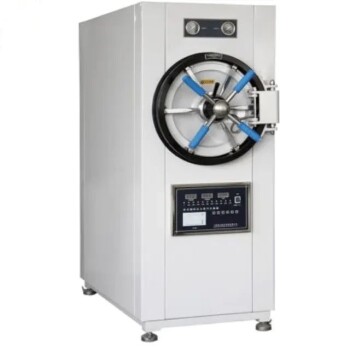
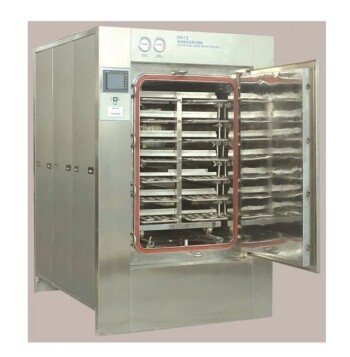
Sterilization is the non-negotiable foundation of accurate microbiological research. A laboratory high-pressure autoclave is required to subject all glassware, nutrient media, and pipette tips to rigorous pressure steam sterilization before any testing begins. This step completely eliminates pre-existing microbial contamination, creating a "clean slate" for your experiment.
The autoclave ensures that any observed antibacterial effects can be exclusively attributed to the agent being tested—such as the photogenerated radicals from a nanocomposite—rather than random environmental contaminants.
The Science of Isolating Variables
To prove that a specific material works, you must first remove all other variables. The autoclave is the primary tool for achieving this isolation.
Eliminating "Background Noise"
Microbes are ubiquitous in the environment. Without sterilization, your equipment and growth media introduce unknown bacteria into the experiment before it even begins.
Proving Causality
The goal of an antibacterial evaluation is to measure the specific impact of a material, such as an Ag3PO4/TiO2 nanocomposite.
If external bacteria are present, you cannot verify that the inactivation of the target bacteria (e.g., E. coli) is due to the nanocomposite's photogenerated radicals.
Critical Components Requiring Sterilization
The primary reference highlights specific items that must undergo pressure steam sterilization to ensure a controlled environment.
Glassware and Instruments
All beakers, flasks, and especially pipette tips must be sterilized. These tools come into direct contact with the samples and are common vectors for cross-contamination.
Nutrient Media
The nutrient media acts as the food source for the bacteria you intend to study.
If the media is not autoclaved, foreign microbes will consume the nutrients and proliferate, making it impossible to measure the growth or inhibition of your specific test organism.
Understanding the Risks of Contamination
Skipping or performing inadequate sterilization introduces significant risks to the validity of your data.
The Risk of Ambiguous Results
If external microbial contamination occurs, the observed antibacterial effect becomes unreliable. You may see bacterial growth where there should be none, or competitive inhibition where different bacteria kill the target strain instead of your material doing the work.
Compromising the Mechanism Study
In the context of Ag3PO4/TiO2 nanocomposites, the mechanism involves inactivation via photogenerated radicals. Contaminants can alter the chemical environment, potentially interfering with radical production or scavenging, further obscuring the true performance of the material.
Ensuring Experimental Success
To guarantee that your data stands up to peer review and scientific scrutiny, you must prioritize the preparation phase.
- If your primary focus is Data Integrity: Ensure every piece of equipment and all media undergo a full high-pressure autoclave cycle to eliminate 100% of external biological variables.
- If your primary focus is Material Characterization: Remember that you cannot accurately measure the chemical performance of your nanocomposite (e.g., radical generation) if biological contaminants are altering the reaction environment.
Absolute sterility is not just a safety protocol; it is the only way to scientifically prove cause and effect in antibacterial research.
Summary Table:
| Requirement | Purpose in Antibacterial Testing | Impact of Skipping |
|---|---|---|
| Glassware/Tips | Prevents cross-contamination from handling | Introduces unknown environmental microbes |
| Nutrient Media | Creates a sterile growth environment for target strains | Foreign bacteria consume nutrients and skew data |
| Pressure Steam | Ensures 100% elimination of pre-existing microbes | Creates 'background noise' and ambiguous results |
| Causality Proof | Attributes inactivation solely to the test agent | Fails to verify material performance (e.g., radicals) |
Elevate Your Research Precision with KINTEK
Don’t let microbial contamination compromise your data integrity. At KINTEK, we understand that accurate antibacterial performance evaluations require absolute sterility. We specialize in providing high-performance high-temperature high-pressure reactors and autoclaves designed to meet the rigorous demands of modern laboratories.
From advanced sterilization solutions to a comprehensive range of crushing and milling systems, hydraulic presses, and specialized ceramics, KINTEK is your partner in material science and microbiological excellence. Ensure your nanocomposites and materials are tested under perfect conditions.
Ready to upgrade your lab's capabilities? Contact us today to find the perfect autoclave solution for your research!
References
- Neerugatti KrishnaRao Eswar, Giridhar Madras. Enhanced sunlight photocatalytic activity of Ag3PO4 decorated novel combustion synthesis derived TiO2 nanobelts for dye and bacterial degradation. DOI: 10.1039/c5pp00092k
This article is also based on technical information from Kintek Solution Knowledge Base .
Related Products
- Desktop Fast High Pressure Laboratory Autoclave Sterilizer 16L 24L for Lab Use
- Laboratory High Pressure Horizontal Autoclave Steam Sterilizer for Lab Use
- Portable High Pressure Laboratory Autoclave Steam Sterilizer for Lab Use
- Laboratory High Pressure Steam Sterilizer Vertical Autoclave for Lab Department
- Laboratory Sterilizer Lab Autoclave Vertical Pressure Steam Sterilizer for Liquid Crystal Display Automatic Type
People Also Ask
- What is the role of a laboratory high-pressure autoclave in the conversion of furfural to piperidine? Optimize Yields
- What function does a high-pressure laboratory autoclave serve in walnut shell pretreatment? Enhance Biomass Reactivity.
- How does a laboratory high-pressure autoclave function to control Mn3O4 morphology? Precision Particle Engineering
- Autoclave's Role in PAA & MA Nanosheet Assembly? Driving High-Pressure Solvothermal Chemical Integration
- What are the two types of autoclave used in the laboratory? Gravity vs. Pre-Vacuum Explained