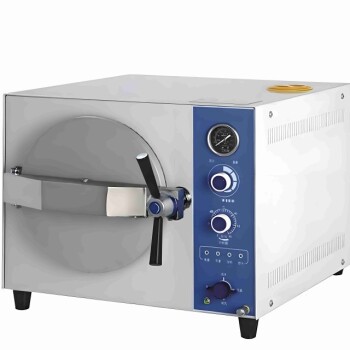
The autoclave functions as an essential intensifier for chemical pretreatment. It provides a controlled high-temperature and high-pressure environment that significantly amplifies the corrosive power of dilute sulfuric acid. This combination is required to breach the robust physical defenses of microalgae cells.
By sustaining a temperature of 121°C under pressure, the autoclave enables acid to penetrate and destroy tough cell walls. This step is the "core stage" for releasing intracellular starch and cellulose, which is necessary for efficient direct saccharification.
The Mechanics of Disruption
Overcoming Structural Resistance
Microalgae are protected by tough, resilient cell walls that resist degradation. Simple exposure to acid at ambient temperatures is often insufficient to break down these barriers effectively.
Enhancing Chemical Penetration
The autoclave creates rigorous physical conditions, typically reaching 121°C. This high thermal energy, combined with pressure, drives the dilute sulfuric acid deep into the cellular matrix.
Accelerating Cell Wall Destruction
Under these intensified conditions, the acid can rapidly degrade the structural integrity of the cell wall. This results in the physical destruction necessary to expose the cell's internal contents.
The Objective: Downstream Efficiency
Releasing Intracellular Assets
The primary goal of autoclaving during acid treatment is the liberation of intracellular starch and cellulose. These valuable polymers are locked inside the cell and must be released to be utilized.
Enabling Direct Saccharification
This disruption process is not an end in itself but a preparation for the next phase. By effectively breaking the cell walls, the autoclave ensures the biomass is primed for direct saccharification, the process of converting complex carbohydrates into simple sugars.
Understanding the Operational Context
The Necessity of Rigorous Conditions
It is important to recognize that this process relies on the synergy between chemical and physical forces. The "rigorous" nature of the autoclave environment is non-negotiable for this specific method.
Precision in Temperature
The reference specifically highlights 121°C as the operational standard. Failing to reach this temperature threshold may result in incomplete cell wall destruction and lower yields of starch and cellulose.
Making the Right Choice for Your Goal
To maximize the efficiency of your microalgae processing, consider your specific objectives:
- If your primary focus is Cell Disruption: Ensure your autoclave maintains a steady 121°C to fully leverage the penetrating power of the dilute sulfuric acid.
- If your primary focus is Saccharification Yield: View the autoclave stage not just as sterilization, but as the critical step that determines how much starch and cellulose will be available for conversion.
The autoclave transforms a slow chemical reaction into a rapid, high-yield extraction process capable of unlocking the full potential of microalgae biomass.
Summary Table:
| Feature | Autoclave Acid Treatment Role |
|---|---|
| Standard Temperature | 121°C |
| Primary Function | Chemical pretreatment intensifier |
| Mechanism | Synergy of heat, pressure, and acid |
| Key Outcome | Cell wall destruction & starch release |
| Downstream Goal | Direct saccharification of biomass |
Maximize Your Biomass Extraction with KINTEK
Are you struggling to breach resilient microalgae cell walls or optimize your saccharification yields? KINTEK specializes in high-performance laboratory equipment designed for the most rigorous chemical and physical pretreatment processes. Our advanced high-temperature high-pressure reactors and autoclaves provide the precise temperature control (121°C and beyond) and pressure stability needed to intensify your acid treatment workflows.
From PTFE-lined vessels and specialized ceramics that resist corrosive acids to our precision crushing and milling systems, KINTEK provides the end-to-end solutions your research demands. Whether you are scaling up biofuel production or refining cell disruption protocols, our team is ready to equip your lab with the durability and accuracy of industry-leading hardware.
Ready to transform your extraction efficiency? Contact KINTEK today to find the perfect autoclave solution for your lab!
References
- Jinzhi Yang, Ming Yang. Glucose Conversion for Biobutanol Production from Fresh Chlorella sorokiniana via Direct Enzymatic Hydrolysis. DOI: 10.3390/fermentation9030284
This article is also based on technical information from Kintek Solution Knowledge Base .
Related Products
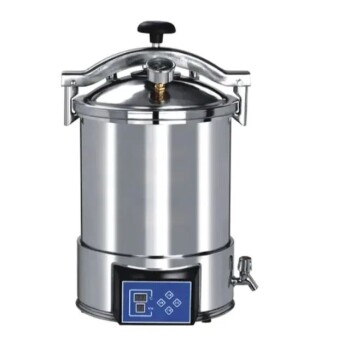
- Portable High Pressure Laboratory Autoclave Steam Sterilizer for Lab Use
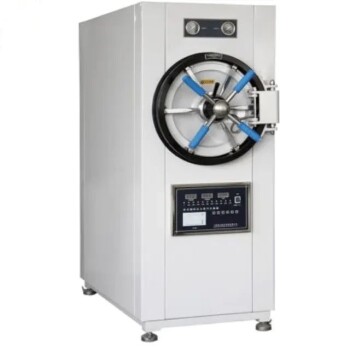
- Laboratory Horizontal Autoclave Steam Sterilizer Lab Microcomputer Sterilizer
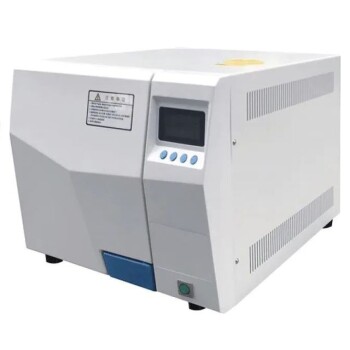
- Desktop Fast High Pressure Laboratory Autoclave Sterilizer 16L 24L for Lab Use
- Portable Digital Display Automatic Laboratory Sterilizer Lab Autoclave for Sterilization Pressure
- Desktop Fast Laboratory Autoclave Sterilizer 35L 50L 90L for Lab Use
People Also Ask
- Why is a laboratory high-pressure autoclave sterilizer necessary? Ensure Accuracy in Antibacterial Research
- What is the role of a laboratory high-pressure autoclave in the conversion of furfural to piperidine? Optimize Yields
- What are the two types of autoclave used in the laboratory? Gravity vs. Pre-Vacuum Explained
- What precautions should be taken during autoclave in laboratory? A Complete Safety Guide to Prevent Burns and Explosions
- What extreme conditions does a laboratory autoclave simulate? Testing Wear Resistance of Nuclear Fuel Cladding