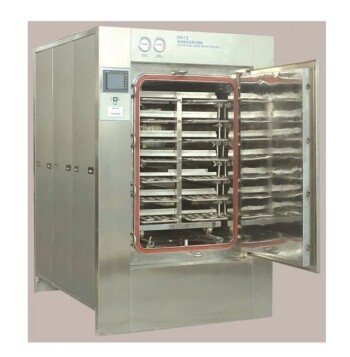
In the context of antimicrobial research, the autoclave functions as the fundamental gatekeeper of experimental validity. It utilizes high-pressure saturated steam to sterilize nutrient broth and agar media, ensuring a completely neutral environment before the introduction of Klebsiella pneumoniae or chromium oxide nanoparticles.
By eliminating all pre-existing microbial life in the growth media, the autoclave isolates the experimental variables. This ensures that any observed data—such as growth inhibition or reduction in bacterial counts—can be attributed strictly to the activity of the chromium oxide nanoparticles, rather than interference from environmental contaminants.
The Critical Role of Sterilization
Preparing the Growth Foundation
Before an experiment begins, the nutrient broth and agar media serve as the food source for the bacteria. These substances must be rendered completely sterile.
The autoclave achieves this by subjecting the media to saturated steam under high pressure. This process destroys all potential contaminants that could compete with the target organism.
Protecting Data Integrity
The presence of foreign microbes can disastrously skew quantitative data. If the media is not sterile, optical density (OD) measurements will reflect total biomass, not just Klebsiella pneumoniae.
Similarly, colony-forming unit (CFU) counts rely on the assumption that every colony grows from the specific strain introduced. Autoclaving removes the "noise" of background contamination, providing a clean baseline for these measurements.
Validating Nanoparticle Efficacy
Isolating the Variable
The core objective is to determine how chromium oxide nanoparticles affect Klebsiella pneumoniae. Without autoclaving, it is impossible to know if the bacteria are dying due to the nanoparticles or due to competition from other microbes.
Ensuring Accurate Inhibition Zones
In zone of inhibition tests, researchers measure the clear area around the antimicrobial agent where bacteria fail to grow. Contaminants can overgrow these zones or alter the chemical properties of the agar.
Sterilization guarantees that the physical properties of the agar remain consistent. This allows for precise measurement of the nanoparticles' range of effectiveness.
Operational Considerations and Pitfalls
The Necessity of Protocol Adherence
While the autoclave is a powerful tool, it must be used correctly to be effective. The cycle must reach specific temperature and pressure thresholds to ensure the complete destruction of resistant spores.
Potential for Media Degradation
It is crucial not to over-process the media. Excessive exposure to high heat can degrade the nutrients within the broth or agar.
If the nutritional quality of the media is compromised, Klebsiella pneumoniae may fail to grow due to starvation rather than the antimicrobial effect of the nanoparticles. This would lead to false positives regarding the efficacy of the chromium oxide.
Ensuring Valid Experimental Outcomes
To maximize the reliability of your antimicrobial studies, consider the specific requirements of your analysis:
- If your primary focus is quantitative accuracy (OD/CFU): Ensure the autoclave cycle is fully validated to prevent background noise from contaminants skewing your bacterial counts.
- If your primary focus is determining causality: rely on strict sterilization to confirm that cell death is caused solely by the chromium oxide nanoparticles.
Rigorous sterilization is not merely a preparatory step; it is the control mechanism that validates every subsequent finding in your research.
Summary Table:
| Aspect of Research | Role of Autoclave | Impact on Experimental Validity |
|---|---|---|
| Media Preparation | Sterilizes nutrient broth and agar using high-pressure steam | Ensures a neutral growth environment for K. pneumoniae |
| Data Integrity | Eliminates background microbial "noise" | Guarantees OD and CFU counts reflect only target variables |
| Variable Isolation | Removes competing microorganisms | Confirms inhibition is caused strictly by chromium oxide nanoparticles |
| Methodological Accuracy | Maintains consistent physical agar properties | Allows for precise measurement of inhibition zones |
Elevate Your Pathogen Research with KINTEK Precision
Maintaining a sterile baseline is critical when measuring the antimicrobial efficacy of nanoparticles. At KINTEK, we specialize in high-performance laboratory equipment designed to meet the rigorous demands of microbiology and material science.
Our advanced range of autoclaves and high-pressure reactors ensures absolute sterilization and precise experimental conditions, protecting your data from environmental contamination. Beyond sterilization, we provide comprehensive solutions for lab-scale innovation, including:
- High-temperature furnaces for nanoparticle synthesis.
- Crushing and milling systems for material preparation.
- Incubators and shakers for consistent bacterial culture growth.
Don't let contamination compromise your research validity. Contact KINTEK today to discover how our specialized equipment can enhance the accuracy and reproducibility of your laboratory workflows.
References
- Poonam Sangwan, Harish Kumar. SYNTHESIS, CHARACTERIZATION AND ANTIBACTERIAL ACTIVITIES OF CHROMIUM OXIDE NANOPARTICLES AGAINST KLEBSIELLA PNEUMONIAE. DOI: 10.22159/ajpcr.2017.v10i2.15189
This article is also based on technical information from Kintek Solution Knowledge Base .
Related Products
- Portable High Pressure Laboratory Autoclave Steam Sterilizer for Lab Use
- Laboratory Horizontal Autoclave Steam Sterilizer Lab Microcomputer Sterilizer
- Desktop Fast High Pressure Laboratory Autoclave Sterilizer 16L 24L for Lab Use
- Portable Digital Display Automatic Laboratory Sterilizer Lab Autoclave for Sterilization Pressure
- Desktop Fast Laboratory Autoclave Sterilizer 35L 50L 90L for Lab Use
People Also Ask
- Why is a laboratory high-pressure autoclave sterilizer necessary? Ensure Accuracy in Antibacterial Research
- What is the role of a laboratory high-pressure autoclave in the conversion of furfural to piperidine? Optimize Yields
- What are the two types of autoclave used in the laboratory? Gravity vs. Pre-Vacuum Explained
- What precautions should be taken during autoclave in laboratory? A Complete Safety Guide to Prevent Burns and Explosions
- What extreme conditions does a laboratory autoclave simulate? Testing Wear Resistance of Nuclear Fuel Cladding