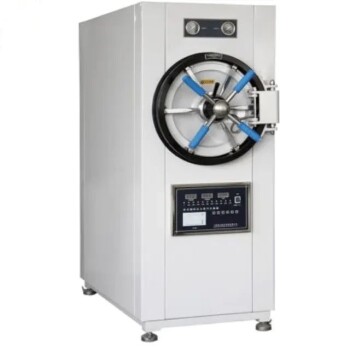
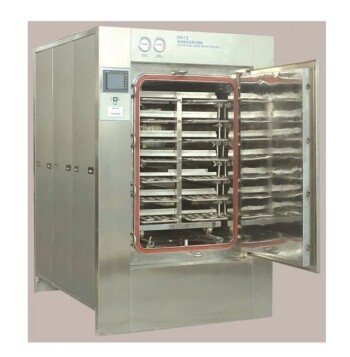
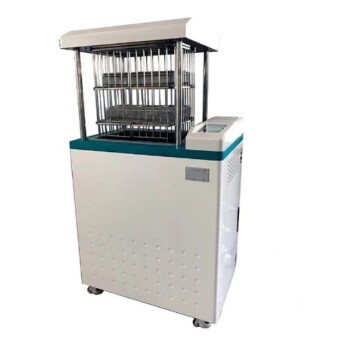
Steam autoclaving is the definitive standard for preparing dental alloy samples prior to biological testing. It utilizes a combination of high-temperature and high-pressure steam to totally eliminate microbial contaminants residing on the material's surface. This step is critical because it ensures that the sample is biologically inert before you introduce your specific test organisms.
Scientific rigor demands a controlled starting point; autoclaving provides this by stripping dental alloys of all pre-existing microbial life. This ensures that any biological activity observed during your experiment is exclusively the result of your designated culture process, not environmental contamination.
The Mechanics of Sterilization
Harnessing Heat and Pressure
The primary mechanism of an autoclave is the application of high-temperature steam under pressure.
This combination is far more effective than simple chemical cleaning. It allows the sterilization process to penetrate surface irregularities on the dental alloy where microbes often hide.
Total Microbial Elimination
The objective of this process is absolute sterility.
By subjecting the samples to these extreme conditions, you remove all potential microbial contaminants. This effectively resets the biological status of the alloy to zero.
Preserving Experimental Integrity
Eliminating Environmental Noise
In bacterial adhesion studies, your data is only as good as your isolation of variables.
Without autoclaving, environmental microbes present on the alloy could affect the outcome. These "background" bacteria could be mistaken for your test subjects, leading to skewed or invalid data.
Confirming Specific Adhesion
When studying specific organisms, such as Escherichia coli, you must be certain of the source of adhesion.
Thorough sterilization confirms that any bacteria found on the alloy later originate solely from the designated culture process. This direct causality is impossible to establish if the sample was not sterile to begin with.
Understanding the Protocol Trade-offs
Process Necessity vs. Material Limits
While autoclaving is essential for biological validity, it subjects materials to physical stress.
The reliance on high temperature and pressure means the dental alloy must be robust. It is important to acknowledge that this rigorous sterilization is necessary to remove contaminants, but it requires the material to withstand the process without degrading.
Ensuring Experimental Integrity
To guarantee valid results in your dental alloy research, apply the following principles:
- If your primary focus is Data Accuracy: Use steam autoclaving to remove environmental microbes that would otherwise corrupt your adhesion counts.
- If your primary focus is Causality: Rely on this sterilization method to prove that observed adhesion is caused strictly by your introduced culture, such as E. coli.
Starting with a sterile foundation is the only way to end with a scientifically valid conclusion.
Summary Table:
| Feature | Benefit for Bacterial Adhesion Experiments |
|---|---|
| High-Pressure Steam | Penetrates surface irregularities for total microbial elimination. |
| Biological Inertness | Resets the alloy surface to zero, removing environmental "noise." |
| Experimental Control | Ensures observed adhesion results from the test culture only (e.g., E. coli). |
| Scientific Rigor | Establishes direct causality and valid, reproducible data. |
Elevate Your Dental Research Precision with KINTEK
In the rigorous world of biomaterials and microbiology, the integrity of your data depends on the sterility of your foundation. KINTEK specializes in providing the high-performance laboratory equipment and consumables essential for advanced research. Our robust high-temperature high-pressure autoclaves are designed to ensure your dental alloys and materials are perfectly sterilized, protecting your experiments from environmental contamination.
From high-temperature furnaces and precision crushing systems to our specialized PTFE and ceramic consumables, KINTEK offers a comprehensive range of tools for dental laboratories and material science researchers. Whether you are conducting bacterial adhesion studies or developing next-generation alloys, our solutions deliver the reliability you need.
Ready to optimize your lab's workflow? Contact KINTEK today to discuss your equipment needs and see how our expertise can enhance your scientific outcomes.
References
- Katarzyna Banaszek, L. Klimek. Adhesion of<i>E. coli</i>Bacteria Cells to Prosthodontic Alloys Surfaces Modified by TiO<sub>2</sub>Sol-Gel Coatings. DOI: 10.1155/2013/179241
This article is also based on technical information from Kintek Solution Knowledge Base .
Related Products
- Laboratory High Pressure Steam Sterilizer Vertical Autoclave for Lab Department
- Portable High Pressure Laboratory Autoclave Steam Sterilizer for Lab Use
- Laboratory Sterilizer Lab Autoclave Vertical Pressure Steam Sterilizer for Liquid Crystal Display Automatic Type
- Laboratory Horizontal Autoclave Steam Sterilizer Lab Microcomputer Sterilizer
- Laboratory High Pressure Horizontal Autoclave Steam Sterilizer for Lab Use
People Also Ask
- What is the role of a laboratory high-pressure autoclave in the conversion of furfural to piperidine? Optimize Yields
- Why is a laboratory high-pressure autoclave sterilizer necessary? Ensure Accuracy in Antibacterial Research
- What function does a high-pressure laboratory autoclave serve in walnut shell pretreatment? Enhance Biomass Reactivity.
- How does a laboratory high-pressure autoclave function to control Mn3O4 morphology? Precision Particle Engineering
- Autoclave's Role in PAA & MA Nanosheet Assembly? Driving High-Pressure Solvothermal Chemical Integration