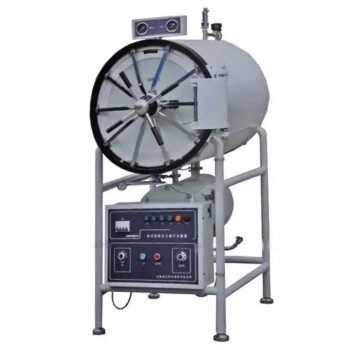
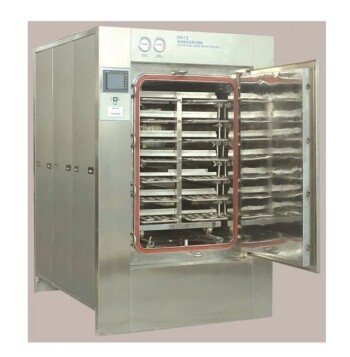
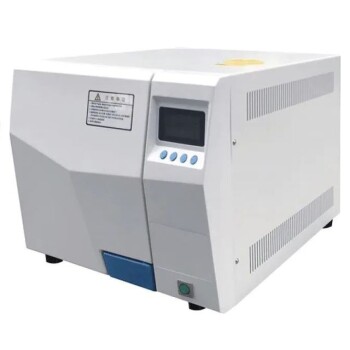
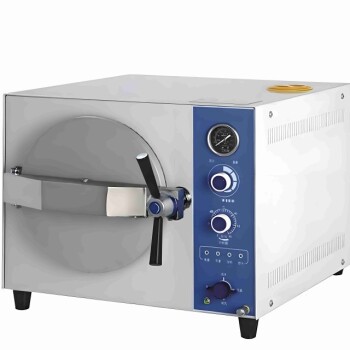
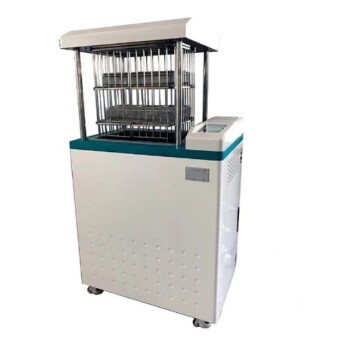
The reliability of microbial experiments hinges on a controlled baseline. An autoclave ensures this by utilizing a high-temperature and high-pressure environment to totally eliminate residual microorganisms from culture media and experimental glassware. This creates a sterile starting point, preventing external contamination from compromising the integrity of your results.
The core function of an autoclave is to isolate your variables. By removing pre-existing microbial life, it ensures that any biological changes observed later are caused solely by your introduced samples, not by environmental contaminants.
Establishing a Sterile Environment
To rely on your data, you must be certain that your culture media is a blank canvas before you begin.
The Mechanism of Elimination
The autoclave subjects your media and equipment to intense heat and pressure.
This hostile environment destroys all resident microbial life that may be clinging to glassware or present within the ingredients of the media itself.
Preventing Baseline Contamination
Without this step, "residual microorganisms" act as hidden variables.
By eliminating them completely, the autoclave prevents these random organisms from growing alongside your test subjects and skewing the initial conditions of the experiment.
Ensuring Data Attribution
In degradation experiments, validity comes from knowing exactly what caused the change.
Protecting the Degradation Signal
You are often measuring the specific "degradation performance" of a sample, such as an activated sludge community or a pure culture.
If the starting environment is not sterile, external microbes may contribute to the degradation, leading to false positives or inflated results.
Isolating the Cause
The autoclave ensures that the degradation phenomena you observe are "solely attributable" to your specific inoculation source.
This allows you to draw a direct causal link between the microbes you introduced and the results you recorded.
Common Pitfalls to Avoid
While sterilization is necessary for reliability, the process itself introduces potential variables if not managed correctly.
Over-Sterilization and Nutrient Loss
Excessive exposure to high heat can degrade heat-sensitive nutrients within the media.
If the chemical composition of the media changes due to over-cooking, the growth of your test organism may be inhibited, leading to unreliable data despite the sterility.
Incomplete Sterilization Pockets
If the autoclave is loaded improperly, steam may not reach every surface or the center of large liquid volumes.
This leaves "cold spots" where residual microbes survive, reintroducing the very contamination variables you are trying to eliminate.
Making the Right Choice for Your Goal
The level of scrutiny you apply to sterilization depends on the specific requirements of your experimental design.
- If your primary focus is Pure Culture Analysis: You must prioritize absolute sterility to ensure no other organism competes with your specific strain.
- If your primary focus is Community Degradation (e.g., Sludge): You must ensure the media is sterile so that the degradation rate reflects the community's capability, not the background noise of the media.
A sterile baseline is not just a cleaning step; it is the foundation of reproducible science.
Summary Table:
| Feature | Impact on Reliability | Key Benefit |
|---|---|---|
| Sterile Baseline | Eliminates residual microorganisms | Prevents contamination and skewed results |
| Variable Isolation | Ensures changes are due to samples only | Enables direct causal links in data |
| High-Pressure Steam | Reaches all surfaces and volumes | Guarantees complete elimination of bio-load |
| Process Control | Prevents nutrient degradation | Maintains chemical integrity of culture media |
Elevate Your Research Precision with KINTEK
Don't let contamination compromise your experimental integrity. KINTEK specializes in high-performance laboratory equipment designed for the most demanding research environments. From advanced high-temperature high-pressure reactors and autoclaves to precision crushing and milling systems, our solutions provide the sterile, controlled baseline your science requires. Whether you are conducting pure culture analysis or complex community degradation studies, our comprehensive portfolio—including PTFE consumables, ceramics, and cooling solutions—ensures your results are solely attributable to your variables.
Ready to optimize your lab’s reliability? Contact KINTEK today to find the perfect sterilization and research tools for your facility.
References
- Bastian Herzog, Elisabeth Müller. Screening and monitoring microbial xenobiotics’ biodegradation by rapid, inexpensive and easy to perform microplate UV-absorbance measurements. DOI: 10.1186/1756-0500-7-101
This article is also based on technical information from Kintek Solution Knowledge Base .
Related Products
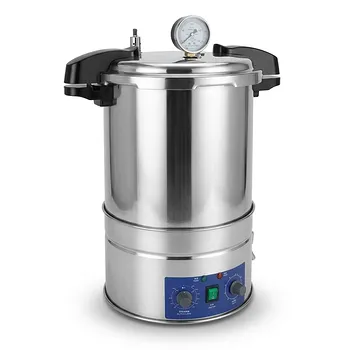
- Portable High Pressure Laboratory Autoclave Steam Sterilizer for Lab Use
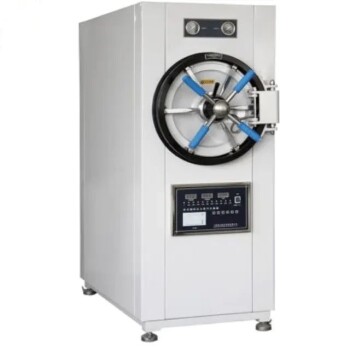
- Laboratory Horizontal Autoclave Steam Sterilizer Lab Microcomputer Sterilizer
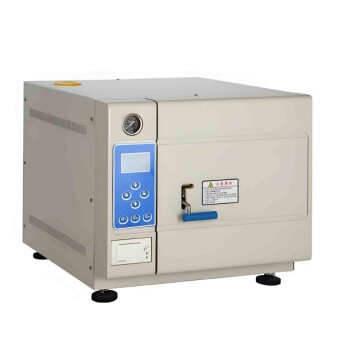
- Desktop Fast High Pressure Laboratory Autoclave Sterilizer 16L 24L for Lab Use
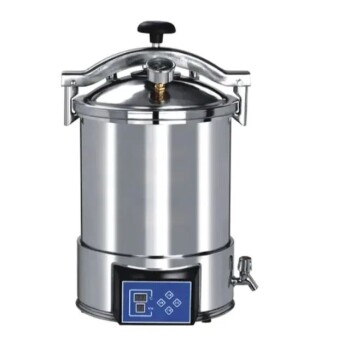
- Portable Digital Display Automatic Laboratory Sterilizer Lab Autoclave for Sterilization Pressure
- Desktop Fast Laboratory Autoclave Sterilizer 35L 50L 90L for Lab Use
People Also Ask
- Why is a laboratory high-pressure autoclave sterilizer necessary? Ensure Accuracy in Antibacterial Research
- What is the role of a laboratory high-pressure autoclave in the conversion of furfural to piperidine? Optimize Yields
- What are the two types of autoclave used in the laboratory? Gravity vs. Pre-Vacuum Explained
- What precautions should be taken during autoclave in laboratory? A Complete Safety Guide to Prevent Burns and Explosions
- What extreme conditions does a laboratory autoclave simulate? Testing Wear Resistance of Nuclear Fuel Cladding