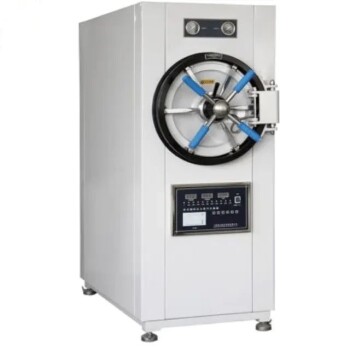
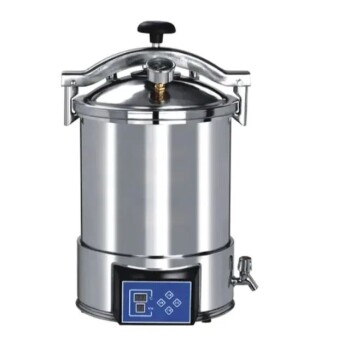
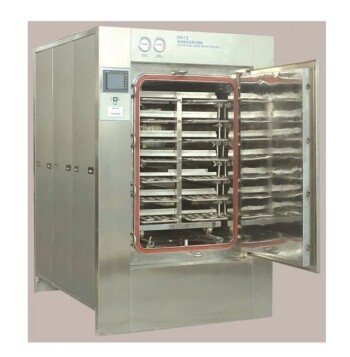
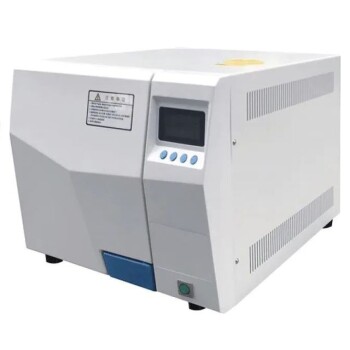
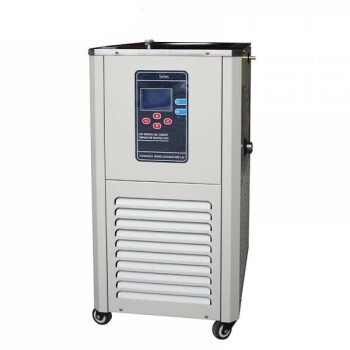
The autoclave acts as the primary gatekeeper for scientific validity in remediation research. By utilizing high-temperature and high-pressure steam, it completely sterilizes experimental substrates before testing begins. This critical step eliminates indigenous microorganisms, ensuring that the data collected reflects only the specific interactions between the introduced remediation agents and the contaminants.
Core Takeaway To prove that a specific microbe detoxifies heavy metals or aids plant growth, you must first remove "biological noise." The autoclave creates a sterile "blank slate," preventing interference from wild bacteria and allowing researchers to establish a definitive cause-and-effect relationship in their results.
Establishing a Controlled Environment
The Mechanics of Sterilization
The autoclave functions by subjecting experimental substrates to high-pressure steam.
This extreme environment is necessary to achieve complete sterilization. It ensures the total elimination of any life forms originally present in the material.
Eliminating Indigenous Variables
Native soil and substrates are naturally teeming with "indigenous microorganisms."
If left alive, these unknown organisms become uncontrolled variables. The autoclave removes them, ensuring the starting point of the experiment is neutral and defined.
Ensuring Accuracy in Remediation Data
Preventing Biological Competition
When developing strategies using plant growth-promoting bacteria, the test subject needs a clear path to function.
Sterilization prevents indigenous microbes from competing for resources. This allows researchers to observe the true potential of the specific remediation microbe without the interference of a "turf war" in the substrate.
Proving Detoxification Capabilities
The ultimate goal is to assess how well a microbe detoxifies heavy metals.
By using an autoclave, researchers create a controlled experimental model. If the heavy metals are neutralized, the success can be accurately attributed to the targeted microorganism, rather than an unknown factor in the soil.
Understanding the Trade-offs
The Limit of Controlled Models
The autoclave creates a highly controlled experimental model, which is excellent for isolating variables.
However, this sterility represents an artificial environment. While it proves what a microbe can do, it does not perfectly replicate the complex, competitive biology found in real-world field conditions.
Contextual Validity
Data derived from autoclaved substrates is valid for understanding mechanisms and potential.
It validates the specific biological interaction, but researchers must remember that re-introducing these strategies into non-sterile environments involves variables that were intentionally removed during the lab phase.
Making the Right Choice for Your Goal
To effectively utilize an autoclave in your remediation strategy development, consider your specific research phase:
- If your primary focus is Proof of Concept: Use the autoclave to ensure that any heavy metal detoxification is undeniably caused by your introduced microbe, not background noise.
- If your primary focus is Mechanism Study: Rely on the sterilized environment to study exactly how your plant growth-promoting bacteria interact with the substrate without biological competition.
An autoclave is not just a cleaning tool; it is the instrument that transforms an observation into a verifiable scientific fact.
Summary Table:
| Feature | Role in Remediation Research | Benefit to Experimental Accuracy |
|---|---|---|
| Sterilization Method | High-temperature & high-pressure steam | Eliminates 100% of indigenous microbial life |
| Variable Control | Removal of "Biological Noise" | Ensures data reflects only introduced remediation agents |
| Resource Competition | Elimination of indigenous microbes | Allows targeted bacteria to function without interference |
| Validation Goal | Establishing Cause-and-Effect | Confirms specific mechanisms for heavy metal detoxification |
Elevate Your Remediation Research with KINTEK Precision
Don't let biological interference compromise your scientific validity. KINTEK specializes in high-performance laboratory equipment designed to create the controlled environments your research demands. From high-temperature high-pressure reactors and autoclaves to advanced crushing and milling systems, we provide the tools necessary to transform observations into verifiable facts.
Whether you are conducting proof-of-concept studies for heavy metal detoxification or exploring plant-growth-promoting bacteria, our comprehensive range of equipment—including muffle furnaces, rotary furnaces, and hydraulic presses—ensures your lab is equipped for excellence.
Ready to optimize your experimental accuracy? Contact us today to find the perfect solution for your laboratory!
References
- Mohammed Alsafran, Kamal Usman. Principles and Applicability of Integrated Remediation Strategies for Heavy Metal Removal/Recovery from Contaminated Environments. DOI: 10.1007/s00344-022-10803-1
This article is also based on technical information from Kintek Solution Knowledge Base .
Related Products
- Portable High Pressure Laboratory Autoclave Steam Sterilizer for Lab Use
- Laboratory Horizontal Autoclave Steam Sterilizer Lab Microcomputer Sterilizer
- Desktop Fast High Pressure Laboratory Autoclave Sterilizer 16L 24L for Lab Use
- Portable Digital Display Automatic Laboratory Sterilizer Lab Autoclave for Sterilization Pressure
- Desktop Fast Laboratory Autoclave Sterilizer 35L 50L 90L for Lab Use
People Also Ask
- Why is a laboratory high-pressure autoclave sterilizer necessary? Ensure Accuracy in Antibacterial Research
- What is the role of a laboratory high-pressure autoclave in the conversion of furfural to piperidine? Optimize Yields
- What are the two types of autoclave used in the laboratory? Gravity vs. Pre-Vacuum Explained
- What precautions should be taken during autoclave in laboratory? A Complete Safety Guide to Prevent Burns and Explosions
- What extreme conditions does a laboratory autoclave simulate? Testing Wear Resistance of Nuclear Fuel Cladding