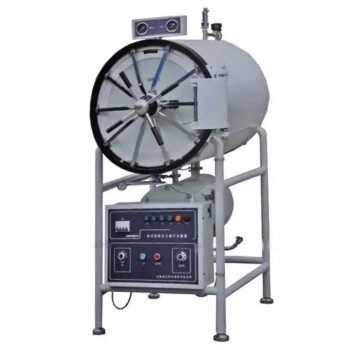
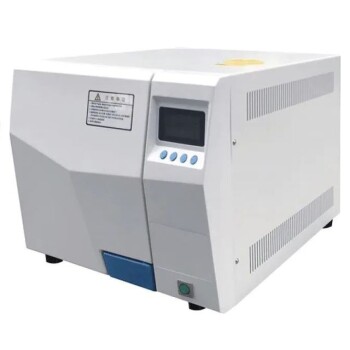
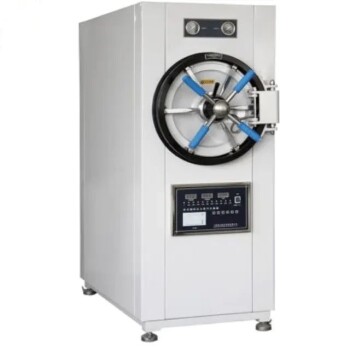
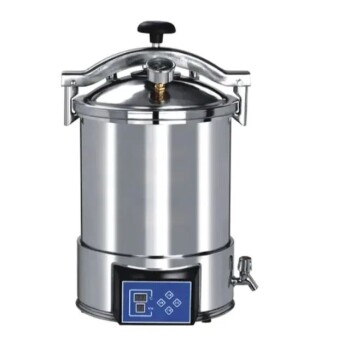
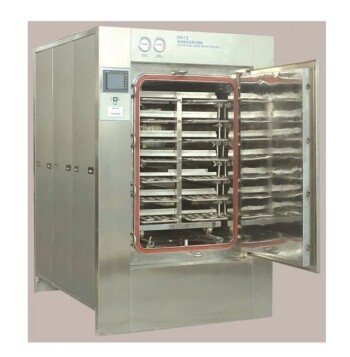
Stainless steel autoclaves provide a sealed, corrosion-resistant environment specifically designed to maintain a constant temperature of 90°C for a duration of seven days. In Product Consistency Test (PCT-A) leaching experiments, these vessels contain a mixture of phosphate glass powder and deionized water, ensuring the reaction occurs under controlled pressure without external contamination.
The stainless steel autoclave serves as a neutral isolation chamber, ensuring that the normalized release rates of elements—such as fluorine, lithium, sodium, and potassium—accurately reflect the glass's stability in underground repositories rather than artifacts of the test equipment.
Defining the Experimental Parameters
The PCT-A protocol relies on strict adherence to specific physical conditions to simulate long-term waste degradation.
Thermal Consistency
The autoclave must maintain the reaction environment at exactly 90°C. This elevated temperature accelerates chemical reactions that might otherwise take years to observe in a natural setting.
The Reaction Timeline
The standard duration for these experiments is seven days. This timeframe allows sufficient interaction between the glass powder and the deionized water to produce measurable leachate data.
Sample Preparation
The experiment utilizes glass powder rather than solid blocks. Increasing the surface area of the glass ensures a more rigorous test of its chemical durability when exposed to the leaching solution.
The Role of Material Integrity
The choice of stainless steel for the autoclave construction is not arbitrary; it is a functional requirement for data accuracy.
Corrosion Resistance
The primary function of the stainless steel is to provide a corrosion-resistant barrier. It must withstand the hot, wet environment without degrading.
preventing Cross-Contamination
If the vessel material were to react with the deionized water, it would alter the chemical composition of the leachate. Stainless steel prevents this, ensuring that the elements detected in the solution originate solely from the phosphate glass waste form.
Pressure Management
The autoclave is a sealed system. Its construction is robust enough to withstand the experimental pressure generated by heating water in a closed volume, preventing the loss of the leaching solution through evaporation.
Critical Considerations for Accuracy
While the autoclave provides the necessary conditions, understanding the potential points of failure is essential for valid results.
The Risk of Seal Failure
The system relies entirely on being hermetically sealed. Any breach in the seal results in pressure loss and evaporation, which alters the concentration of the solution and invalidates the normalized release rate calculations.
Material Inertness
The reliability of the data depends on the steel remaining chemically inert relative to the specific phosphate glass composition. If the steel contributes ions to the solution, it obscures the measurement of key elements like sodium or potassium.
Assessing Waste Form Stability
When analyzing the results from a PCT-A experiment conducted in these autoclaves, consider your specific evaluation goals:
- If your primary focus is Chemical Durability: Prioritize the normalized release rates of alkali metals (Lithium, Sodium, Potassium), as these are often the first to leach from the glass matrix.
- If your primary focus is Environmental Safety: Examine the release of specific volatile elements like Fluorine, which indicate how the waste form will behave in an underground repository environment.
The stainless steel autoclave is the foundational tool that transforms a theoretical waste form design into a verified, chemically stable reality.
Summary Table:
| Parameter | Specification | Purpose in PCT-A Leaching |
|---|---|---|
| Temperature | 90°C | Accelerates chemical reactions to simulate long-term degradation |
| Duration | 7 Days | Provides standardized timeframe for measurable leachate data |
| Vessel Material | Stainless Steel | Ensures corrosion resistance and prevents sample contamination |
| Atmosphere | Sealed System | Prevents evaporation and maintains constant solution concentration |
| Sample Form | Glass Powder | Maximizes surface area for rigorous chemical durability testing |
Secure Your Research Accuracy with KINTEK Solutions
Reliable PCT-A leaching experiments require precision and durability. KINTEK specializes in high-performance laboratory equipment, providing the high-temperature high-pressure reactors and autoclaves essential for glass waste form stability testing. Whether you are analyzing chemical durability or environmental safety, our corrosion-resistant stainless steel autoclaves ensure your results reflect the true stability of your materials without external interference.
Our value to you:
- Precision Engineering: Guaranteed thermal consistency and hermetic seals for sensitive leaching protocols.
- Comprehensive Portfolio: From crushing and milling systems for sample preparation to advanced reactors and furnaces.
- Expert Support: Specialized solutions for nuclear waste research and battery research tools.
Contact KINTEK today to upgrade your laboratory’s testing capabilities!
References
- Yaping Sun, Zhenghua Qian. Immobilization of simulated radioactive fluoride waste in phosphate glass. DOI: 10.1007/s40843-016-5010-x
This article is also based on technical information from Kintek Solution Knowledge Base .
Related Products
- Mini SS High Pressure Autoclave Reactor for Laboratory Use
- Portable High Pressure Laboratory Autoclave Steam Sterilizer for Lab Use
- Desktop Fast Laboratory Autoclave Sterilizer 35L 50L 90L for Lab Use
- Desktop Fast High Pressure Laboratory Autoclave Sterilizer 16L 24L for Lab Use
- Laboratory High Pressure Steam Sterilizer Vertical Autoclave for Lab Department
People Also Ask
- Why use high-pressure reactors for molecular sieve synthesis? Unlock Superior Crystallinity and Framework Control
- What are the advantages of using a high-pressure reactor like an autoclave? Maximize Liquefaction Speed & Yield
- What is the function of a high-pressure reactor autoclave? Enhancing Cu/N Co-Doped Carbon Catalyst Synthesis
- Why are high-pressure reactors or autoclaves necessary for the synthesis of new functional materials? Unlock Precision.
- How are high-pressure reactors used to prepare metaphosphate electrocatalysts? Master In-Situ Precursor Growth