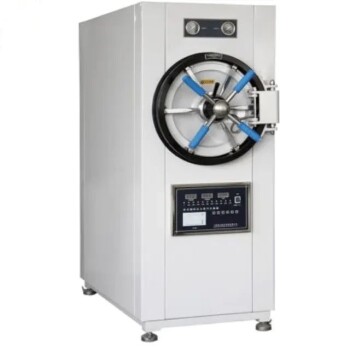
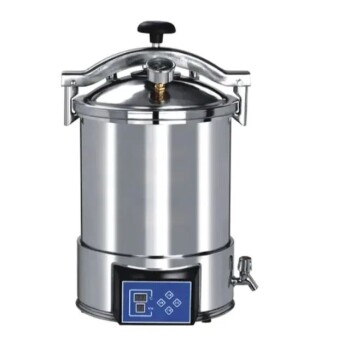
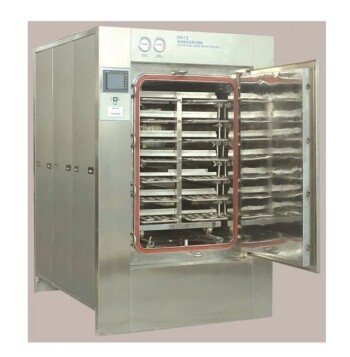
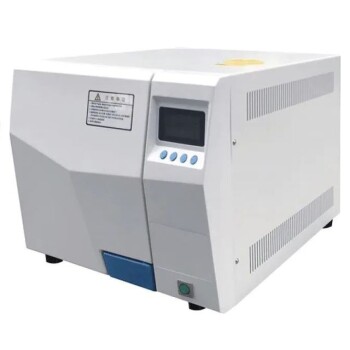
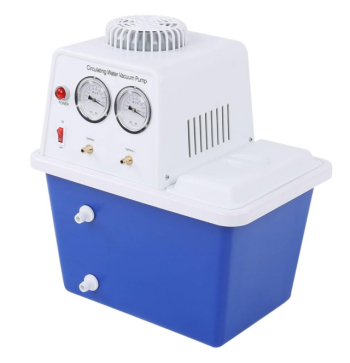
The use of an autoclave is strictly necessary to establish a completely sterile baseline for your experiments. By subjecting nutrient agar or liquid culture media to high-temperature and high-pressure steam—typically 121°C for over 10 minutes—you eliminate all pre-existing microbial contaminants. This process ensures that any bacterial or fungal growth observed later is solely due to your experimental variables, not accidental contamination.
Core Takeaway: Autoclaving creates a "zero-pollution baseline," which is the scientific foundation for measuring antimicrobial performance. Without it, you cannot distinguish between the survival of your target pathogens and the growth of random environmental contaminants, rendering your Ag2O/TiO2 efficiency data invalid.
The Mechanics of Sterilization
High-Temperature Steam
An industrial autoclave utilizes steam under high pressure to reach temperatures that standard boiling cannot achieve.
The standard benchmark is maintaining 121°C for a duration of at least 10 minutes.
Complete Elimination
This specific combination of heat and time is required to destroy robust microbial life forms, including spores.
It ensures the culture media is entirely free from background microbial contaminants before you introduce your target strains.
Ensuring Experimental Validity
The Zero-Pollution Baseline
For antibacterial testing, the starting point must be absolute sterility.
If the media contains pre-existing bacteria, it is impossible to accurately calculate the inactivation efficiency of your material.
Isolating the Variable
You are specifically testing the heterojunction of Ag2O (Silver Oxide) and TiO2 (Titanium Dioxide).
To prove that this material causes the death of the microbe, you must confirm that no other biological factors are influencing the growth count.
Target Strain Specificity
Controlled Testing
Your research likely focuses on the inactivation of specific, known pathogens.
Common targets for these materials include bacteria like Escherichia coli and fungi such as Candida albicans or Aspergillus flavus.
Preventing Cross-Contamination
Without autoclaving, wild strains from the air or lab surfaces could outcompete these specific test strains.
This would lead to erratic data, making it impossible to replicate the antibacterial or antifungal effects of the Ag2O/TiO2 photocatalyst.
Common Pitfalls to Avoid
Incomplete Sterilization
Reducing the time below 10 minutes or failing to reach 121°C can leave hardy spores intact.
This results in "false growth" that might be misinterpreted as a failure of the Ag2O/TiO2 material to inhibit bacteria.
Media Degradation
While necessary, the process must be controlled; excessive exposure to high heat beyond the required time can degrade the nutrients in the agar.
This could inhibit bacterial growth naturally, leading to "false positives" regarding your material's effectiveness.
Ensuring Reliable Antibacterial Data
To ensure your assessment of the Ag2O/TiO2 heterojunction is publishable and accurate, apply the following standards:
- If your primary focus is Data Integrity: Ensure the autoclave reaches the full 121°C threshold to guarantee a zero-pollution baseline for all control and test samples.
- If your primary focus is Specific Pathogen Analysis: Strict sterilization is required to ensure that results reflect only the interaction between the Ag2O/TiO2 and targets like E. coli or C. albicans, rather than environmental mold.
Reliable antimicrobial testing is impossible without the absolute sterility provided by proper autoclave pre-treatment.
Summary Table:
| Parameter | Standard Requirement | Purpose in Antibacterial Testing |
|---|---|---|
| Temperature | 121°C (250°F) | Ensures destruction of heat-resistant spores and microbes. |
| Exposure Time | ≥ 10-15 Minutes | Provides sufficient thermal death time for complete sterilization. |
| Pressure | High-pressure Steam | Reaches temperatures higher than boiling for total elimination. |
| Outcome | Zero-Pollution Baseline | Isolates the Ag2O/TiO2 effect from background contamination. |
Elevate Your Research Precision with KINTEK
Don't let contamination compromise your antibacterial data. KINTEK specializes in high-performance laboratory equipment designed for rigorous scientific standards. Whether you are developing Ag2O/TiO2 heterojunctions or testing advanced photocatalysts, our robust autoclaves and high-pressure reactors ensure a perfect sterile baseline every time.
From muffle furnaces for material synthesis to pellet presses and cooling solutions, we provide the comprehensive tools your lab needs for reliable, publishable results.
Ready to upgrade your lab's sterilization and processing capabilities? → Contact KINTEK Today for a Customized Quote
References
- Maya Endo‐Kimura, Ewa Kowalska. Photocatalytic and Antimicrobial Properties of Ag2O/TiO2 Heterojunction. DOI: 10.3390/chemengineering3010003
This article is also based on technical information from Kintek Solution Knowledge Base .
Related Products
- Portable High Pressure Laboratory Autoclave Steam Sterilizer for Lab Use
- Laboratory Horizontal Autoclave Steam Sterilizer Lab Microcomputer Sterilizer
- Desktop Fast High Pressure Laboratory Autoclave Sterilizer 16L 24L for Lab Use
- Portable Digital Display Automatic Laboratory Sterilizer Lab Autoclave for Sterilization Pressure
- Desktop Fast Laboratory Autoclave Sterilizer 35L 50L 90L for Lab Use
People Also Ask
- Why is a laboratory high-pressure autoclave sterilizer necessary? Ensure Accuracy in Antibacterial Research
- What is the role of a laboratory high-pressure autoclave in the conversion of furfural to piperidine? Optimize Yields
- What are the two types of autoclave used in the laboratory? Gravity vs. Pre-Vacuum Explained
- What precautions should be taken during autoclave in laboratory? A Complete Safety Guide to Prevent Burns and Explosions
- What extreme conditions does a laboratory autoclave simulate? Testing Wear Resistance of Nuclear Fuel Cladding