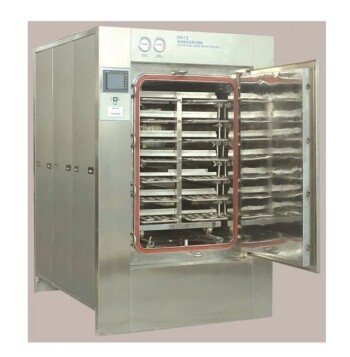
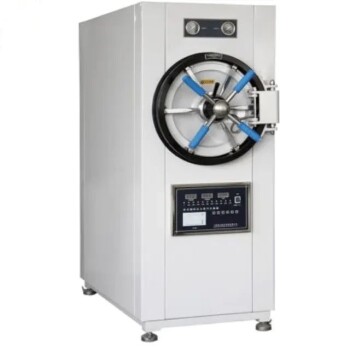
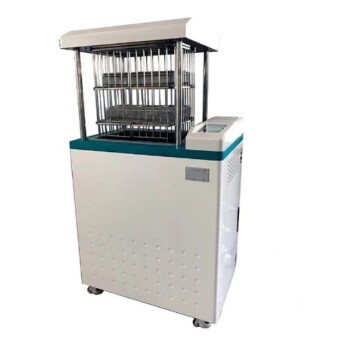
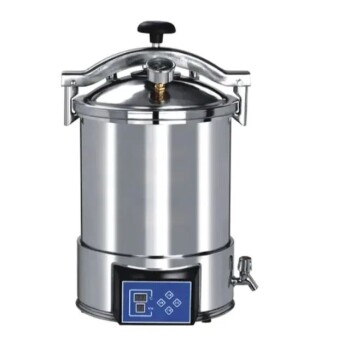
Laboratory autoclaves serve as critical simulation chambers designed to replicate the specific static or semi-static conditions found within Supercritical Water-cooled Reactors (SCWR). By maintaining controlled high-pressure environments (specifically 25 MPa) and stable temperatures, these devices allow researchers to conduct long-term immersion experiments on non-flow components like pressure tubes and header joints.
The primary function of these autoclaves is to stress-test life-limiting components that are difficult to replace. By simulating the precise chemical and physical environment of an SCWR, researchers can predict corrosion kinetics, hydrogen absorption, and the structural integrity of welded sections before they are deployed.
Simulating the SCWR Environment
To ensure the safety of a reactor, researchers must understand how materials behave in specific zones of the system. Autoclaves provide a controlled window into these isolated environments.
Replicating Static Zones
Not every part of an SCWR experiences high-velocity water flow.
Autoclaves are specifically engineered to model the static or semi-static environments found in critical non-flow areas.
This includes complex geometries such as the joints between pressure tubes and headers.
Precision Pressure Control
The validity of these experiments relies on precise environmental control.
Laboratory autoclaves maintain a stable pressure of 25 MPa, matching the operational pressure of an SCWR.
This creates a stable physical and chemical environment necessary for accurate long-term testing.
Evaluating Material Integrity
The ultimate goal of using an autoclave is to predict how materials will degrade over years of service. This allows for the evaluation of components that are essentially permanent fixtures in the reactor.
Analyzing Corrosion Kinetics
Immersion experiments in autoclaves provide data on how fast materials deteriorate.
By controlling the chemistry, researchers can map out corrosion kinetics to estimate the lifespan of the material.
Monitoring Hydrogen Absorption
A critical risk in reactor environments is the absorption of hydrogen, which can lead to material embrittlement.
Autoclaves facilitate the study of hydrogen absorption behavior under sustained high pressure.
This helps identify materials that may become brittle and prone to cracking over time.
Assessing Welded Sections
Welds are often the most vulnerable points in a pressure boundary.
Autoclave experiments focus heavily on the microstructural stability of welded sections.
This ensures that the heat-affected zones of a weld maintain their integrity under SCWR conditions.
Understanding the Limitations
While laboratory autoclaves are essential tools, they provide a specific slice of data rather than a holistic system view.
Static vs. Dynamic Conditions
It is critical to remember that these autoclaves simulate static or semi-static environments.
They do not replicate the high-velocity flow dynamics found in the reactor core or primary cooling loops.
Consequently, data derived from these experiments should not be used to predict flow-accelerated corrosion or erosion-corrosion phenomena.
Making the Right Choice for Your Research
When reviewing data from laboratory autoclaves, align the findings with the specific operational context of the component in question.
- If your primary focus is component longevity: Prioritize corrosion kinetics data to predict the service life of permanent structures like pressure tube joints.
- If your primary focus is structural safety: Examine the hydrogen absorption rates and microstructural stability of welds to prevent catastrophic embrittlement.
By isolating static environmental variables, laboratory autoclaves provide the baseline data necessary to certify the safety of the reactor's most permanent structures.
Summary Table:
| Research Parameter | Autoclave Simulation Role |
|---|---|
| Pressure Stability | Maintains precise 25 MPa for SCWR replication |
| Environment Type | Replicates static or semi-static zones (non-flow) |
| Corrosion Testing | Maps kinetics to predict long-term material lifespan |
| Safety Analysis | Monitors hydrogen absorption and weld microstructural stability |
| Key Components | Tests pressure tubes, header joints, and permanent structures |
Advance Your SCWR Material Research with KINTEK
Ensure the safety and longevity of your reactor components with KINTEK’s industry-leading high-temperature high-pressure reactors and autoclaves. Specifically designed to meet the rigorous demands of supercritical water research, our equipment provides the precise pressure control (25 MPa+) and thermal stability required to analyze corrosion kinetics and hydrogen absorption with confidence.
From high-temperature furnaces and crushing systems to specialized PTFE and ceramic consumables, KINTEK delivers a comprehensive laboratory portfolio for advanced nuclear and material science. Partner with us to secure the structural integrity of your permanent reactor fixtures.
Ready to optimize your testing environment? Contact KINTEK Experts Today
References
- Lori J. Walters, D. Guzonas. Irradiation Issues and Material Selection for Canadian SCWR Components. DOI: 10.1115/1.4038367
This article is also based on technical information from Kintek Solution Knowledge Base .
Related Products
- Laboratory Sterilizer Lab Autoclave Herbal Powder Sterilization Machine for Plant
- Laboratory Horizontal Autoclave Steam Sterilizer Lab Microcomputer Sterilizer
- Laboratory Sterilizer Lab Autoclave Vertical Pressure Steam Sterilizer for Liquid Crystal Display Automatic Type
- Laboratory High Pressure Horizontal Autoclave Steam Sterilizer for Lab Use
- Laboratory High Pressure Steam Sterilizer Vertical Autoclave for Lab Department
People Also Ask
- What is the primary function of a laboratory sterilization autoclave? Master the Physics of Wet Heat Sterilization
- What is an autoclave sterilizer? Achieve Absolute Sterility with Steam and Pressure
- What is the size of an autoclave sterilizer? Find the Perfect Fit for Your Lab's Needs
- In what industries and applications are steam sterilizers or autoclaves used? Discover Key Uses Across 4 Major Sectors
- What is the autoclave temperature for sterilization? Master the 121°C Standard for Guaranteed Sterility