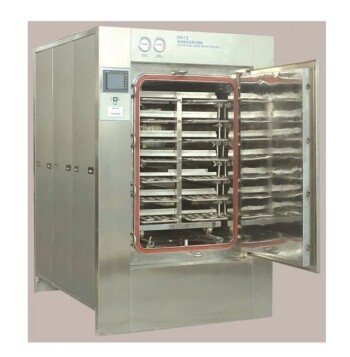
The primary advantage of a stirred autoclave is its ability to replicate dynamic real-world conditions. Unlike static testing, a stirring device introduces fluid motion that mimics the actual flow of molten salts through industrial systems. This addition transforms a simple corrosion test into a comprehensive evaluation of both chemical and mechanical degradation.
While static tests only measure chemical corrosion in a stagnant environment, adding a stirring device introduces flow velocity. This is critical for accurately predicting material lifespan in Concentrated Solar Power (CSP) plants by simulating erosion, stress, and chemical homogeneity.
Simulating Operational Reality
Mimicking Flow in CSP Plants
Molten salts in energy applications, specifically Concentrated Solar Power (CSP) plants, are rarely stagnant; they continuously circulate through pipes and collectors. A stirring device replicates this essential fluid motion. This creates a test environment that mirrors the actual hydrodynamic conditions of the service environment.
Moving Beyond Static Limitations
Static experiments often yield data that is too optimistic or simplistic for final engineering designs. By introducing flow, you generate results that are significantly more representative of real-world engineering applications. This ensures that the material selection process is based on data that accounts for the rigors of active operation.
The Mechanics of Material Degradation
Ensuring Chemical Uniformity
In a static vessel, the chemical composition of the salt can vary locally near the metal surface as reactions occur. Continuous stirring ensures chemical uniformity throughout the molten salt volume. This prevents localized concentration gradients from skewing corrosion rate data.
Introducing Dynamic Erosion
Flow does not just corrode; it physically wears down materials. A stirred system simulates dynamic erosion, allowing researchers to observe how fluid velocity accelerates material loss. This captures the combined effect of chemical attack and physical wear.
Analyzing Oxide Film Stability
Protective oxide films are a material's first line of defense, but they can be stripped away by flowing fluid. Stirring applies flow-induced stress to the material surface. This allows for the precise observation of oxide growth morphology and spalling behavior (flaking off) that would not occur in a static test.
Understanding the Trade-offs
Increased Mechanical Complexity
Introducing moving parts into a high-temperature, corrosive environment adds distinct mechanical challenges. Stirred autoclaves require robust sealing and agitation systems that are more prone to wear and maintenance issues than simple static vessels.
Cost and Setup Requirements
The equipment required to safely stir molten salts at high temperatures is inherently more expensive. These systems demand higher capital investment and energy consumption compared to the passive nature of static testing.
Selecting the Right Testing Method
To determine if the added complexity of a stirred autoclave is necessary for your project, consider your specific end goals.
- If your primary focus is initial material screening: Static testing is often sufficient for establishing a baseline ranking of chemical compatibility among different alloys.
- If your primary focus is engineering design and lifecycle prediction: You must use a stirred autoclave to accurately model erosion-corrosion and the mechanical stability of oxide films under flow.
By simulating the dynamic environment of the final application, you ensure your test data is not just accurate, but truly predictive.
Summary Table:
| Feature | Static Testing | Stirred Autoclave Testing |
|---|---|---|
| Environment | Stagnant chemical exposure | Dynamic fluid motion/flow simulation |
| Data Accuracy | Baseline material screening | Predictive for engineering design |
| Failure Modes | Chemical corrosion only | Combined chemical & physical erosion |
| Oxide Film | Growth observation only | Evaluates spalling & mechanical stress |
| Best Use Case | Initial material ranking | Life-cycle prediction for CSP plants |
Elevate Your Material Research with KINTEK Precision
Don't settle for static data in a dynamic world. KINTEK specializes in advanced high-temperature high-pressure reactors and autoclaves engineered to simulate the most demanding industrial environments.
Whether you are developing next-generation Concentrated Solar Power (CSP) materials or conducting complex molten salt research, our customized stirring systems provide the chemical uniformity and flow-induced stress data necessary for accurate life-cycle prediction. From corrosion-resistant electrolytic cells to precision crushing and milling systems, we provide the laboratory infrastructure to turn your data into reality.
Ready to bridge the gap between lab testing and industrial performance? Contact our technical experts today to find the perfect stirred autoclave solution for your laboratory.
References
- Fadoua Aarab, Thomas Bauer. A New Approach to Low-Cost, Solar Salt-Resistant Structural Materials for Concentrating Solar Power (CSP) and Thermal Energy Storage (TES). DOI: 10.3390/met11121970
This article is also based on technical information from Kintek Solution Knowledge Base .
Related Products
- Desktop Fast Laboratory Autoclave Sterilizer 35L 50L 90L for Lab Use
- Laboratory High Pressure Horizontal Autoclave Steam Sterilizer for Lab Use
- Desktop Fast High Pressure Laboratory Autoclave Sterilizer 16L 24L for Lab Use
- Desktop Fast Laboratory Autoclave Sterilizer 20L 24L for Lab Use
- Laboratory High Pressure Steam Sterilizer Vertical Autoclave for Lab Department
People Also Ask
- What is the primary function of a laboratory autoclave in the pre-treatment of medical plastic waste for liquid fuel?
- What is an autoclave laboratory equipment? The Ultimate Guide to Steam Sterilization
- What precautions should be taken during autoclave in laboratory? A Complete Safety Guide to Prevent Burns and Explosions
- What extreme conditions does a laboratory autoclave simulate? Testing Wear Resistance of Nuclear Fuel Cladding
- Why is a laboratory autoclave necessary for Postgate Medium B (PMB)? Ensure Pure SRB Cultures & Accurate MIC Research