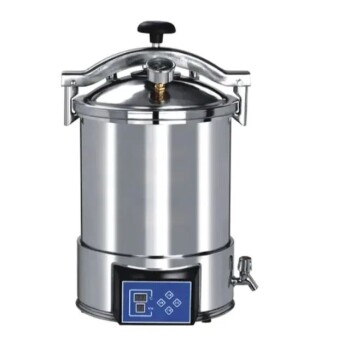
The primary purpose of an autoclave in uranium bio-leaching is to establish a strictly controlled, sterile environment. By subjecting growth media and mineral samples to high pressure and temperatures of typically 120°C, the autoclave eliminates all native microorganisms found within the sandstone. This critical step ensures that the biological leaching process is driven exclusively by the researcher's inoculated fungal strains, preventing external contaminants from skewing the results.
Core Takeaway: Scientific accuracy in bio-leaching relies on isolating the specific metabolic activity of the test organism. The autoclave creates a biological "blank slate," ensuring that any uranium dissolution observed is the direct result of the introduced strain, not random environmental competition.
The Mechanics of Contamination Control
Eradicating Native Microorganisms
Raw mineral samples, such as sandstone, naturally harbor various native microorganisms. These indigenous bacteria and fungi act as "noise" in an experiment.
The autoclave uses high heat and pressure to destroy these organisms completely. Without this step, the baseline of the experiment is contaminated before it even begins.
Preventing Resource Competition
Bio-leaching relies on fungi consuming specific nutrients in the growth media to produce the metabolites necessary for dissolving uranium.
If native microorganisms are left alive, they will compete for these nutrients. This competition starves the inoculated strain, reducing its effectiveness and leading to inaccurate data regarding its leaching potential.
Validating Experimental Data
Isolating Metabolic Activity
The goal of these experiments is to measure the metabolic dissolution capabilities of a specific fungal strain.
Sterilization ensures that the chemical changes observed in the media are solely attributable to that specific strain. It removes the variable of "community dynamics" found in nature.
Ensuring Reproducibility
For scientific results to be valid, they must be reproducible under the same conditions.
If the "background" microbial population varies from sample to sample, results will fluctuate wildly. Autoclaving standardizes the samples, allowing for consistent comparison between different fungal strains.
The Consequence of Inadequate Sterilization
The Risk of Data Ambiguity
The primary "trade-off" in this process is not mechanical, but rather the risk of false attribution.
If the autoclave process fails to reach the required 120°C or is maintained for an insufficient duration, heat-resistant native spores may survive. This leads to "interference," where the researcher cannot distinguish between the work of the inoculated fungus and the survivors.
Compromised Experimental Integrity
A single surviving colony of native bacteria can alter the pH or chemical composition of the media.
This renders the entire experiment invalid, as the specific interactions between the uranium and the intended microorganism are no longer isolated.
Making the Right Choice for Your Goal
To ensure your bio-leaching data is defensible and accurate, apply the following principles:
- If your primary focus is determining strain efficiency: Ensure your sterilization protocol completely eliminates native competition to isolate the strain's specific metabolic output.
- If your primary focus is processing raw ore samples: Recognize that native sandstone contains biological variables that must be neutralized via autoclaving before inoculation can occur.
A sterile foundation is the non-negotiable starting point for accurate biological leaching research.
Summary Table:
| Feature | Purpose in Bio-Leaching | Benefit |
|---|---|---|
| High Temperature (120°C) | Eradication of native microbes | Eliminates experimental 'noise' |
| High Pressure | Deep sterilization of sandstone | Reaches spores in mineral crevices |
| Controlled Environment | Biological 'blank slate' | Isolate metabolic dissolution data |
| Sterile Media | Preventing nutrient competition | Maximizes growth of inoculated strains |
Maximize Your Bio-Leaching Accuracy with KINTEK
Precise uranium bio-leaching research demands the highest level of sterilization and material integrity. KINTEK specializes in premium laboratory equipment, offering high-performance high-temperature high-pressure reactors and autoclaves engineered to handle the rigorous demands of mineral processing and microbiological research.
Whether you are isolating specific fungal metabolic activities or processing complex sandstone ores, our range of autoclaves, crushing and milling systems, and ceramic consumables provide the reliability you need for defensible, reproducible results. Empower your laboratory with KINTEK’s industry-leading solutions—contact us today to optimize your research workflow!
References
- Reda M. Attia, Nilly A. Kawady. Comparative evaluation of chemical and bio techniques for uranium leaching from low grade sandstone rock sample, Abu Thor, southwestern Sinai, Egypt. DOI: 10.1007/s10967-022-08621-6
This article is also based on technical information from Kintek Solution Knowledge Base .
Related Products
- Portable High Pressure Laboratory Autoclave Steam Sterilizer for Lab Use
- Portable Digital Display Automatic Laboratory Sterilizer Lab Autoclave for Sterilization Pressure
- Desktop Fast High Pressure Laboratory Autoclave Sterilizer 16L 24L for Lab Use
- Desktop Fast Laboratory Autoclave Sterilizer 35L 50L 90L for Lab Use
- Desktop Fast Laboratory Autoclave Sterilizer 20L 24L for Lab Use
People Also Ask
- Why is a laboratory high-pressure autoclave sterilizer necessary? Ensure Accuracy in Antibacterial Research
- What is the role of a laboratory high-pressure autoclave in the conversion of furfural to piperidine? Optimize Yields
- What are the two types of autoclave used in the laboratory? Gravity vs. Pre-Vacuum Explained
- What precautions should be taken during autoclave in laboratory? A Complete Safety Guide to Prevent Burns and Explosions
- What extreme conditions does a laboratory autoclave simulate? Testing Wear Resistance of Nuclear Fuel Cladding