The primary difference is the specific requirement for chemical and organic purity. While both industrial pharmaceutical autoclaves and waste decontamination units achieve biological sterility, pharmaceutical production units must also guarantee that the process introduces no chemical contaminants. Bio-hazardous waste decontamination, by contrast, focuses strictly on neutralizing pathogens without regard for chemical residues.
The application dictates the design: production requires protecting the product from the process, while waste decontamination simply ensures the output is safe for disposal.
The Pharmaceutical Standard: Protecting the Product
The Requirement for Total Purity
In industrial processes such as pharmaceutical and biomedical production, killing bacteria is only half the battle. You must also maintain a high level of chemical and organic purity.
Because the items being sterilized are often final products or equipment used in manufacturing, they cannot be contaminated by the sterilization medium itself.
The Necessity of Clean Steam
To achieve this stringent level of cleanliness, pharmaceutical autoclaves utilize higher purity steam.
This ensures that no heavy metals, boiler additives, or other organic impurities are deposited onto the product during the sterilization cycle. The quality of the autoclave construction is inherently different to support this "clean" process.
The Decontamination Standard: Neutralizing the Threat
Focus on Biological Sterility
For bio-hazardous waste, the objective is strictly safety. The goal is to render the waste biologically inert so it can be disposed of without risk of infection.
Because the load is destined for disposal, the aesthetic or chemical integrity of the waste is irrelevant.
Relaxed Chemical Standards
Since there is no "product" to protect, decontamination autoclaves do not require chemical purity.
Consequently, the standards for the steam supply and the autoclave vessel are different. They do not need to prevent chemical cross-contamination, which significantly changes the engineering requirements compared to production units.
Understanding the Trade-offs
Equipment Quality vs. Purpose
It is critical not to conflate "sterilization" with "cleanliness." Using a waste decontamination autoclave for pharmaceutical production would likely result in chemical contamination of the product, rendering it unusable.
Cost and Complexity Implications
Pharmaceutical units are designed for "different quality" standards to handle high-purity inputs. This generally implies a higher degree of system complexity to maintain that purity.
Conversely, specifying a high-purity pharmaceutical autoclave for waste decontamination is often an unnecessary expenditure, as the advanced purity features yield no benefit for trash disposal.
Making the Right Choice for Your Goal
Selecting the correct autoclave depends entirely on what happens to the load after it leaves the chamber.
- If your primary focus is Pharmaceutical Production: You must select a unit designed for chemical and organic purity using high-quality steam to prevent product contamination.
- If your primary focus is Waste Decontamination: You should prioritize biological sterility capabilities without incurring the cost or complexity of high-purity steam systems.
Match your equipment standards to your output requirements to ensure safety without over-engineering the solution.
Summary Table:
| Feature | Pharmaceutical Production Autoclaves | Waste Decontamination Autoclaves |
|---|---|---|
| Primary Goal | Biological sterility + Chemical/Organic purity | Pathogen neutralization (Biological sterility) |
| Steam Quality | High-purity "clean" steam (no additives) | Standard industrial steam |
| Output Use | Final products or manufacturing equipment | Disposal in waste streams |
| Contamination Risk | Prevents chemical cross-contamination | Focused strictly on infectious risks |
| Equipment Complexity | High (specialized materials & steam systems) | Moderate (focused on robust sterilization) |
Elevate Your Laboratory Standards with KINTEK
Choosing the right sterilization technology is critical for both product integrity and facility safety. At KINTEK, we specialize in high-performance laboratory equipment tailored to your specific application. Whether you require high-temperature high-pressure reactors and autoclaves designed for the stringent purity standards of pharmaceutical production, or robust solutions for bio-hazardous waste management, our experts are here to help.
From advanced vacuum and atmosphere furnaces to precise hydraulic presses and cooling solutions, KINTEK provides the comprehensive tools necessary for cutting-edge research and industrial manufacturing.
Don't compromise on purity or safety. Contact us today to find the perfect autoclave solution for your laboratory!
Related Products
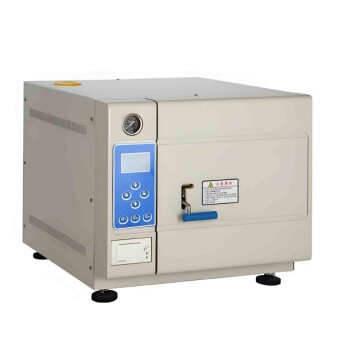
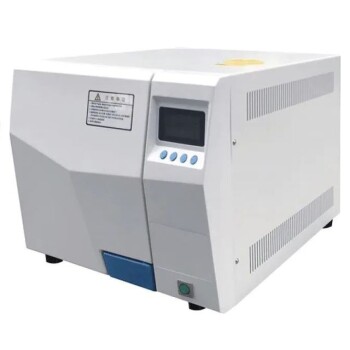
- Desktop Fast High Pressure Laboratory Autoclave Sterilizer 16L 24L for Lab Use
- Desktop Fast Laboratory Autoclave Sterilizer 35L 50L 90L for Lab Use
- Desktop Fast Laboratory Autoclave Sterilizer 20L 24L for Lab Use
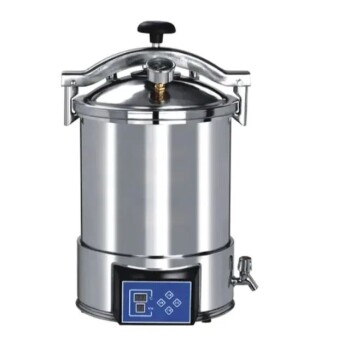
- Portable High Pressure Laboratory Autoclave Steam Sterilizer for Lab Use
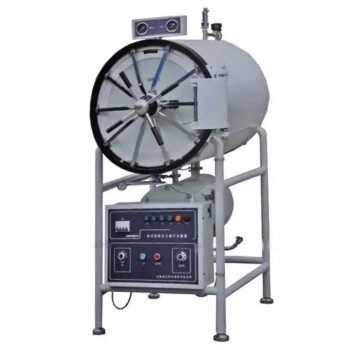
- Laboratory High Pressure Horizontal Autoclave Steam Sterilizer for Lab Use
People Also Ask
- Why is a laboratory high-pressure autoclave sterilizer necessary? Ensure Accuracy in Antibacterial Research
- What is the role of a laboratory high-pressure autoclave in the conversion of furfural to piperidine? Optimize Yields
- What function does a high-pressure laboratory autoclave serve in walnut shell pretreatment? Enhance Biomass Reactivity.
- How does a laboratory high-pressure autoclave function to control Mn3O4 morphology? Precision Particle Engineering
- Autoclave's Role in PAA & MA Nanosheet Assembly? Driving High-Pressure Solvothermal Chemical Integration