The primary purpose of treating polyester fabric substrates in an autoclave is to establish a verified sterile baseline for scientific experimentation. By subjecting the material to 121°C for a duration of 2 hours, you completely eliminate any pre-existing microbial contamination, ensuring that the fabric is biologically inert before testing begins.
Core Takeaway Reliable antimicrobial testing requires the isolation of variables. Autoclaving the substrate removes all biological "background noise," ensuring that any subsequent bacterial reduction can be attributed strictly to the antimicrobial agent being tested, rather than environmental randomness.
Establishing Experimental Purity
Elimination of Background Interference
Polyester fabrics, like any physical substrate, naturally accumulate microbes from the environment during handling and storage.
If these microbes are not removed, they introduce a significant variable into the experiment. This "background interference" makes it impossible to distinguish between the bacteria you intentionally introduce for the test and the contaminants already present.
Validating the Antimicrobial Agent
The ultimate goal of this preparation is to assess the specific performance of a treatment, such as a ZrNO-Ag co-sputtered coating.
To measure the "pure bactericidal effect" of such a coating, the control surface must be pristine. Autoclaving ensures that the data reflects the coating's ability to kill bacteria under light irradiation, rather than simply measuring a chaotic mix of pre-existing and introduced microbes.
The Mechanics of the Protocol
Thermal Sterilization Parameters
The process relies on a rigorous combination of heat and time.
The specific protocol calls for a temperature of 121°C. This temperature is the standard threshold for killing vegetative bacteria, spores, and other hardy microorganisms using pressurized steam.
Extended Duration for Reliability
The treatment is sustained for 2 hours.
While standard sterilization cycles are often shorter, this extended duration provides a safety margin to ensure the complete elimination of contamination. This rigor is necessary to guarantee the accuracy of sensitive biological counts in subsequent phases.
Understanding the Trade-offs
Rigor vs. Throughput
The primary trade-off in this protocol is the significant time investment required for preparation.
dedicating 2 hours solely to substrate sterilization reduces the throughput of experiments. However, attempting to shorten this cycle increases the risk of "false" data, where survival counts are skewed by contaminants that survived a less rigorous cleaning.
Material Stress
Subjecting polymers to high heat and pressure can theoretically alter their physical structure.
While polyester is generally autoclavable, the researcher must accept that this aggressive sterilization is necessary for biological validity, even if it exerts thermal stress on the fabric substrate. The priority here is biological neutrality over preserving the pristine physical state of the raw fiber.
Ensuring Data Integrity in Antimicrobial Testing
To ensure your experimental results are scientifically valid, apply the following principles to your preparation workflow:
- If your primary focus is isolating the coating's effect: You must strictly adhere to the autoclave protocol to remove background interference, ensuring that any bacterial death is caused solely by the specific agent (e.g., ZrNO-Ag coating).
- If your primary focus is experimental reproducibility: Standardize the sterilization cycle at 121°C for exactly 2 hours for every batch to ensure a consistent biological baseline across all samples.
A controlled starting point is the only way to guarantee that your end results measure reality rather than contamination.
Summary Table:
| Parameter | Specification | Purpose in Experimentation |
|---|---|---|
| Temperature | 121°C | Standard threshold for killing vegetative bacteria and spores |
| Duration | 2 Hours | Ensures complete elimination of environmental contaminants |
| Substrate | Polyester Fabric | Provides a biologically inert surface for testing |
| Goal | Sterilization | Removes background noise to isolate antimicrobial effects |
Elevate Your Research Precision with KINTEK
Don’t let experimental variables compromise your data integrity. KINTEK specializes in high-performance laboratory solutions, providing the precision high-pressure reactors, autoclaves, and specialized sterilization equipment necessary for rigorous antimicrobial and material research.
Whether you are developing advanced coatings or conducting complex bacterial inactivation studies, our comprehensive range of high-temperature furnaces, crushing systems, and cooling solutions are designed to meet the most demanding scientific standards.
Ready to optimize your laboratory workflow? Contact us today to discover how KINTEK’s expert-grade equipment can bring absolute reliability to your next experiment.
References
- Sami Rtimi, J. Kiwi. ZrNO–Ag co-sputtered surfaces leading to E. coli inactivation under actinic light: Evidence for the oligodynamic effect. DOI: 10.1016/j.apcatb.2013.01.066
This article is also based on technical information from Kintek Solution Knowledge Base .
Related Products
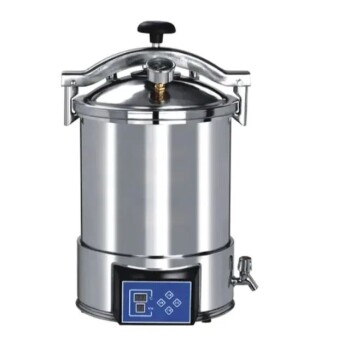
- Portable High Pressure Laboratory Autoclave Steam Sterilizer for Lab Use
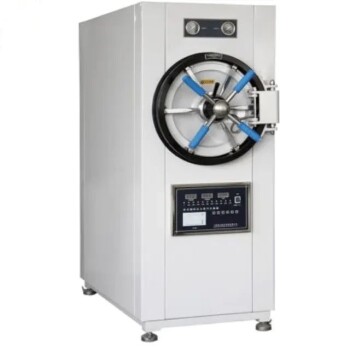
- Laboratory Horizontal Autoclave Steam Sterilizer Lab Microcomputer Sterilizer
- Desktop Fast High Pressure Laboratory Autoclave Sterilizer 16L 24L for Lab Use
- Portable Digital Display Automatic Laboratory Sterilizer Lab Autoclave for Sterilization Pressure
- Desktop Fast Laboratory Autoclave Sterilizer 35L 50L 90L for Lab Use
People Also Ask
- Why is a laboratory high-pressure autoclave sterilizer necessary? Ensure Accuracy in Antibacterial Research
- What is the role of a laboratory high-pressure autoclave in the conversion of furfural to piperidine? Optimize Yields
- What are the two types of autoclave used in the laboratory? Gravity vs. Pre-Vacuum Explained
- What precautions should be taken during autoclave in laboratory? A Complete Safety Guide to Prevent Burns and Explosions
- What extreme conditions does a laboratory autoclave simulate? Testing Wear Resistance of Nuclear Fuel Cladding