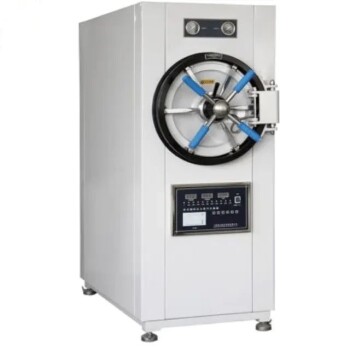
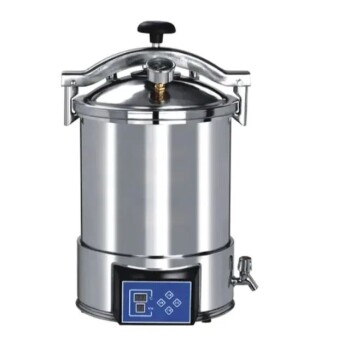
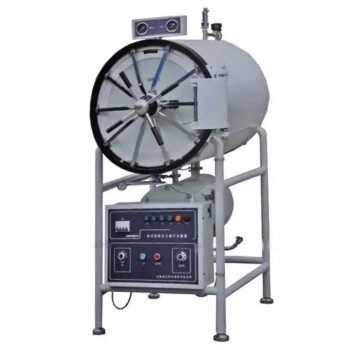
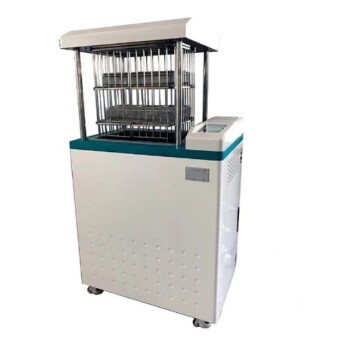
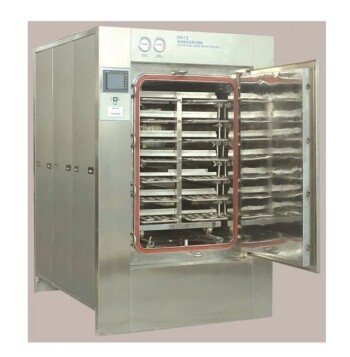
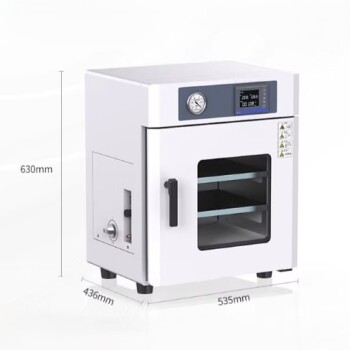
The fundamental necessity of a laboratory autoclave in preparing Postgate Medium B (PMB) lies in its ability to generate a high-temperature, high-pressure environment—typically 121°C—that is critical for deep sterilization. This rigorous thermal treatment is the only reliable method to ensure the liquid culture medium is completely free of background biological noise before your specific experiment begins.
By eliminating all potential microbial contaminants, the autoclave allows researchers to isolate the specific activity of Sulfate-Reducing Bacteria (SRB). This ensures that any data collected on Microbiologically Influenced Corrosion (MIC) results solely from the target bacteria, preserving the integrity of single-variable control.
The Mechanics of Deep Sterilization
Reaching the Thermal Threshold
Standard boiling at atmospheric pressure is often insufficient to destroy hardy microbial contaminants or spores.
The autoclave utilizes pressure to raise the boiling point of water, achieving a consistent temperature of 121°C.
Penetrating the Liquid Medium
This specific combination of heat and pressure drives thermal energy deep into the liquid volume of the PMB.
It ensures that every milliliter of the medium is treated equally, leaving no "cold spots" where contaminants could survive.
Protecting Experimental Integrity
Isolating the Target Variable
In Sulfate-Reducing Bacteria (SRB) research, specifically regarding Microbiologically Influenced Corrosion (MIC), causality is key.
You must be certain that observed corrosion is caused by the SRB you introduced, not by a random environmental microbe.
Eliminating Microbial Competition
Postgate Medium B is a nutrient-rich environment that supports many types of microbial life, not just SRB.
Without deep sterilization, faster-growing contaminants can outcompete your target SRB for resources, leading to culture failure or skewed growth rates.
Common Pitfalls to Avoid
The Risk of "Clean" vs. "Sterile"
A common mistake in media preparation is assuming that visually clear water or reagents are biologically neutral.
Microbial contamination is invisible to the naked eye but can act as a rogue variable that completely invalidates experimental results.
Incomplete Sterilization Methods
Relying on lower temperatures or simple boiling fails to achieve the "deep sterilization" mandated by the primary reference.
Only the high-pressure environment of the autoclave guarantees the elimination of all potential biological interferences.
Making the Right Choice for Your Goal
To ensure your SRB research stands up to peer review, consider your specific experimental objectives:
- If your primary focus is Establishing Causality in MIC: You must use an autoclave to guarantee that corrosion rates are attributable strictly to the specific SRB strain being tested.
- If your primary focus is Long-term Culture Maintenance: You must use an autoclave to prevent aggressive contaminants from overrunning and destroying your stock cultures.
The autoclave is not just a heating device; it is the gatekeeper of your scientific control.
Summary Table:
| Feature | Requirement for PMB Preparation | Role in SRB Research |
|---|---|---|
| Sterilization Temp | 121°C (High-Pressure Steam) | Eliminates hardy spores and background biological noise |
| Medium Integrity | Deep Thermal Penetration | Ensures nutrient-rich PMB is 100% free of contaminants |
| Variable Control | Single-Variable Isolation | Guarantees observed corrosion is caused only by target SRB |
| Culture Success | Competitive Exclusion | Prevents fast-growing microbes from outcompeting SRB strains |
Elevate Your Research Precision with KINTEK Solutions
In the rigorous world of SRB research and Microbiologically Influenced Corrosion (MIC) studies, experimental integrity is everything. KINTEK specializes in high-performance laboratory equipment designed to meet the strictest sterilization standards. Our advanced high-pressure autoclaves and reactors ensure your Postgate Medium B is perfectly sterile, protecting your cultures from competitive contamination.
Beyond sterilization, KINTEK offers a comprehensive range of high-temperature furnaces, crushing systems, and specialized electrochemical cells to support your entire material science and microbiology workflow. Don't let microbial noise invalidate your data—partner with KINTEK for reliable, peer-review-ready results.
Ready to optimize your lab's sterilization process? Contact KINTEK today to find the perfect solution for your research!
References
- Mohamed Riyadh Ismail, S.Z.H. Shah. Effect of Acetate on Microbiologically Influenced Corrosion of Internal Pipeline Surfaces. DOI: 10.3390/met13121974
This article is also based on technical information from Kintek Solution Knowledge Base .
Related Products
- Desktop Fast Laboratory Autoclave Sterilizer 20L 24L for Lab Use
- Laboratory Horizontal Autoclave Steam Sterilizer Lab Microcomputer Sterilizer
- Desktop Fast Laboratory Autoclave Sterilizer 35L 50L 90L for Lab Use
- Desktop Fast High Pressure Laboratory Autoclave Sterilizer 16L 24L for Lab Use
- High Pressure Laboratory Autoclave Reactor for Hydrothermal Synthesis
People Also Ask
- What are the two types of autoclave used in the laboratory? Gravity vs. Pre-Vacuum Explained
- What is a laboratory autoclave? A Guide to Sterilization with Pressurized Steam
- What precautions should be taken during autoclave in laboratory? A Complete Safety Guide to Prevent Burns and Explosions
- What extreme conditions does a laboratory autoclave simulate? Testing Wear Resistance of Nuclear Fuel Cladding
- What role does a laboratory autoclave play in HEA corrosion research? Key to Validating Advanced Reactor Materials