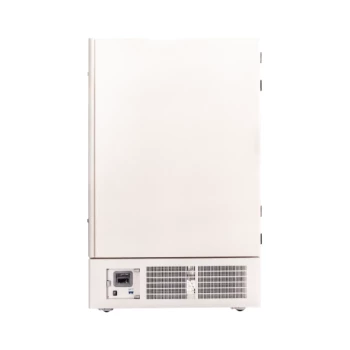
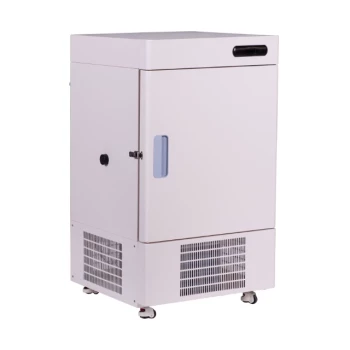
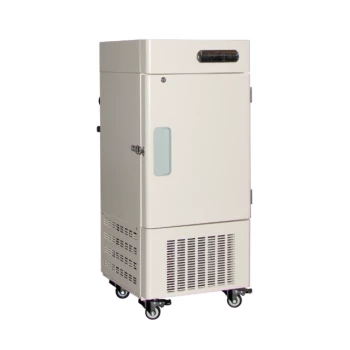
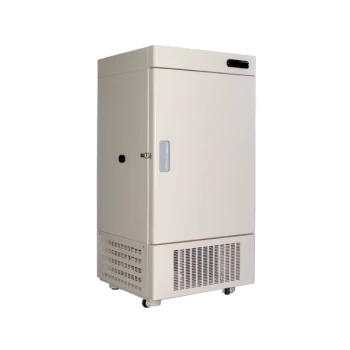
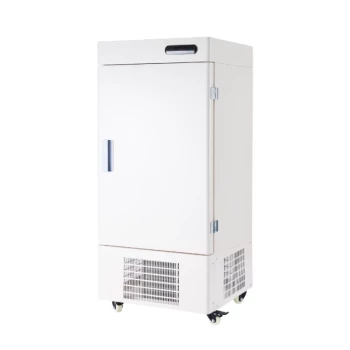
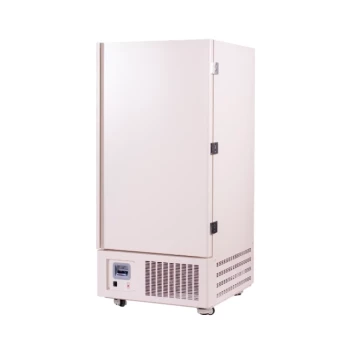
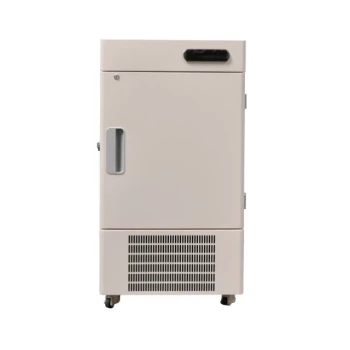
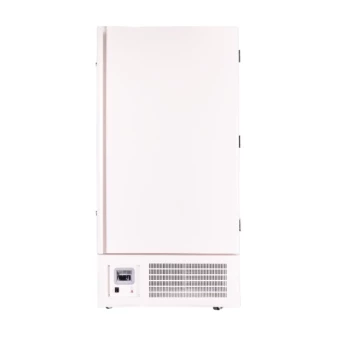
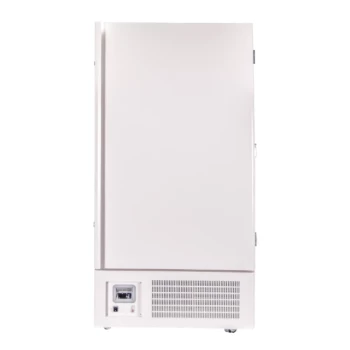
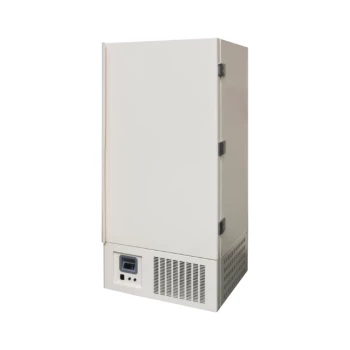
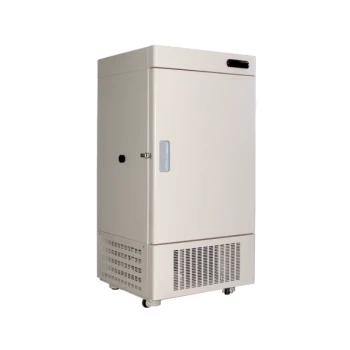
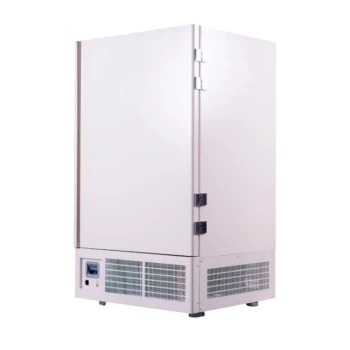
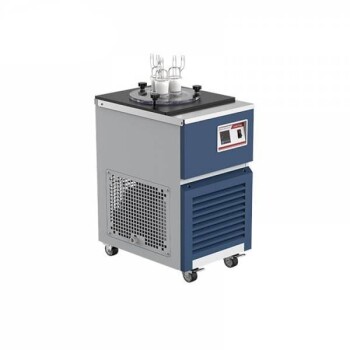
Laboratory ultra-low temperature (ULT) freezers are critical instruments for the long-term preservation of Sulfate-Reducing Bacteria (SRB). By maintaining a temperature range of -60°C to -80°C, these freezers effectively suspend the bacteria's biochemical activities, forcing the organism into a protective dormant state.
The primary value of a ULT freezer lies in its ability to facilitate programmed cooling. This precise temperature management minimizes the formation of lethal intracellular ice crystals, thereby significantly improving the survival rate of the bacteria upon recovery.
The Mechanics of Bacterial Preservation
Suspending Biochemical Activity
The fundamental role of the ULT freezer is to halt the metabolic processes of the bacteria. By holding samples between -60°C and -80°C, the freezer stops the chemical reactions that typically drive cell degradation or aging.
Inducing Dormancy
At these ultra-low temperatures, Sulfate-Reducing Bacteria enter a state of suspended animation. This dormancy allows the samples to remain viable for extended periods without requiring nutrients or active maintenance.
The Critical Role of Cooling Dynamics
The Importance of Programmed Cooling
Successful preservation relies on more than just reaching a cold temperature; it depends on how that temperature is reached. ULT freezers are utilized in programmed cooling processes to lower the temperature at a specific, controlled rate.
Preventing Cellular Damage
The greatest threat to SRB during freezing is the formation of intracellular ice crystals. If a sample freezes too quickly or unevenly, these sharp crystals can puncture cell walls, destroying the bacteria.
Maximizing Recovery Rates
By controlling the cooling rate to minimize ice formation, the structural integrity of the bacteria is preserved. This directly correlates to a higher survival rate when the samples are eventually thawed and revived for research.
Understanding the Risks and Precision
The Consequence of Uncontrolled Cooling
The primary pitfall in SRB preservation is a lack of precision during the freezing phase. Without the controlled environment provided by ULT freezer protocols, ice crystallization becomes highly probable.
The Link Between Structure and Viability
It is essential to understand that structural damage is often irreversible. If the cooling process fails to prevent intracellular ice, the bacteria may fail to recover, rendering the preserved sample useless.
Making the Right Choice for Your Goal
To ensure the successful preservation of your bacterial strains, focus on the specific capabilities of your preservation protocol.
- If your primary focus is long-term viability: Ensure your protocol utilizes programmed cooling rather than snap-freezing to prevent cell wall damage.
- If your primary focus is equipment selection: Verify that the freezer can maintain a stable environment within the -60°C to -80°C range to ensure complete biochemical suspension.
Precision in the cooling process is the single most important factor in ensuring your bacteria survive the freeze.
Summary Table:
| Feature | Role in SRB Preservation | Key Benefit |
|---|---|---|
| Temperature Range | Maintains -60°C to -80°C | Complete suspension of biochemical activity |
| Cooling Dynamics | Enables programmed cooling rates | Prevents lethal intracellular ice crystal formation |
| Biological State | Induces cellular dormancy | Ensures long-term viability without nutrient intake |
| Structural Integrity | Protects cell wall boundaries | Maximizes bacterial recovery rates post-thawing |
Secure Your Research with KINTEK Precision Cooling
Preserving delicate microbial strains like Sulfate-Reducing Bacteria requires more than just cold storage—it demands absolute thermal stability and precision. KINTEK specializes in high-performance laboratory equipment, offering advanced ULT freezers, cold traps, and freeze dryers designed to protect your samples' structural integrity.
Whether you are managing complex bacterial libraries or conducting sensitive battery research, our comprehensive portfolio—from ultra-low temperature freezers to high-pressure reactors—is engineered to meet the rigorous demands of modern science.
Don't risk irreversible cellular damage. Contact KINTEK today to find the perfect cooling solution for your lab!
References
- Ivan Kushkevych, Simon K.‐M. R. Rittmann. Distribution of Sulfate-Reducing Bacteria in the Environment: Cryopreservation Techniques and Their Potential Storage Application. DOI: 10.3390/pr9101843
This article is also based on technical information from Kintek Solution Knowledge Base .
Related Products
- 938L Vertical Ultra Low Temperature Freezer for Advanced Laboratory Storage
- 108L Vertical Ultra Low Temperature ULT Freezer
- 28L Compact Upright Ultra Low Temperature Freezer for Laboratory
- 208L Advanced Precision Laboratory Ultra Low Temperature Freezer for Cold Storage
- 158L Precision Vertical Ultra Low Freezer for Laboratory Applications
People Also Ask
- What features should be considered when choosing an ultra low temperature freezer? Secure Your Samples with Precision
- How is the interior of an ultra low temperature freezer designed for optimal storage? Maximize Sample Integrity with Smart Design
- How is temperature controlled in ultra low temperature freezers? A Guide to Stable -80°C Storage
- What is an ultra-low temperature freezer? Protect Your Most Valuable Biological Samples
- What is cryopreservation and how do ultra low temperature freezers facilitate this process? Preserve Your Samples for the Long Term