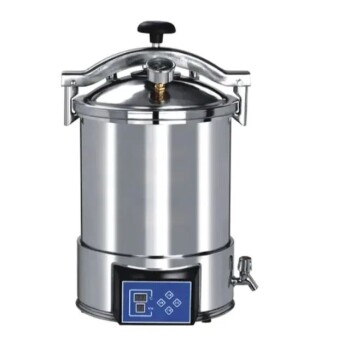
In the hydrothermal synthesis of alpha-cobalt hydroxide ($\alpha$-Co(OH)$_2$), a Teflon-lined autoclave serves as a specialized reaction vessel that facilitates controlled recrystallization and oriented crystal growth under high-pressure conditions. By maintaining a sealed environment at 180 °C, it allows for the full hydrolysis of cobalt ions, resulting in a colloidal solution of ultra-thin nanosheets characterized by uniform morphology and high structural stability.
The Teflon-lined autoclave provides the necessary subcritical environment to drive the oriented growth of cobalt ions into stable nanosheets while protecting the reaction from metallic contamination and chemical corrosion.
Environmental Control for Nanosheet Formation
Achieving Subcritical Conditions
The primary function of the autoclave is to generate autogenous pressure, allowing the liquid reaction mixture to reach temperatures well above its boiling point.
At 180 °C, the solvent enters a subcritical state, which significantly increases the solubility and reactivity of the cobalt precursors.
This high-energy environment is essential for the full hydrolysis of cobalt ions, a process that is difficult to complete under standard atmospheric pressure.
Driving Oriented Growth
The transition from metal ions to solid nanostructures requires a phase of controlled recrystallization.
Under the constant pressure and heat of the autoclave, cobalt ions undergo oriented growth, where the crystal lattice expands in specific directions to form two-dimensional structures.
This specific growth mechanism is what produces the ultra-thin nanosheets required for high-performance composite materials.
The Functional Importance of the Teflon Liner
Chemical Inertness and Purity
The Teflon liner acts as a critical barrier between the reactive solution and the stainless steel body of the autoclave.
It provides excellent resistance to corrosion, protecting the vessel from the potentially harsh acidic or alkaline environments used during synthesis.
More importantly, it prevents metal ion contamination from the autoclave walls, ensuring that the final $\alpha$-Co(OH)$_2$ product remains chemically pure.
Promoting Uniform Nucleation
The non-stick, smooth surface of the Teflon liner helps maintain a homogeneous reaction environment.
This uniformity ensures that nucleation—the beginning of crystal formation—occurs evenly throughout the solution rather than localized on the vessel walls.
The result is a product with uniform morphology, meaning the nanosheets are consistent in size, thickness, and structural integrity.
Understanding the Trade-offs
Temperature Limitations
While Teflon is highly resistant to chemicals, it has a strict thermal limit, typically around 220 °C to 250 °C.
Attempting to synthesize materials at temperatures exceeding these limits can lead to liner deformation or the release of toxic decomposition products.
For reactions requiring higher temperatures, researchers must often switch to more expensive liners, such as PPL (polyphenylene polymers).
Pressure and Safety Risks
The internal pressure of the autoclave is determined by the filling ratio of the solvent, which usually should not exceed 80%.
If the autoclave is overfilled, the expansion of the liquid at 180 °C can cause a catastrophic pressure spike, leading to mechanical failure.
Conversely, a filling ratio that is too low may fail to generate the autogenous pressure required for the oriented growth of the nanosheets.
Applying This to Your Synthesis Project
When utilizing a Teflon-lined autoclave for hydrothermal synthesis, your approach should vary based on your specific material requirements:
- If your primary focus is maximum crystallinity: Ensure the autoclave is kept at a constant 180 °C for the full duration of the reaction to allow for complete, ordered recrystallization.
- If your primary focus is high chemical purity: Inspect the Teflon liner for any scratches or pitting before use, as these defects can harbor contaminants or allow the solution to reach the steel shell.
- If your primary focus is nanosheet uniformity: Optimize the filling ratio (typically 60-80%) to ensure consistent pressure and uniform nucleation across the entire batch.
Mastering the balance of temperature, pressure, and containment within the autoclave is the definitive step in producing high-quality $\alpha$-Co(OH)$_2$ nanosheets.
Summary Table:
| Feature | Role in Hydrothermal Synthesis | Impact on $\alpha$-Co(OH)$_2$ Nanosheets |
|---|---|---|
| Subcritical Environment | Maintains 180°C autogenous pressure | Ensures full hydrolysis and high reactivity |
| Teflon Liner | Provides chemical inertness | Prevents metal contamination and ensures purity |
| Oriented Growth | Controlled recrystallization phase | Produces ultra-thin, two-dimensional structures |
| Smooth Surface | Promotes uniform nucleation | Ensures consistent size, thickness, and morphology |
| Filling Ratio (60-80%) | Regulates internal pressure | Prevents mechanical failure while driving crystal expansion |
Elevate Your Material Synthesis with KINTEK
Precision is the key to high-performance nanomaterials. KINTEK specializes in premium laboratory equipment designed to meet the rigorous demands of advanced research. Whether you are synthesizing $\alpha$-Co(OH)$_2$ nanosheets or developing new composites, our high-temperature high-pressure reactors and autoclaves provide the contamination-free environment and thermal stability you need for success.
Our extensive portfolio includes:
- Thermal Processing: Muffle, tube, vacuum, and atmosphere furnaces.
- Sample Preparation: Crushing, milling systems, and hydraulic pellet presses.
- Specialized Labware: High-purity ceramics, crucibles, and PTFE consumables.
Don't let equipment limitations hinder your discovery. Contact KINTEK today to find the perfect solution for your laboratory and experience the benefit of industry-leading reliability and technical support.
References
- Xinwu Xu, Yibo He. Corrosion-resistant cobalt phosphide electrocatalysts for salinity tolerance hydrogen evolution. DOI: 10.1038/s41467-023-43459-w
This article is also based on technical information from Kintek Solution Knowledge Base .
Related Products
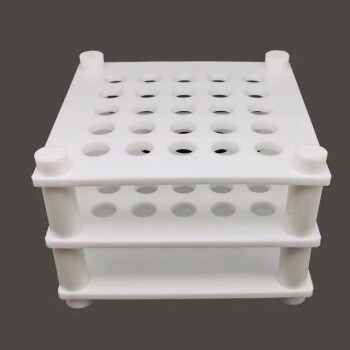
- Custom PTFE Teflon Parts Manufacturer for Centrifuge Tube Racks
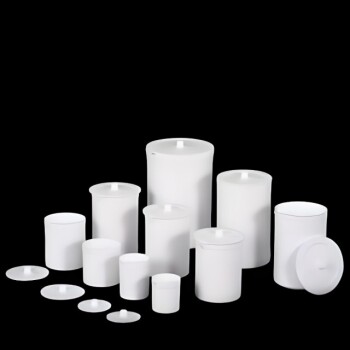
- Custom PTFE Teflon Parts Manufacturer PTFE Beaker and Lids
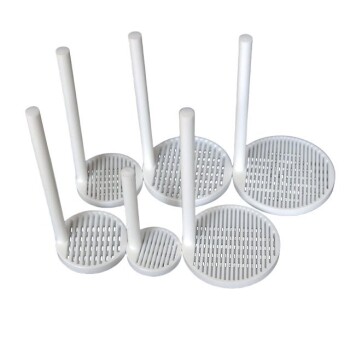
- Custom PTFE Teflon Parts Manufacturer for Cleaning Racks
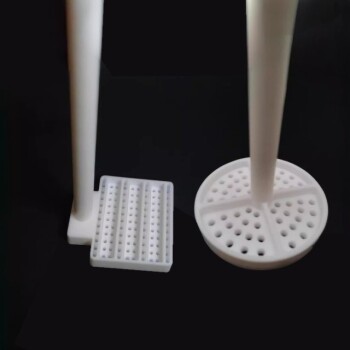
- Custom PTFE Teflon Parts Manufacturer Corrosion Resistant Cleaning Rack Flower Basket
- Custom Machined and Molded PTFE Teflon Parts Manufacturer for Laboratory ITO FTO Conductive Glass Cleaning Flower Basket
People Also Ask
- Why is slender PTFE tubing necessary for flow control in multi-channel catalyst aging? Ensure Equal Gas Distribution
- Why are PTFE containers required for PCT leaching tests? Ensure Chemical Inertness and Analytical Precision
- Why are PTFE containers necessary for selective HF etching of MAX phases? Ensure Safe & Pure MXene Synthesis
- What role do PTFE containers play in trace metal detection? Ensure Analytical Precision in Photocatalysis Studies
- Why is a PTFE container required for acid leaching of silicon nanosheets? Ensure High Purity and Safety