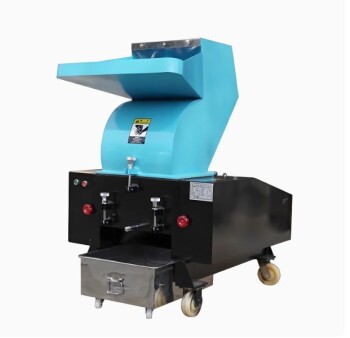
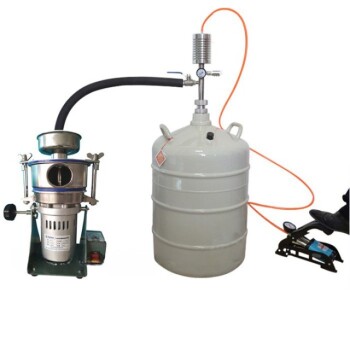
Industrial grinders serve as the critical bridge between raw waste materials and high-quality modified biochar by mechanically reducing precursors into fine, high-surface-area powders. This physical refinement ensures that materials like agricultural waste or mineral sources can pass through standard analytical sieves—typically a 40-mesh screen—to achieve the particle size uniformity required for consistent chemical modification.
An industrial grinder is used to maximize the specific surface area of raw materials, ensuring uniform heat transfer and full contact between carbon and mineral sources during the co-pyrolysis process. Without this precision grinding, the final biochar would lack the structural homogeneity and chemical reactivity necessary for industrial or environmental applications.
Optimizing Physical Properties for Chemical Integration
Maximizing Specific Surface Area
The primary function of the grinder is to physically break down large, irregular materials like oyster shells, rice husks, or wood bark into a fine biomass powder. This process dramatically increases the specific surface area, which is the total area available for chemical reactions per unit of mass.
Facilitating Uniform Mixing
In the preparation of modified biochar, researchers often combine carbon sources with modifiers like calcium or boron. By reducing all raw materials to a consistent powder, the grinder allows for full contact and uniform distribution between different components, preventing the formation of localized clusters that would weaken the final product's effectiveness.
Standardizing Particle Size Through Sieving
Following the grinding process, material is typically passed through a standard analytical sieve (such as 40-mesh or 100-mesh). This ensures a narrow particle size distribution, which is essential for maintaining stable reaction kinetics during the subsequent thermal stages of production.
Enhancing Thermal Efficiency During Pyrolysis
Ensuring Uniform Heat and Mass Transfer
Small, uniform particles allow heat to be transferred rapidly and consistently to the core of every grain. This prevents the "cold core" effect found in larger chunks, leading to improved conversion efficiency and ensuring that the entire batch of biomass is carbonized at the same rate.
Maintaining Consistent Reaction Kinetics
When particles are uniform, the chemical transformations that occur during heating happen simultaneously throughout the reactor. This consistency leads to a more homogeneous biochar product, with predictable pore structures and chemical functionalities across the entire yield.
Improving Solvent and Gas Penetration
During modification or thermal analysis, gases and chemical solvents must penetrate the biomass. A finely ground powder allows for deeper and more rapid solvent penetration, which is critical when pre-treating materials like pharmaceutical residues or woody biomass.
Understanding the Trade-offs and Limitations
Energy Consumption vs. Particle Fineness
While finer particles generally lead to better biochar, the energy required to grind materials to extremely small sizes (e.g., 100-mesh) increases exponentially. Operators must balance the energy costs of the grinding stage against the performance gains of the final modified biochar.
Heat Generation During Grinding
High-speed industrial grinders can generate significant heat, which may cause premature thermal degradation of sensitive biomass or the loss of volatile organic compounds. In some cases, cooling systems or intermittent grinding cycles are required to maintain the chemical integrity of the raw material.
Material Loss and Dust Management
The grinding process naturally produces very fine dust, which can lead to material loss if not managed with proper filtration. Additionally, these fine powders can pose respiratory hazards or explosion risks in an industrial setting, requiring robust containment and safety protocols.
Applying Grinding Strategies to Your Production Goal
How to Apply This to Your Project
To achieve the best results in modified biochar preparation, align your grinding strategy with your specific material and performance requirements:
- If your primary focus is Maximum Surface Reactivity: Utilize a high-speed multi-functional grinder to reach a 100-mesh consistency, ensuring the highest possible area for chemical bonding.
- If your primary focus is Scaling Production for Agricultural Use: Target a 40-mesh (0.425 mm) particle size to balance energy efficiency with sufficient uniformity for co-pyrolysis.
- If your primary focus is Processing High-Moisture Biomass: Ensure the material is thoroughly dried before grinding to prevent clogging and to maintain the efficiency of the industrial cutting blades.
By mastering the mechanical pre-treatment stage, you ensure that the subsequent chemical and thermal processes can operate at peak efficiency, resulting in a superior modified biochar.
Summary Table:
| Feature | Role in Biochar Pre-treatment | Impact on Final Product |
|---|---|---|
| Surface Area Expansion | Breaks down biomass into fine powder | Increases chemical reactivity and bonding sites |
| Particle Uniformity | Ensures materials pass 40-100 mesh sieves | Results in a homogeneous biochar structure |
| Material Mixing | Enables full contact between carbon and modifiers | Prevents localized clusters and weak effectiveness |
| Thermal Efficiency | Eliminates "cold cores" in biomass particles | Ensures uniform carbonization and stable kinetics |
| Solvent Penetration | Facilitates rapid gas and liquid flow | Optimizes chemical modification and thermal analysis |
Elevate Your Biochar Research with Precision Pre-treatment
High-quality modified biochar starts with precise mechanical preparation. At KINTEK, we understand that the consistency of your biomass powder dictates the success of your pyrolysis and chemical modification. Whether you are aiming for maximum surface reactivity or scaling production for agricultural use, our laboratory and industrial solutions provide the reliability you need.
Our comprehensive portfolio includes:
- High-Performance Grinding & Milling Systems: Achieve the exact 40-mesh or 100-mesh consistency required for your precursors.
- Standardized Sieving Equipment: Ensure narrow particle size distribution for stable reaction kinetics.
- Advanced Thermal Processing: A full range of high-temperature furnaces (muffle, tube, vacuum, and atmosphere) and CVD/PECVD systems for precise co-pyrolysis.
- Support Equipment: From pellet presses to ULT freezers and crucibles, we provide everything needed for a seamless workflow.
Ready to optimize your material processing? Contact our experts today to find the perfect equipment tailored to your specific biochar production goals.
References
- Cancan Xu, Lvjun Chen. Removal of Phosphorus from Domestic Sewage in Rural Areas Using Oyster Shell-Modified Agricultural Waste–Rice Husk Biochar. DOI: 10.3390/pr11092577
This article is also based on technical information from Kintek Solution Knowledge Base .
Related Products
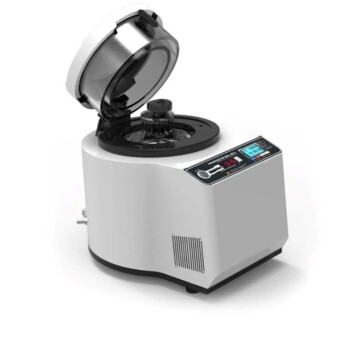
- Laboratory High Throughput Tissue Grinding Mill Grinder
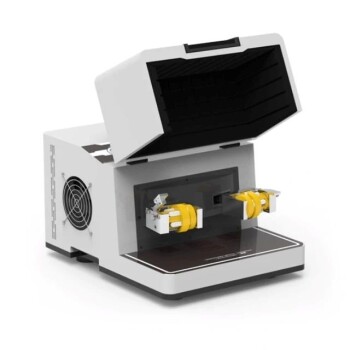
- Laboratory Hybrid Tissue Grinding Mill
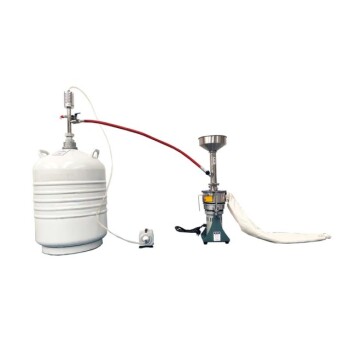
- Liquid Nitrogen Cryogenic Grinder Mill Cryomill Airflow Ultrafine Pulverizer
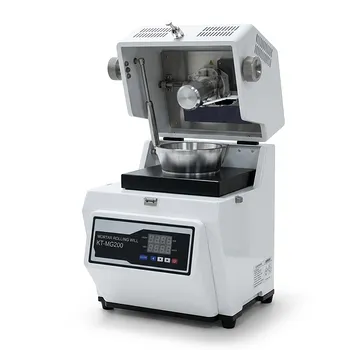
- Laboratory Grinding Mill Mortar Grinder for Sample Preparation
- Powerful Plastic Crusher Machine
People Also Ask
- What is the purpose of using a laboratory grinder and standard sieves? Unlock Precise Rice Husk Pretreatment
- What is the purpose of using a laboratory grinder with specific mesh sieves for oat straw? Optimize Pellet Quality
- What is the role of laboratory-grade grinders and sieves in sample prep? Ensure High-Precision Corrosion Analysis
- How do laboratory grinders and standard sieving systems ensure the quality of feedstock for torrefaction?
- What does a grinder do in a laboratory? Achieve Homogeneous Sample Preparation for Accurate Analysis