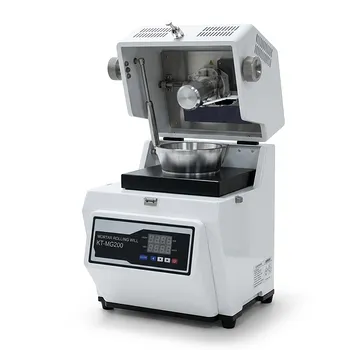
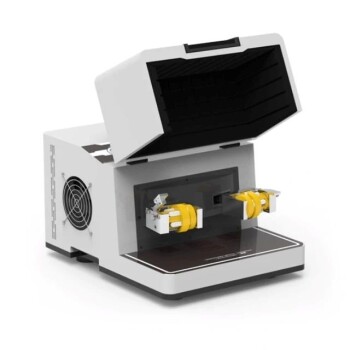
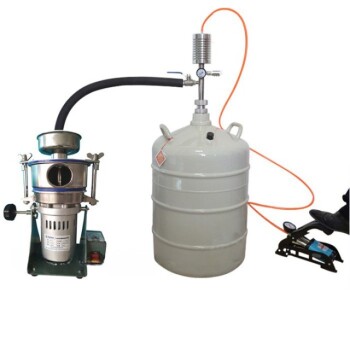
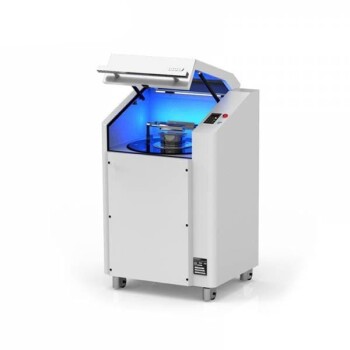
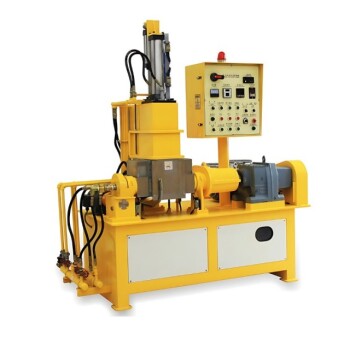
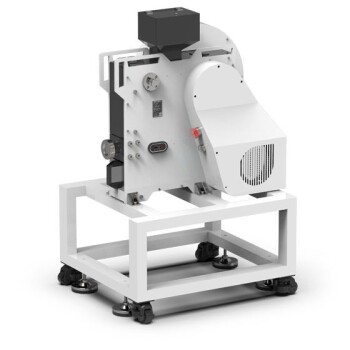
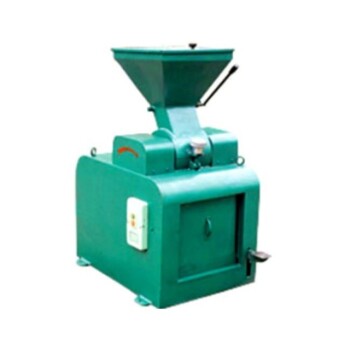
To ensure experimental precision and reliability, the primary purpose of using a laboratory grinder and standard sieves is to mechanically process raw rice husks into a uniform particle size, specifically between 1.40 and 2.36 mm. This physical standardization is a prerequisite for successful chemical pretreatment, as it guarantees that subsequent alkaline solution impregnation occurs evenly throughout the entire biomass sample.
Core Takeaway The combination of grinding and sieving eliminates experimental errors caused by diffusion limitations. By standardizing particle size, you ensure that chemical reactions proceed at a consistent rate, yielding reliable and repeatable kinetic data during fractionation experiments.
The Science Behind Particle Size Standardization
Achieving Material Homogeneity
Raw agricultural residues like rice husks are naturally inconsistent in shape and density. Using a laboratory grinder breaks this variable material down into a manageable form.
However, grinding alone produces a chaotic mix of dust and large chunks. Standard sieves act as a quality control filter, isolating only the particles that fall within the 1.40 to 2.36 mm range. This creates a homogeneous feedstock essential for controlled experimentation.
Facilitating Uniform Impregnation
Effective pretreatment relies on the interaction between the solid biomass and liquid chemicals, such as alkaline solutions.
When particles are uniform, the solution penetrates the biomass structure at a predictable rate. This ensures that every gram of material receives the same degree of chemical treatment, preventing scenarios where smaller particles are over-processed while larger particles remain under-reacted.
Improving Kinetic Data Quality
In fractionation experiments, researchers often measure reaction kinetics—the speed and mechanism of chemical changes.
If particle sizes vary, the "diffusion path" (the distance chemicals must travel into the particle) varies as well. This creates diffusion limitations, where the reaction rate is throttled by physical transport rather than chemical potential. Standardizing size removes this variable, ensuring the data reflects true reaction kinetics rather than physical inconsistencies.
Common Pitfalls to Avoid
The Risk of Neglecting Sizing
It is a common error to view grinding as merely "making things smaller." Failing to use sieves to strictly enforce the specific size range (1.40–2.36 mm) introduces noise into your data.
Without sieving, the presence of oversized particles introduces significant diffusion lag. Conversely, excessive "fines" (very small particles) react too quickly. This mixture leads to erratic results that are difficult to reproduce or scale.
Balancing Size and Yield
While not explicitly detailed in the primary reference, the focus on a specific range implies a trade-off. Selecting a tight range like 1.40–2.36 mm is necessary for accuracy, even though it requires discarding material that falls outside these bounds. Accuracy is prioritized over total raw material yield during this phase.
Making the Right Choice for Your Goal
To maximize the value of your pretreatment process, apply these principles based on your specific experimental objectives:
- If your primary focus is data reproducibility: Strictly enforce the 1.40 to 2.36 mm sieve range to eliminate diffusion limitations as a source of error.
- If your primary focus is reaction efficiency: Use this preparation method to guarantee that your alkaline solution impregnates the biomass uniformly, maximizing the effectiveness of the chemical load.
Standardizing your feedstock is the single most effective step you can take to transform variable raw waste into a consistent scientific substrate.
Summary Table:
| Parameter | Targeted Range / Tool | Scientific Purpose |
|---|---|---|
| Particle Size | 1.40 mm to 2.36 mm | Ensures material homogeneity and uniform chemical penetration. |
| Grinder Role | Mechanical processing | Breaks down raw biomass into manageable, smaller fractions. |
| Sieve Role | Quality Control Filter | Eliminates 'fines' and oversized chunks to prevent diffusion lag. |
| Key Outcome | Kinetic Data Reliability | Removes physical transport variables to reveal true reaction rates. |
Elevate Your Biomass Research with KINTEK Precision
Consistency is the foundation of breakthrough science. At KINTEK, we specialize in the high-performance laboratory equipment you need to transform raw agricultural residues into standardized scientific substrates.
Whether you are refining rice husk pretreatment or exploring complex fractionation, our comprehensive range of crushing and milling systems, precision sieving equipment, and high-temperature furnaces ensures your samples meet the most rigorous experimental standards. From PTFE products and ceramics to advanced high-pressure reactors, we provide the tools required to eliminate diffusion limitations and achieve repeatable kinetic data.
Ready to optimize your lab's efficiency? Contact KINTEK today to discover how our expert solutions and high-quality consumables can streamline your pretreatment workflows and enhance your research outcomes.
References
- Hyun Jin Jung, Kyeong Keun Oh. NaOH-Catalyzed Fractionation of Rice Husk Followed by Concomitant Production of Bioethanol and Furfural for Improving Profitability in Biorefinery. DOI: 10.3390/app11167508
This article is also based on technical information from Kintek Solution Knowledge Base .
Related Products
- Laboratory Grinding Mill Mortar Grinder for Sample Preparation
- Laboratory High Throughput Tissue Grinding Mill Grinder
- Laboratory Hybrid Tissue Grinding Mill
- Small Cryogenic Grinder Cryomill Cryogrinder with Liquid Nitrogen for Laboratory Use
- Lab Vibration Mill
People Also Ask
- What laboratory apparatus is used for grinding? Match the Right Mill to Your Sample Material
- What is the function of a laboratory grinding mill? Achieve Precise Sample Preparation for Accurate Results
- What is the role of laboratory-grade grinders and sieves in sample prep? Ensure High-Precision Corrosion Analysis
- What is the purpose of using a laboratory grinder with specific mesh sieves for oat straw? Optimize Pellet Quality
- How do laboratory grinders and standard sieving systems ensure the quality of feedstock for torrefaction?