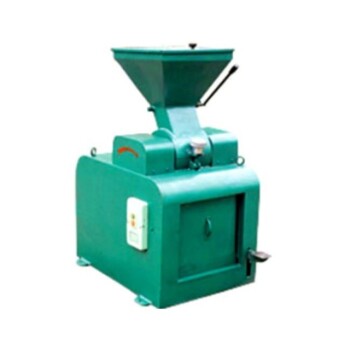
Precision in particle size is the foundation of pellet quality. The primary purpose of using a laboratory grinder equipped with specific mesh sieves is to mechanically refine biologically pretreated oat straw into a consistent, uniform granular powder. This process does not simply reduce volume; it strictly controls the material's physical state to ensure it meets the specific compression requirements of the molding die.
The use of specific sieve apertures, such as 1.6mm and 1.0mm, allows researchers to manipulate particle size distribution. This control is the deciding factor in achieving high filling density and strong intermolecular bonding forces, both of which are essential for durable pellet formation.
The Mechanics of Particle Preparation
Achieving Granular Uniformity
The pulverization process transforms variable oat straw biomass into a homogeneous powder. By passing the material through specific sieves (specifically 1.6mm and 1.0mm), the grinder acts as a quality control gate.
Only particles that have achieved the correct geometric dimensions are allowed to pass through to the next stage. This eliminates large, irregular fragments that could disrupt the pelletizing process.
Optimizing for the Molding Die
The granular powder produced is not a byproduct; it is an engineered input for the molding die.
For a pellet to form correctly, the material entering the die must possess optimal compression characteristics. The grinder ensures the straw is in the exact physical state required to respond to the pressure applied during molding.
The Impact on Physical Properties
Controlling Filling Density
The specific size of the particles directly dictates the filling density within the pellet mold.
If particles are too large or irregular, large gaps (voids) remain between them, lowering the density. The specific sieves ensure particles are small enough to pack tightly together, maximizing the mass of material that fits into the die volume.
Strengthening Intermolecular Bonding
Perhaps the most critical function of sieving is its influence on intermolecular bonding forces.
Pellets hold together because of the bonds formed between particles under pressure. The specific surface area created by grinding to 1.6mm or 1.0mm optimizes these contact points, allowing the biomass to fuse securely rather than crumbling apart.
Understanding the Trade-offs
The Cost of Imprecision
Skipping this specific sieving step or using incorrect apertures introduces significant risk to pellet integrity.
Without the restriction of the sieve, the particle size distribution becomes too wide. This leads to weak points within the pellet where large particles prevent effective bonding, resulting in a product that is prone to dusting or breaking during transport.
Balancing Size and Energy
While finer particles generally bond better, the text highlights specific sizes (1.6mm and 1.0mm) rather than "micro-dust."
This suggests a balance is required. The material must be fine enough to bond and fill voids, but potentially not so fine that it becomes difficult to handle or compress within the specific constraints of the laboratory molding equipment.
Making the Right Choice for Your Goal
- If your primary focus is Durability: Ensure you utilize the finer sieve settings (such as 1.0mm) to maximize intermolecular bonding forces for a harder pellet.
- If your primary focus is Consistency: Prioritize the use of the laboratory grinder to standardize the pretreated straw, ensuring uniform filling density across every production batch.
The durability of your final energy product is determined effectively before it ever reaches the pellet press, largely defined by the precision of your pulverization sieves.
Summary Table:
| Parameter | Influence on Pelletization | Benefit |
|---|---|---|
| Sieve Aperture | Controls particle size distribution (1.0mm - 1.6mm) | Ensures granular uniformity and eliminates irregular fragments. |
| Filling Density | Dictates the packing efficiency within the molding die | Maximizes material mass and reduces internal voids/gaps. |
| Intermolecular Bonding | Increases the specific surface area of particles | Enhances contact points for stronger, more durable fusion. |
| Material Consistency | Standardizes biologically pretreated biomass | Prevents pellet breakage and dusting during transport. |
Precision Pulverization Starts with KINTEK
Achieve the perfect particle size for your biomass research with KINTEK’s high-performance crushing and milling systems. Whether you are preparing oat straw for pelletization or refining materials for energy production, our laboratory grinders and precision sieving equipment ensure the granular uniformity required for superior density and durability.
From hydraulic pellet presses to specialized sieving solutions, KINTEK provides researchers and labs with the tools needed to optimize every stage of material preparation.
Ready to enhance your pellet quality? Contact KINTEK today for a customized quote!
References
- Wei Gao, Rongfei Zhao. Biological Pretreatment by Solid-State Fermentation of Oat Straw to Enhance Physical Quality of Pellets. DOI: 10.1155/2020/3060475
This article is also based on technical information from Kintek Solution Knowledge Base .
Related Products
- Laboratory Grinding Mill Mortar Grinder for Sample Preparation
- Laboratory High Throughput Tissue Grinding Mill Grinder
- Laboratory Hybrid Tissue Grinding Mill
- Small Cryogenic Grinder Cryomill Cryogrinder with Liquid Nitrogen for Laboratory Use
- Lab Vibration Mill
People Also Ask
- What laboratory apparatus is used for grinding? Match the Right Mill to Your Sample Material
- What is the function of a laboratory grinding mill? Achieve Precise Sample Preparation for Accurate Results
- What is the purpose of using a laboratory grinder and standard sieves? Unlock Precise Rice Husk Pretreatment
- What is the role of laboratory-grade grinders and sieves in sample prep? Ensure High-Precision Corrosion Analysis
- How do laboratory grinders and standard sieving systems ensure the quality of feedstock for torrefaction?