Accurate X-ray diffraction (XRD) analysis of Spark Plasma Sintering (SPS) samples requires mechanical reduction because the SPS process synthesizes materials into highly dense, compact cylindrical blocks that are incompatible with standard powder diffraction methods. You must use grinding equipment, such as mortars or ball mills, to convert these solid compacts into a fine powder and to mechanically remove the residual carbon contamination that accumulates on the sample surface during sintering.
Core Takeaway Grinding is not merely a sizing step; it is a purification and standardization process. It transforms a dense, carbon-contaminated block into a randomized, clean powder, ensuring that your XRD data reflects the true crystal structure of the material rather than surface impurities or grain alignment artifacts.
The Physical Necessity of Grinding
Overcoming High Density
SPS is designed to produce materials with near-theoretical density. The resulting output is a solid cylindrical block, not the loose powder typically required for standard XRD sample holders.
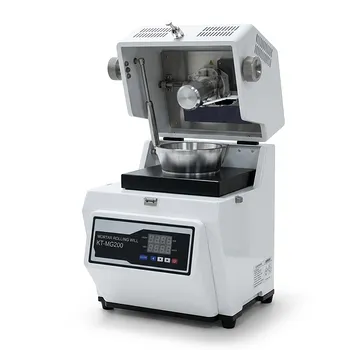
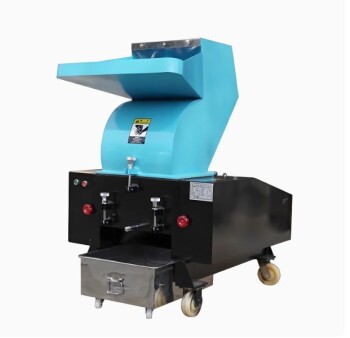
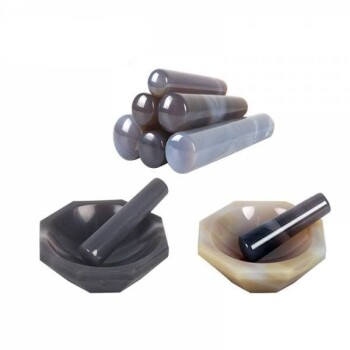
To analyze the bulk material, you must physically break down this dense microstructure. Equipment like mortars or ball mills are essential to crush the sintered block into a form that can be mounted and analyzed.
Removing Process Contamination
The SPS process typically utilizes graphite dies, which inevitably leads to carbon diffusion or adhesion onto the surface of the sample.
If you analyze the sample "as-is," your diffraction pattern will likely show carbon peaks that obscure the material's true composition. Grinding (or polishing) acts as a mechanical cleaning step to strip away this surface carbon layer.
Ensuring Data Integrity
Eliminating Preferred Orientation
A solid sintered block often retains a specific grain alignment (texture) developed during the high-pressure sintering process. This is known as preferred orientation.
If analyzed directly, this alignment distorts the intensity of the diffraction peaks. Grinding the sample into an extremely fine powder breaks up these aligned structures.
Achieving Random Grain Distribution
For XRD to be quantitative and accurate, the crystallites must be randomly distributed.
Fine grinding ensures that the crystal grains are randomized. This results in accurate peak intensities and clear peak shapes, allowing for precise analysis of phase purity and structural changes that may have occurred during heat treatment.
Common Pitfalls to Avoid
Incomplete Surface Removal
A common error is crushing the entire block without first addressing the surface.
If the carbon-rich outer layer is not removed via polishing or selective grinding before the bulk pulverization, you risk mixing the surface contaminants into the final powder. This will introduce impurity peaks into your final dataset.
Insufficient Particle Reduction
Simply breaking the block into coarse chunks is not enough.
As noted in the analysis of materials like LAGP, the powder must be extremely fine. Coarse powders may still exhibit preferred orientation effects, leading to data that misrepresents the material's true crystal symmetry.
Making the Right Choice for Your Goal
To ensure your XRD characterization accurately reflects your SPS synthesis, apply the following preparation strategies:
- If your primary focus is Phase Purity: Ensure you polish or grind away the outer surface of the SPS block first to completely eliminate residual carbon contamination before crushing the bulk material.
- If your primary focus is Structural Refinement: Prioritize ball milling to achieve an extremely fine, homogeneous powder, which eliminates preferred orientation and ensures accurate peak intensities.
By rigorously preparing your sample, you transform a dense, contaminated artifact into reliable, high-quality data.
Summary Table:
| Preparation Requirement | Impact on XRD Quality | Recommended Solution |
|---|---|---|
| Surface Removal | Eliminates carbon peaks from graphite dies | Manual grinding or polishing |
| Particle Size Reduction | Ensures random grain distribution and peak accuracy | Ball mills or mortars |
| Bulk Pulverization | Converts dense blocks into measurable powder | High-energy crushing systems |
| Texture Elimination | Removes preferred orientation artifacts | Fine milling to micron scale |
Elevate Your Materials Research with KINTEK Precision
Achieve flawless XRD data by optimizing your post-SPS sample preparation. KINTEK provides the high-performance laboratory equipment required to transform dense sintered compacts into high-purity analytical samples.
Our specialized range includes:
- Crushing & Milling Systems: High-energy ball mills and mortars for perfect grain randomization.
- SPS-Compatible Tools: Precision grinding equipment to remove surface carbon contamination.
- Thermal & Pressure Solutions: From advanced Spark Plasma Sintering (SPS) systems to hydraulic presses and high-temperature furnaces.
Don't let surface impurities or grain alignment compromise your research. Partner with KINTEK for reliable, high-quality results. Contact our technical specialists today to find the perfect milling or sintering solution for your lab!
Related Products
- Three-dimensional electromagnetic sieving instrument
- Laboratory High Throughput Tissue Grinding Mill Grinder
- Laboratory Grinding Mill Mortar Grinder for Sample Preparation
- Vibrating Disc Mill Small Laboratory Grinding Machine
- Laboratory Disc Cup Vibratory Mill for Sample Grinding
People Also Ask
- Why is sieving equipment essential for the classification of processed bio-activated carbon? Optimize Performance
- What are the limitations of sieving? Understanding the Constraints of Particle Size Analysis
- What are advantages and disadvantages of sieving method? A Guide to Reliable & Cost-Effective Particle Sizing
- How is sieving important? The Critical Role of Particle Size Analysis in Quality Control
- What is sieving and how does it work? A Guide to Accurate Particle Size Analysis