Knowledge What is the role of a laboratory crushing and sieving system? Optimize Copper-Based NH3-SCR Catalyst Preparation
Author avatar

Tech Team · Kintek Solution

Updated 1 day ago

What is the role of a laboratory crushing and sieving system? Optimize Copper-Based NH3-SCR Catalyst Preparation


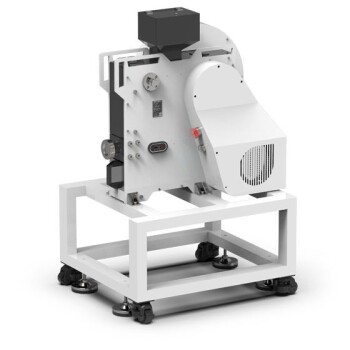
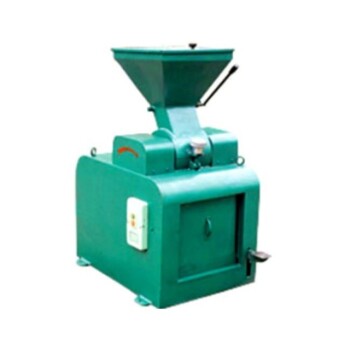
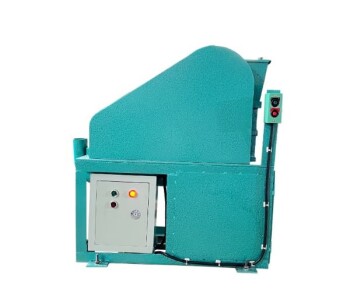
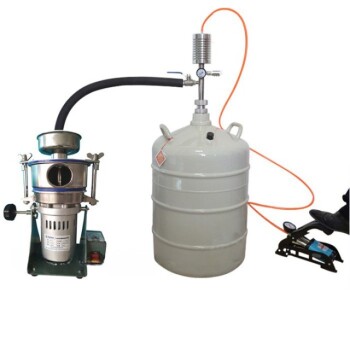
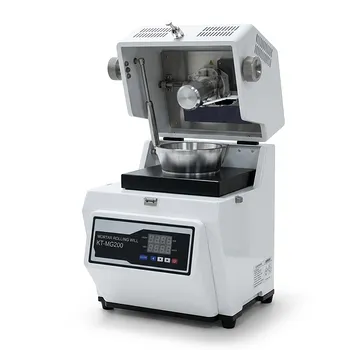
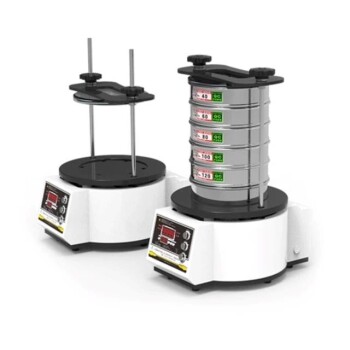
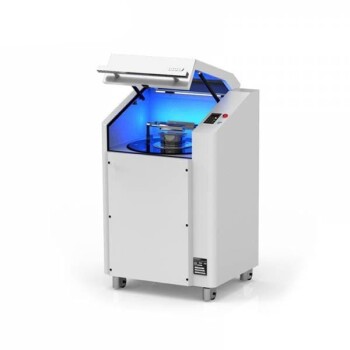
Precision particle sizing is the gatekeeper of valid experimental data. A laboratory crushing and sieving system processes modified activated carbon blocks into a strict size range, typically 0.25 to 1.0 mm, to prepare the material for NH3-SCR reactions. This step is mandatory to adapt the catalyst for the specific hydraulic and kinetic conditions required by micro-fixed-bed reactors.

The system does more than just break down material; it standardizes the experiment. By controlling particle geometry, you remove physical variables like diffusion resistance and channeling, ensuring that your observed reaction rates reflect true catalytic activity rather than mass transfer limitations.

Ensuring Data Integrity in Micro-Reactors

To obtain reliable data from a copper-based activated carbon catalyst, you must control the physical environment of the reaction. The crushing and sieving system achieves this through three specific mechanisms.

Eliminating Diffusion Limitations

The most critical role of this system is removing internal and external diffusion limitations.

If particles are too large, reactants cannot penetrate the catalyst pores efficiently. This leads to false data where the reaction rate appears lower than it actually is. By standardizing the size to 0.25–1.0 mm, the system exposes the active sites effectively.

Establishing Uniform Gas Flow

In a fixed-bed reactor, gas must flow evenly through the catalyst bed.

Irregular or oversized blocks cause "channeling," where gas bypasses the catalyst entirely. Sieving ensures a uniform packed bed, guaranteeing that the gas stream interacts consistently with the copper-based active sites.

Optimizing Pressure Drop

The system ensures the particles are not so small that they choke the reactor.

While smaller particles reduce diffusion issues, they can create excessive back-pressure. The specified range strikes the necessary balance, optimizing the pressure drop across the micro-fixed-bed reactor to allow stable operation.

Distinguishing Lab Prep from Raw Material Processing

It is vital to distinguish the role of the laboratory system from industrial processing, as they serve different stages of the catalyst lifecycle.

Targeting the Finished Catalyst

The laboratory system discussed here focuses on modified activated carbon blocks.

At this stage, the material has already been carbonized and activated. The goal here is strictly to shape the catalyst for the testing apparatus without altering its chemical composition.

Contrast with Raw Material Processing

Industrial systems, by contrast, process raw biomass like coconut shells or wood before activation.

As noted in supplementary literature, industrial crushing increases the total surface area of raw materials to aid heat transfer and reagent penetration during carbonization. While this enhances porosity, it is a precursor step and distinct from the laboratory sizing required for reaction testing.

Understanding the Trade-offs

When utilizing crushing and sieving systems, you must navigate specific operational risks to ensure data quality.

The Risk of "Fines" Generation

Crushing inevitably produces dust or "fines" (particles smaller than 0.25 mm).

If these are not rigorously sieved out, they will clog the reactor bed. This artificially spikes pressure and can skew results by providing a surface area that differs disproportionately from the target sample.

Mechanical Integrity vs. Size Reduction

Aggressive crushing can fracture the internal pore structure of the activated carbon.

The objective is to reduce the block size, not to crush the pores. Over-processing can degrade the mechanical strength of the catalyst, leading to attrition during the actual NH3-SCR reaction.

Making the Right Choice for Your Goal

The configuration of your crushing and sieving process should depend on the specific data you need to collect.

  • If your primary focus is Kinetic Accuracy: Prioritize the lower end of the size range (closer to 0.25 mm) to rigorously eliminate diffusion limitations and measure intrinsic activity.
  • If your primary focus is Reactor Hydraulics: select a narrower, slightly larger particle distribution to minimize pressure drop and test for flow stability.

Ultimately, precise sieving turns a variable natural material into a standardized scientific baseline.

Summary Table:

Mechanism Impact on NH3-SCR Research Purpose
Diffusion Control Eliminates internal/external resistance Ensures measurement of true catalytic activity
Flow Uniformity Prevents gas channeling in fixed-bed Guarantees consistent gas-catalyst interaction
Pressure Balance Optimizes reactor pressure drop Maintains stable operation without clogging
Size Standardization Typically 0.25 - 1.0 mm range Adapts catalyst to micro-reactor hydraulics

Elevate Your Catalyst Research with KINTEK Precision

Don't let diffusion limitations or inconsistent gas flow compromise your experimental data. KINTEK specializes in high-performance laboratory equipment designed for the rigorous demands of material science.

From advanced crushing and milling systems and precision sieving equipment to prepare your copper-based catalysts, to high-temperature furnaces and high-pressure reactors for testing NH3-SCR activity, we provide the tools you need for standardized, reproducible results.

Ready to optimize your catalyst preparation workflow? Contact KINTEK Today to Consult with Our Experts

Related Products

People Also Ask

Related Products

Powerful Plastic Crusher Machine

Powerful Plastic Crusher Machine

KINTEK's powerful plastic crusher machines process 60-1350 KG/H of diverse plastics, ideal for labs and recycling. Durable, efficient, and customizable.

Laboratory Test Sieves and Vibratory Sieve Shaker Machine

Laboratory Test Sieves and Vibratory Sieve Shaker Machine

Efficiently process powders, granules, and small blocks with a high-frequency vibration sieve. Control vibration frequency, screen continuously or intermittently, and achieve accurate particle size determination, separation, and classification.

Laboratory Ten-Body Horizontal Jar Mill for Lab Use

Laboratory Ten-Body Horizontal Jar Mill for Lab Use

The Ten-body horizontal jar mill is for 10 ball mill pots (3000ml or less). It has frequency conversion control, rubber roller movement, and PE protective cover.

Laboratory Vibratory Sieve Shaker Machine for Dry and Wet Three-Dimensional Sieving

Laboratory Vibratory Sieve Shaker Machine for Dry and Wet Three-Dimensional Sieving

KT-VD200 can be used for sieving tasks of dry and wet samples in the laboratory. The screening quality is 20g-3kg. The product is designed with a unique mechanical structure and an electromagnetic vibrating body with a vibration frequency of 3000 times per minute.

Laboratory Vibratory Sieve Shaker Machine Slap Vibrating Sieve

Laboratory Vibratory Sieve Shaker Machine Slap Vibrating Sieve

KT-T200TAP is a slapping and oscillating sieving instrument for laboratory desktop use, with 300 rpm horizontal circular motion and 300 vertical slapping motions to simulate manual sieving to help sample particles pass through better.

Vibratory Sieve Shaker Machine Dry Three-Dimensional Vibrating Sieve

Vibratory Sieve Shaker Machine Dry Three-Dimensional Vibrating Sieve

The KT-V200 product focuses on solving common sieving tasks in the laboratory. It is suitable for sieving 20g-3kg dry samples.

Small Lab Rubber Calendering Machine

Small Lab Rubber Calendering Machine

Small lab rubber calendering machine is used for producing thin, continuous sheets of plastic or rubber materials. It is commonly employed in laboratories, small-scale production facilities, and prototyping environments to create films, coatings, and laminates with precise thickness and surface finish.

Automatic Laboratory Hydraulic Pellet Press Machine for Lab Use

Automatic Laboratory Hydraulic Pellet Press Machine for Lab Use

Experience efficient sample preparation with our Automatic Lab Press Machine. Ideal for material research, pharmacy, ceramics, and more. Features a compact size and hydraulic press functionality with heating plates. Available in various sizes.

Laboratory Sterilizer Lab Autoclave Herbal Powder Sterilization Machine for Plant

Laboratory Sterilizer Lab Autoclave Herbal Powder Sterilization Machine for Plant

The herbal powder sterilization autoclave machine for Chinese medicine uses saturated steam for effective sterilization. It utilizes the heat and penetrative properties of steam, achieves sterilization after heat preservation, and maintains a good drying effect with a dedicated drying system.

Rubber Vulcanizer Vulcanizing Machine Plate Vulcanizing Press for Lab

Rubber Vulcanizer Vulcanizing Machine Plate Vulcanizing Press for Lab

The Plate vulcanizing press is a kind of equipment used in the production of rubber products, mainly used for the vulcanization of rubber products. Vulcanization is a key step in rubber processing.

Electric Split Lab Cold Isostatic Press CIP Machine for Cold Isostatic Pressing

Electric Split Lab Cold Isostatic Press CIP Machine for Cold Isostatic Pressing

Split cold isostatic presses are capable of providing higher pressures, making them suitable for testing applications that require high pressure levels.

Single Punch Electric Tablet Press Machine Laboratory Powder Tablet Punching TDP Tablet Press

Single Punch Electric Tablet Press Machine Laboratory Powder Tablet Punching TDP Tablet Press

The single-punch electric tablet press is a laboratory-scale tablet press suitable for corporate laboratories in pharmaceutical, chemical, food, metallurgical and other industries.

Lab Internal Rubber Mixer Rubber Kneader Machine for Mixing and Kneading

Lab Internal Rubber Mixer Rubber Kneader Machine for Mixing and Kneading

Lab internal rubber mixer is suitable for mixing, kneading and dispersing various chemical raw materials such as plastics, rubber, synthetic rubber, hot melt adhesive and various low-viscosity materials.

Metallographic Specimen Mounting Machine for Laboratory Materials and Analysis

Metallographic Specimen Mounting Machine for Laboratory Materials and Analysis

Precision metallographic mounting machines for labs—automated, versatile, and efficient. Ideal for sample prep in research and quality control. Contact KINTEK today!

Automatic High Temperature Heated Hydraulic Press Machine with Heated Plates for Lab

Automatic High Temperature Heated Hydraulic Press Machine with Heated Plates for Lab

The High Temperature Hot Press is a machine specifically designed for pressing, sintering and processing materials in a high temperature environment. It is capable of operating in the range of hundreds of degrees Celsius to thousands of degrees Celsius for a variety of high temperature process requirements.

Heated Hydraulic Press Machine with Integrated Manual Heated Plates for Lab Use

Heated Hydraulic Press Machine with Integrated Manual Heated Plates for Lab Use

Efficiently process heat-pressing samples with our Integrated Manual Heated Lab Press. With a heating range up to 500°C, it's perfect for various industries.

Manual High Temperature Heated Hydraulic Press Machine with Heated Plates for Lab

Manual High Temperature Heated Hydraulic Press Machine with Heated Plates for Lab

The High Temperature Hot Press is a machine specifically designed for pressing, sintering and processing materials in a high temperature environment. It is capable of operating in the range of hundreds of degrees Celsius to thousands of degrees Celsius for a variety of high temperature process requirements.

Single Punch Electric Tablet Press Machine TDP Tablet Punching Machine

Single Punch Electric Tablet Press Machine TDP Tablet Punching Machine

The electric tablet punching machine is a laboratory equipment designed for pressing various granular and powdery raw materials into discs and other geometric shapes. It is commonly used in pharmaceutical, healthcare products, food, and other industries for small batch production and processing. The machine is compact, lightweight, and easy to operate, making it suitable for use in clinics, schools, laboratories, and research units.

Automatic Lab Cold Isostatic Press CIP Machine Cold Isostatic Pressing

Automatic Lab Cold Isostatic Press CIP Machine Cold Isostatic Pressing

Efficiently prepare samples with our Automatic Lab Cold Isostatic Press. Widely used in material research, pharmacy, and electronic industries. Provides greater flexibility and control compared to electric CIPs.

Automatic Heated Hydraulic Press Machine with Heated Plates for Laboratory Hot Press 25T 30T 50T

Automatic Heated Hydraulic Press Machine with Heated Plates for Laboratory Hot Press 25T 30T 50T

Efficiently prepare your samples with our Automatic Heated Lab Press. With a pressure range up to 50T and precise control, it's perfect for various industries.


Leave Your Message