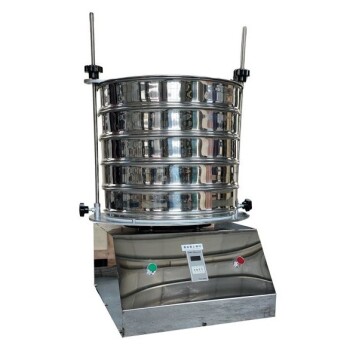
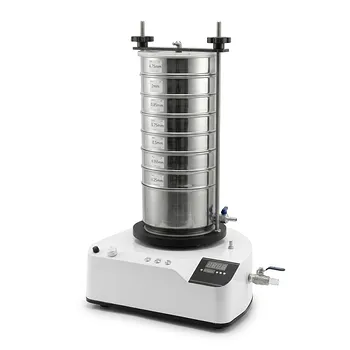
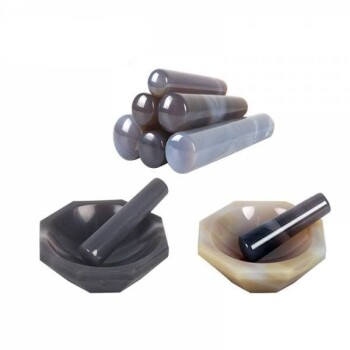
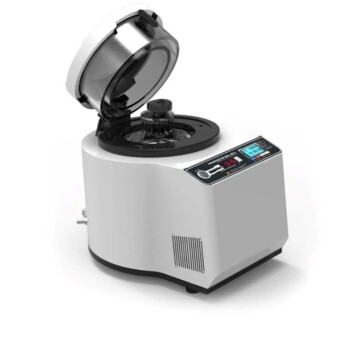
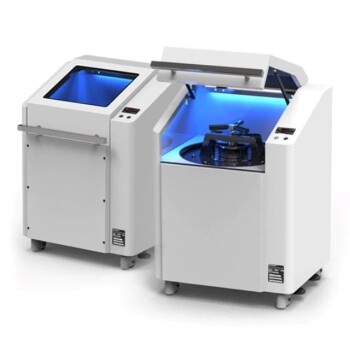
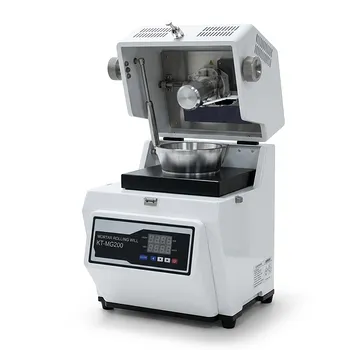
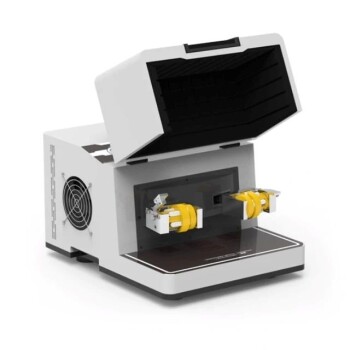
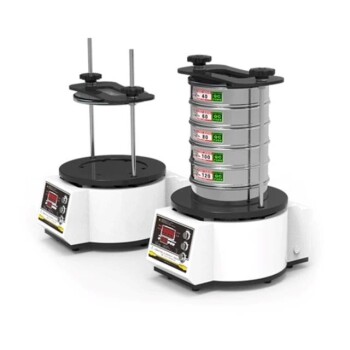
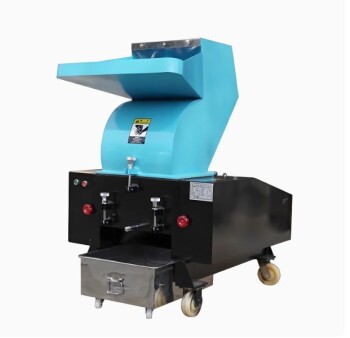
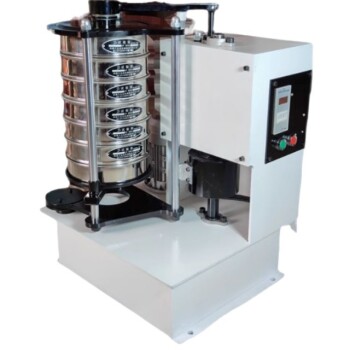
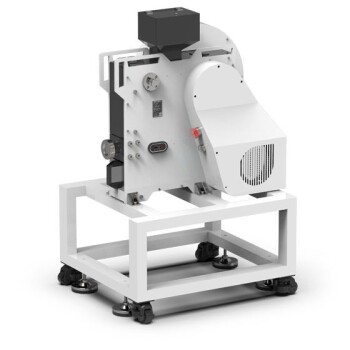
Grinding and sieving waste tires is a critical preprocessing step designed to reduce particle size to below 250 μm, thereby maximizing the specific surface area of the raw material. This physical alteration is essential for optimizing the chemical interactions that occur during hydrothermal liquefaction.
By pulverizing waste tires into fine powder, you dramatically increase the contact area between the solid material and the solvent. This ensures efficient mass transfer and uniform breakdown of complex molecular structures.
Optimizing the Reaction Environment
The success of hydrothermal liquefaction relies heavily on how well the solid waste interacts with the liquid solvent. Mechanical processing is the bridge that facilitates this interaction.
Maximizing Specific Surface Area
The primary objective of using grinding equipment is to pulverize the rubber into a fine powder.
By controlling the particle size to below 250 μm, you expose significantly more of the material's surface. This increase in specific surface area is the fundamental driver for all subsequent reaction improvements.
Enhancing Mass Transfer Efficiency
Chemical reactions in this context occur at the interface between the solid particle and the fluid.
A larger surface area facilitates mass transfer efficiency, allowing reactants and products to move more freely between the solid tire material and the liquid phase. Without this efficiency, the reaction becomes sluggish and incomplete.
Ensuring Full Solvent Contact
Hydrothermal liquefaction utilizes hot compressed water as the reaction medium.
Sieving ensures particles are small enough to maintain full contact with this water. This prevents the formation of "dry" cores within the particles where the solvent cannot reach, ensuring the entire mass is active in the process.
Promoting Uniform Degradation
Tire rubber is composed of complex macromolecular chains that are difficult to break down.
Uniform particle size leads to consistent heat and chemical exposure across the entire sample. This promotes the uniform degradation of these chains, preventing uneven reaction rates that could lead to unpredictable product yields.
Understanding the Operational Considerations
While preprocessing is vital, it introduces specific variables that must be managed to ensure the experiment is valid.
Precision vs. Effort
Achieving a particle size below 250 μm requires specific equipment and energy input.
You must ensure your grinding protocols are consistent, as variations in particle size can introduce variables that skew experimental data regarding reaction efficiency.
The Limits of Mechanical Separation
Sieving is a physical filter, not a chemical one.
While it controls size effectively, it does not alter the chemical composition of the tire waste. It simply prepares the physical structure to be as receptive as possible to the subsequent thermal and chemical breakdown.
Making the Right Choice for Your Experiment
When designing your hydrothermal liquefaction protocols, consider how particle size impacts your specific goals.
- If your primary focus is Maximum Conversion Efficiency: Ensure strict adherence to the < 250 μm limit to guarantee the highest possible surface area and mass transfer rates.
- If your primary focus is Process Consistency: Use high-quality sieving to ensure uniform particle distribution, which eliminates variables related to uneven heat transfer.
Precise particle control is the foundation of reproducible and efficient hydrothermal liquefaction results.
Summary Table:
| Factor | Preprocessing Benefit | Impact on HTL Process |
|---|---|---|
| Particle Size | Reduction to < 250 μm | Increases specific surface area for faster reactions |
| Mass Transfer | Enhanced solid-liquid interface | Improves movement of reactants and products |
| Solvent Contact | Elimination of "dry" cores | Ensures full interaction with hot compressed water |
| Degradation | Uniform particle distribution | Promotes consistent breakdown of macromolecular chains |
Elevate Your Waste-to-Energy Research with KINTEK
Precision in particle size is the foundation of reproducible hydrothermal liquefaction. KINTEK specializes in high-performance crushing and milling systems and sieving equipment designed to help researchers achieve the exact particle specifications required for optimal mass transfer.
Beyond preprocessing, we provide the complete experimental ecosystem, including:
- High-Temperature High-Pressure Reactors & Autoclaves for HTL and hydrothermal carbonization.
- High-Temperature Furnaces (Muffle, Tube, Vacuum) for secondary thermal treatments.
- Advanced Lab Solutions, from hydraulic presses to cooling systems and essential consumables.
Ready to optimize your waste-to-fuel conversion? Contact our technical experts today to find the perfect equipment for your laboratory.
References
- Rongjie Chen, Yanguo Zhang. Hydrothermal Liquefaction of Scrap Tires: Optimization of Reaction Conditions and Recovery of High Value-Added Products. DOI: 10.3389/fenrg.2022.841752
This article is also based on technical information from Kintek Solution Knowledge Base .
Related Products
- Three-dimensional electromagnetic sieving instrument
- Laboratory Test Sieves and Sieving Machines
- Laboratory Vibratory Sieve Shaker Machine for Dry and Wet Three-Dimensional Sieving
- Nature Agate Mortar and Pestle for Grinding and Mixing
- Laboratory High Throughput Tissue Grinding Mill Grinder
People Also Ask
- Why is sieving equipment essential for the classification of processed bio-activated carbon? Optimize Performance
- What are the limitations of sieving? Understanding the Constraints of Particle Size Analysis
- What are advantages and disadvantages of sieving method? A Guide to Reliable & Cost-Effective Particle Sizing
- How is sieving important? The Critical Role of Particle Size Analysis in Quality Control
- What is sieving and how does it work? A Guide to Accurate Particle Size Analysis