All Questions
What Is The Function Of A 200-Mesh Standard Sieve In The Preparation Of Magnetite Raw Powder? Achieve Material Purity
Discover how 200-mesh standard sieves optimize magnetite powder preparation by ensuring particle uniformity, removing impurities, and enhancing purity.
Why Is A 250-Micron Precision Sieve Necessary For Preparing Tea Waste Biochar? Achieve Uniform Activation & Pore Quality
Learn how 250-micron precision sieving ensures uniform chemical activation and pyrolysis for high-quality tea waste biochar with consistent porosity.
How Does A Lab Test Sieve Contribute To Biomass Charcoal Powder Preparation? Achieve Uniform Particle Size
Discover how laboratory test sieves optimize biomass charcoal by ensuring particle size uniformity, heat transfer, and consistent chemical reactivity.
What Is The Significance Of Using Standard Sieves For The Grading Of Finished Biochar Products? Ensure Uniform Quality
Discover how standard sieves enhance biochar quality by ensuring particle uniformity, predictable mass transfer, and superior industrial performance.
How Do Standard Laboratory Sieves Of 0.075 Mm Benefit Coal Slag Experiments? Optimize Viscosity & Thermal Analysis
Discover how 0.075 mm laboratory sieves improve coal slag homogeneity, DSC sensitivity, and viscosity accuracy for precise thermal research.
Why Must Composite Adsorbent Materials Undergo Processing With Precision Sieving Equipment? Optimize Adsorption & Ssa
Learn why precision sieving is vital for composite adsorbents to ensure uniform particle size, accurate SSA data, and consistent adsorption kinetics.
What Is The Primary Purpose Of Using Stainless Steel Test Sieves? Achieve Precise Particle Size Control For Biochar.
Learn how stainless steel test sieves optimize biosolids and cardboard pretreatment by standardizing particle size for uniform heat transfer.
Why Use Precision Sieving For 2Mm Peanut Shells? Achieve High-Quality Activated Carbon Production
Discover how precision sieving to 2mm ensures consistent chemical activation and optimal thermal conduction for high-performance activated carbon.
What Is The Role Of Laboratory Sieving In Apc Production? Ensure Precision Particle Size For High-Performance Carbon
Discover how laboratory sieving ensures uniform particle size in APC production, enhancing chemical penetration and optimizing pore development.
What Is The Significance Of Using A 200-Mesh Sieve For M-Ssac? Achieve 75Μm Uniformity For Maximum Adsorption
Discover why 200-mesh sieving is vital for M-SSAC. Enhance adsorption efficiency, surface area, and data reproducibility with precise 75μm particles.
What Is The Importance Of Using Standard Sieves For Screening Biomass Powder? Achieve Uniformity & Reactor Efficiency
Discover why standard sieves are essential for biomass powder uniformity, enhancing chemical reactions, heat transfer, and structural integrity.
What Is The Significance Of Using High-Precision Sieving For Coal Char? Ensure Accuracy In Kinetic & Thermal Analysis
Learn how high-precision sieving eliminates variables in coal char research, ensuring uniform heat transfer and accurate kinetic modeling for labs.
What Roles Do Industrial Grinders And Standard Analytical Sieves Play In Biochar Preparation? Optimize Physical Structure.
Learn how industrial grinders and sieves optimize modified biochar by increasing surface area and ensuring particle uniformity for better performance.
What Is The Purpose Of Using A 100 Mesh Standard Sieve To Grade Biomass? Optimize Activated Carbon Uniformity
Discover why 100 mesh sieving is vital for biomass grading to ensure uniform heat transfer and consistent pore structure in activated carbon.
What Is The Function Of Laboratory Sieving Equipment In Chromium Pellet Pretreatment? Ensure Precision & Strength
Learn how laboratory sieving optimizes particle size (<0.25mm) to enhance reaction kinetics and structural integrity in chromium composite pellets.
How Does The Use Of A 20-Mesh Standard Sieve Affect The Quality Of Crushed Coconut Shell Raw Materials? Optimize Quality
Discover how 20-mesh sieves optimize coconut shell feedstock for uniform chemical penetration, consistent heat transfer, and high-capacity adsorption.
What Is The Technical Purpose Of Using Standard Sieves To Process Biomass Samples? Optimize Heat & Mass Transfer
Learn how standard sieves eliminate heat transfer resistance in biomass processing to ensure uniform heating and reproducible reactor reaction data.
What Role Do Industrial Standard Sieves, Such As 240 Mesh, Play In Biomass Microsphere Production? Ensure Material Purity
Discover how 240-mesh industrial sieves ensure particle size uniformity and impurity removal for high-performance biomass microsphere production.
Why Is A Standard Sieve With A 0.074 Mm Mesh Size Used For Petroleum Coke Powder Pretreatment? Ensure Kinetic Accuracy
Learn why a 0.074 mm sieve is vital for petroleum coke pretreatment to eliminate mass transfer limits and ensure accurate kinetic gasification data.
Why Is A Precision Standard Sieve Necessary For Mn3Zn0.8Sn0.2N Powders? Achieve 40Μm Precision & High Performance
Learn why precision sieving is vital for Mn3Zn0.8Sn0.2N powders to ensure uniform 40μm particle size, better dispersion, and thermal expansion control.
Why Must Coal Samples Be Below 74Μm For Triboelectric Separation? Achieve Peak Mineral Liberation & Purity
Discover why 74μm is the critical size for coal triboelectric separation to maximize surface charge density and ensure complete mineral liberation.
What Is The Purpose Of Using A 300-Mesh Sieve In The Pretreatment Phase? Ensure Particle Uniformity & Precise Activation
Discover why a 300-mesh sieve is vital for activated carbon pretreatment. Enhance particle uniformity, heat transfer, and reaction synchronicity.
Purpose Of 150-Mesh Sieve In Wheat Straw Pyrolysis: Ensuring Heat Uniformity & Accurate Tga Results
Discover how a 150-mesh standard sieve optimizes wheat straw pyrolysis by ensuring particle uniformity, reducing thermal gradients, and securing data.
Why Is High-Standard Sieving Equipment Necessary For Coal/Sorghum Co-Combustion? Achieve Precise Experimental Results
Learn how high-standard sieving ensures particle uniformity, maximizing reactive surface area and data accuracy in co-combustion research.
Why Is Precision Sieving Equipment Required For Processing Walnut Shell Raw Materials? Ensure Uniform Pyrolysis Results
Learn why precision sieving is vital for walnut shell pyrolysis to ensure uniform heat transfer, accurate chemical kinetics, and stable product quality.
How Does A Precision Grading Sieve Benefit The Processing Of Carbon Fiber Catalysts? Ensure Kinetic Accuracy
Optimize carbon fiber catalyst research with precision sieving. Eliminate diffusion limits and ensure uniform particle size for reliable lab data.
Why Is An 80-Mesh Standard Sieve Used To Process Ammonium Perrhenate? Optimize Particle Size For Consistent Reduction
Discover why 80-mesh sieving is critical for Ammonium Perrhenate. Break agglomerates, ensure uniform mixing, and stabilize gas-solid reduction.
Why Use 20 Mesh Sieves For Biochar Pretreatment? Ensure Uniform Heat & Consistent Quality.
Discover why sieving straw to 20 mesh is critical for uniform heat conduction and consistent chemical modification in biochar production.
Why Are 150 Μm High-Precision Standard Sieves Required When Processing Wood Powders? Ensure High-Quality Carbon Output
Discover how 150 μm sieving ensures uniform activation, stable pore structures, and superior electrode performance for wood-based carbon materials.
Why Is Precise Sieving And Particle Size Characterization Essential For Dtr? Optimize Kinetic Modeling & Accuracy
Discover how precise sieving impacts residence time and kinetic accuracy in drop-tube reactors. Optimize your DTR experiments with the right data.
Why Is A 60-Mesh Standard Sieve Necessary For Pomelo Peel Biochar? Ensure Uniformity And Chemical Loading
Learn how a 60-mesh sieve optimizes biomass pretreatment for uniform pyrolysis and superior chemical loading in biochar production.
What Is The Importance Of Using A Standard Vibrating Sieve In The Initial Preparation Of Magnetic Biochar? Key To Quality
Learn why standard vibrating sieves are vital for magnetic biochar: they ensure uniform particle size for better heat transfer and impregnation.
How Do High-Precision Standard Sieves Contribute To The Preparation Of Geological Samples For Xrf Analysis? Get Results
Ensure geological XRF accuracy with high-precision sieves. Achieve 200-mesh uniformity to eliminate scattering and improve quantitative modeling.
Why Is A High-Mesh Standard Sieve Necessary For Processing Biochar Composite Powders Intended For 3D Printing? - Tips
Learn how high-mesh sieving prevents nozzle clogging and ensures material homogeneity for high-performance biochar-polymer 3D printing.
What Is The Purpose Of A 200-Mesh Sieve In Biochar Filtration? Ensure High Purity And Material Recovery
Learn why a 200-mesh sieve is crucial for biochar processing, from maximizing material recovery to ensuring chemical purity and uniform particle size.
What Is The Purpose Of Using Standard 1 Mm Or 2 Mm Sieves? Ensure Soil & Straw Homogeneity And Analytical Precision
Learn why 1mm and 2mm sieves are essential for soil and straw pretreatment. Improve sample homogeneity, surface area, and experimental accuracy.
Why Is The Use Of A Standard Sieve Necessary Before The Press-Molding Of Nasicon Powders? Ensure Superior Sintered Density
Learn why sieving NaSICON powder is critical for removing agglomerates, optimizing packing density, and eliminating structural voids in ceramics.
Why Is An Industrial-Grade Standard Sieve Used After Catalyst Regeneration? Ensure Purity & Physical Integrity
Learn how industrial sieves remove inorganic ash and thermal fines post-regeneration to protect reactor efficiency and catalyst life.
What Role Do Crushing And Sieving Systems Play In Plastic Photoreforming? Master Pre-Treatment For Maximum Yield
Learn how industrial-grade mechanical crushing and sieving systems activate plastic waste for efficient photocatalytic degradation.
Why Is It Necessary To Pass Mixed Graphene/Alumina Composite Powder Through A 200-Mesh Sieve After Vacuum Drying? Guide
Learn why 200-mesh sieving is vital after vacuum drying graphene/alumina powder to break agglomerates and ensure high-density sintering homogeneity.
Why Is Sieving Necessary For Mixed Fecral-Based Composite Powders? Key To Superior Quality Control
Learn why sieving is essential for FeCrAl powders after ball milling to eliminate agglomeration and ensure uniform density in sintered parts.
What Is The Purpose Of Processing Dried Aluminum Nitride Mixed Powder With A 200-Mesh Standard Sieving System?
Learn how 200-mesh sieving eliminates agglomerates in Aluminum Nitride powder to ensure flowability, density, and defect-free ceramic sintering.
What Is The Purpose Of Using A 500-Mesh Sieve For Llzto Powder? Ensure Battery Safety With Precise Particle Control
Learn why a 500-mesh sieve is vital for LLZTO ceramic powder preparation to prevent short circuits and ensure electrolyte membrane integrity.
What Is The Significance Of Using Precision Standard Sieves For Inconel 625/Tib2? Optimize Dld Powder Quality
Learn why precision sieving (50–150 µm) is vital for Inconel 625/TiB2 composite powders to ensure stable DLD flow and prevent nozzle clogs.
What Is The Purpose Of Using A 40-Mesh Sieve For Kaolin Catalyst Carriers? Optimizing Uniformity And Activity
Learn why particle size grading with a 40-mesh sieve is essential for kaolin catalyst carriers to ensure uniform surface area and catalytic activity.
What Is The Purpose Of Using A 400-Mesh Standard Sieve? Optimize Carbon Powder For High-Performance Cathodes
Learn how 400-mesh sieving removes agglomerates and ensures uniform carbon dispersion to enhance battery rate performance and conductivity.
What Is The Purpose Of Using A Laboratory Grinder With Specific Mesh Sieves For Oat Straw? Optimize Pellet Quality
Learn how specific sieve apertures like 1.0mm and 1.6mm control particle size, filling density, and bonding forces for superior pellet production.
Why Are Industrial Standard Sieves Necessary For Controlling The Physical Properties Of Dense Refractory Bricks?
Learn how industrial standard sieves optimize particle packing, reduce porosity, and enhance mechanical strength in dense refractory bricks.
Why Is Sieving With Specific Mesh Sizes Necessary For Biomass Pretreatment? Optimize Precision And Reagent Penetration
Learn why specific mesh sizes are vital for biomass pretreatment to ensure uniform reagent penetration, mass transfer, and experimental accuracy.
How Does The Use Of A 150 Mesh Sieve Benefit Polyimide Precursor Powders? Enhance Foam Structural Integrity
Learn how 150 mesh sieving ensures sub-100 µm particle consistency, promoting uniform nucleation and superior polyimide foam quality.
Why Is A Standard Mesh Sieving System Necessary For Polyester Methanolysis? Ensure Precise Reaction Kinetics
Learn why standard mesh sieving is critical for PET powder uniformity to ensure synchronized degradation and data repeatability in methanolysis.
Why Is A High-Mesh Microporous Sieve Used In Composite Geomaterials? Optimize Particle Size For Maximum Adsorption
Learn how high-mesh sieves (< 2 µm) enhance specific surface area, kinetic response, and adsorption efficiency in composite geomaterial powders.
What Is The Primary Purpose Of Using A Standard Sieve In Rice Straw Processing? Achieve Perfect Uniformity
Learn why standard sieves are essential for rice straw processing, ensuring particle uniformity, reproducible data, and optimized heat conduction.
What Is The Purpose Of Using Wide-Aperture Sieving Screens? Optimize Garden Waste Pretreatment For Quality Pellets
Learn how wide-aperture sieving screens remove inorganic impurities, protect crushing equipment, and reduce ash content in pellet fuel production.
What Is The Purpose Of Using A Nylon Sieve? Optimize Mgal2O4 Powder For Defect-Free Ceramics
Learn how nylon sieving ensures uniform particle size and prevents structural defects in Magnesium Aluminum Spinel powder preparation.
How Do Standard Industrial Sieves Contribute To Quality Control In Slate Ceramsite? Ensure Particle Precision
Discover how standard industrial sieves optimize slate ceramsite production through precise grading, uniform expansion, and cost reduction.
Why Use A 500-Mesh Sieve For Wool Biochar? Ensure Uniform Dispersion And Flawless Coatings.
Discover why a 500-mesh sieve is essential for wool biochar to ensure uniform dispersion, reduce surface roughness, and optimize composite quality.
Why Is A Standard Sieve Used To Screen Ground Powders Before The Hot-Pressing Sintering Of Lita2Po8? Achieve Peak Density
Learn why sieving LTPO powder is vital for eliminating pore defects and maximizing density during hot-pressing sintering of electrolyte pellets.
What Is The Purpose Of Standard Sieving Equipment In Tungsten Diffusion Treatment? Ensure High-Quality Diamond Coating
Learn why sieving is essential in diamond tungsten diffusion to separate unreacted powder and ensure success in downstream copper plating.
Why Use A Standard Sieve For Prosopis Juliflora Pretreatment? Ensure Precision In Particle Size Control
Learn why standard sieving (0.1-0.4 mm) is critical for Prosopis juliflora pods to ensure uniform heat transfer and chemical reaction rates.
What Is The Purpose Of Using A 325-Mesh (45 Micron) Standard Sieve? Ensure Uniform Rare-Earth Perovskite Powder
Learn why 325-mesh sieving is critical for rare-earth perovskite powders to ensure particle consistency and optimize electrochemical performance.
Why Use Specific Mesh Metal Sieves For Activated Carbon In Mdhp? Ensure Stable Microwave Resonance & Hydrogen Yield
Learn how specific mesh sieves prevent dielectric shifts and stabilize microwave resonance in hydrogen production from activated carbon.
Why Is A 150-Mesh Standard Sieve Essential For The Preparation Of Honeycomb Ceramic Mn-Ce/Al2O3 Catalysts?
Learn why 150-mesh sieves are critical for catalyst coating stability, adhesion strength, and gas diffusion in Mn-Ce/Al2O3 catalyst preparation.
What Is The Primary Purpose Of Using Standard Sieves? Master Particle Uniformity For High-Quality Catalyst Preparation
Learn how standard sieves ensure particle size uniformity, optimize thermal dynamics, and stabilize reactor hydrodynamics for reliable data.
What Is The Role Of Standard Sieves In Gold Scrap Leaching Kinetic Studies? Ensure Precision In Particle Classification
Learn how standard sieves control liquid-solid surface area and ensure data integrity in gold scrap leaching kinetic studies for reliable results.
Why Must The Crushing And Sieving Of Mg3Sb2 Powder Be Conducted Within An Argon Atmosphere? Protect Material Integrity
Learn why inert Argon environments are critical for Mg3Sb2 processing to prevent oxidation and preserve thermoelectric performance.
What Is The Primary Objective Of Using A 325-Mesh Sieving System? Optimize Mg3Sb2 Powder Processing
Learn why a 325-mesh sieving system is vital for Mg3Sb2 powder, ensuring particle sizes under 45 μm for high-density, low-porosity sintering.
Why Is The Fine Sieving Step Critical For Al3Hf Powder? Ensure Uniformity And Thermal Stability In Composites
Learn why ASTM 400 mesh sieving is essential for Al3Hf powder to prevent thermal gradients and enhance mechanical strength in aluminum composites.
What Is The Primary Function Of Fine-Mesh Test Sieves? Master Natural Mordenite Purification
Learn how fine-mesh test sieves isolate mordenite by removing coarse contaminants like sand and stones to ensure high-purity mineral isolation.
What Is The Primary Purpose Of Using Laboratory Standard Sieves? Optimize Composting Pre-Treatment For Pig Manure
Learn how laboratory sieves standardize particle sizes to enhance microbial activity and C/N ratio control during composting pre-treatment.
Why Is The Use Of Standard Sieving Systems Necessary For Corn Stover? Maximize Lignin Degradation With Kintek
Learn why sieving corn stover to 0.25mm is critical for maximizing surface area, ensuring reagent contact, and accelerating lignin degradation rates.
Why Is It Necessary To Process Dried Sic Mixed Powders Through Sieving Equipment? Ensure Uniform Powder Quality
Learn why sieving Silicon Carbide (SiC) is essential to remove hard agglomerates, restore flowability, and ensure bulk density for ceramic forming.
Why Is Powder Classification Using Standard Sieves Essential For Shs Reactions? Unlock Superior Nitriding Results
Learn how precise powder classification using standard sieves optimizes gas permeability and filtration combustion in SHS material synthesis.
Why Is It Necessary To Perform Sieving With Standard Grading Sieves Before Conducting Thermal Analysis On Flax Straw?
Learn why sieving flax straw with standard grading sieves is essential for accurate TGA results and eliminating thermal lag in biomass analysis.
What Is The Significance Of Using A Standard Sieve Before The Sintering Of Caf2 Nanopowders? Ensure Optical Clarity
Learn why sieving CaF2 nanopowders is essential for removing agglomerates, maximizing packing density, and achieving high-transparency ceramics.
Why Is A 200-Mesh Sieve Required For Lcfa Ceramic Membrane Precursor Powders? Ensure Defect-Free Membrane Fabrication
Learn why 200-mesh sieving is essential for removing aggregates in LCFA powders to protect hollow fiber membrane integrity and slurry rheology.
Role Of Mechanical Disassembly And Sieving In Recycling Lithium Battery Anodes? Achieve 99%+ Purity Feedstock
Learn how mechanical disassembly and sieving systems isolate active graphite from spent lithium batteries to achieve over 99% purity levels.
Why Must Standard Test Sieves Be Used To Screen Silicon Nitride Ceramic Powder? Ensure Uniformity And Strength
Learn why 100-mesh screening is essential for silicon nitride powder to eliminate agglomerates and ensure high-performance ceramic manufacturing.
Why Is Sieving Equipment Necessary For Processing Powder Prior To Hot Extrusion Of Peo? Ensure Cathode Film Uniformity
Learn how sieving equipment prevents agglomeration and ensures uniform particle size for high-performance PEO-based composite cathode production.
Why Is A Standardized Sieving System Necessary For Elephant Grass Research? Ensure Reliable Sample Consistency
Learn why standardized sieving is crucial for elephant grass research to control reaction kinetics and ensure accurate hemicellulose analysis.
How Does Using A Standard Analytical Sieve Affect Phenol Photocatalytic Degradation? Control Particle Size For Accuracy
Learn how analytical sieves improve phenol degradation results by standardizing particle size, diffusion rates, and light absorption uniformity.
Why Is A Precision Sieving System Required For Processing Mgcuceox Adsorbents? Ensure Particle Size & Process Stability
Learn how precision sieving optimizes MgCuCeOx adsorbents by controlling particle size for uniform fluid dynamics and preventing pressure drops.
What Is The Purpose Of Processing Fluoride Ceramic Powders With A 200-Mesh Nylon Test Sieve? Ensure Purity & Density
Learn how 200-mesh nylon sieving eliminates agglomerates and impurities in fluoride ceramic powders to improve flowability and green body density.
What Is The Purpose Of Using A 200-Mesh Sieve Prior To The Component Analysis Of Biomass? Enhance Purity & Protect Hplc
Learn how 200-mesh sieves protect HPLC equipment and optimize magnetic nanoparticle recovery in biomass hydrolysis liquid analysis.
What Role Do Standard Sieves Play In The Research Of Graphite Flake Protection? Quantifying Flake Recovery Rates
Learn how standard sieves isolate flakes >0.15mm to calculate mass recovery rates and evaluate graphite protection methods effectively.
What Is The Primary Purpose Of Using A 200-Mesh Standard Sieve In Coal Combustion? Ensure Precise Particle Sizing
Learn why the 200-mesh sieve (75 µm) is vital for coal combustion studies, ensuring uniform heating and accurate TGA data through maximized surface area.
What Technical Problem Does A Fine Sieving Net Solve? Eliminating Agglomeration In Calcium Silicate Hydrate
Learn how fine sieving nets solve particle agglomeration in calcium silicate hydrate to ensure uniform looseness and low thermal conductivity.
What Is The Significance Of Micron-Level Screening For Welding Aerosol Samples? Boost Precision In Lab Characterization
Learn why micron-level particle screening is vital for isolating reactive fine particles to ensure accurate welding aerosol characterization.
What Is The Significance Of Using Precision Analysis Sieves In The Preparation Of Carbon Nanotubes? Expert Guide
Learn how precision analysis sieves optimize carbon nanotube growth by ensuring catalyst uniformity, heat transfer, and process stability.
Why Must Al2O3/Zro2 Ceramic Powders Undergo Treatment With A Standard Sieve? Ensuring High-Density Sintering Results
Learn why sieving Al2O3/ZrO2 powders is critical to eliminate agglomerates, prevent internal pores, and ensure uniform density in ceramic molds.
What Is The Function Of A Standard Test Sieve In Magnesium Recovery? Optimize Slag Enrichment And Process Efficiency
Learn how test sieves and vibratory shakers isolate magnesium-rich slag fractions to optimize vacuum distillation and recovery efficiency.
Why Is A 325-Mesh Standard Sieve Used For Gold Recovery? Enhance Adsorption Precision With 0.044Mm Particle Control
Learn how 325-mesh sieving maximizes surface area and eliminates mass transfer resistance for accurate gold recovery and kinetic modeling.
What Is The Primary Purpose Of An Industrial Grinder And 400-Mesh Sieve For Coconut Shell Powder? Achieve Uniformity.
Learn why a grinder and 400-mesh sieve are vital for producing fine coconut shell powder to ensure optimal coating and adsorption for quartz sand.
Why Is 200-Mesh Sieving Performed On Ground Powders? Ensure Peak Efficiency In Magnesium & Zinc Borate Synthesis
Learn how 200-mesh sieving optimizes particle size, increases surface area, and stabilizes crystal phases for superior borate synthesis results.
What Is The Purpose Of Using Precision Standard Sieves In Powder Granulation? Maximize Density And Structural Isotropy
Learn how precision sieves optimize powder granulation by controlling particle size, improving flowability, and eliminating the bridging effect.
Why Is A 100 Μm Standard Test Sieve Required For Lgvo Powder? Ensure Smooth Aerosol Deposition And Coating Uniformity
Learn why 100 µm sieving is vital for ball-milled LGVO powder to prevent nozzle clogging and ensure defect-free, uniform aerosol deposition coatings.
Why Must Ultra-Fine Ceramic Powders Be Processed With A Standard Sieve? Key To Defect-Free Sintering
Learn why sieving ultra-fine ceramic powders is critical for removing agglomerates, improving flow, and preventing structural defects in ceramics.
Why Is A 250 Mesh Precision Sieving System Required For Sulfated Zirconia? Enhance Catalyst Performance
Learn why 250 mesh sieving is critical for Sulfated Zirconia catalyst preparation to optimize hydrodynamics and maximize surface area.
What Is The Purpose Of Using A Standard Sieve Before Pressing? Enhance Tic-Steel Composite Uniformity
Learn why sieving is critical for TiC-reinforced steel composites to remove agglomerates, optimize mold filling, and prevent sintering defects.
How Does A Standard Test Sieve Contribute To The Preparation Of Bczyyb Electrolyte Powders? Enhance Particle Uniformity
Learn how standard test sieves refine BCZYYb electrolyte powders by removing agglomerates and ensuring the particle uniformity needed for density.
Related Products
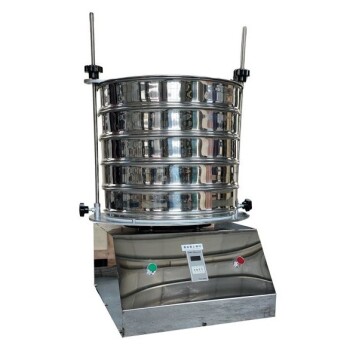
Laboratory Test Sieves and Sieving Machines

Laboratory Test Sieves and Vibratory Sieve Shaker Machine
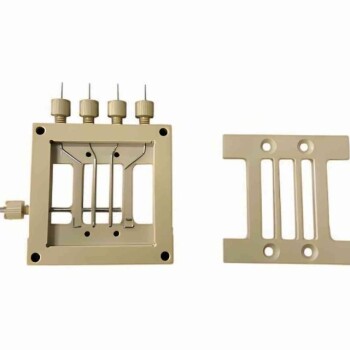
Custom Ion Conductivity Test Fixtures for Fuel Cell Research
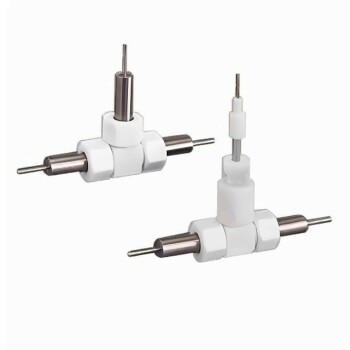
Customizable Swagelok Type Test Cells for Advanced Battery Research Electrochemical Analysis