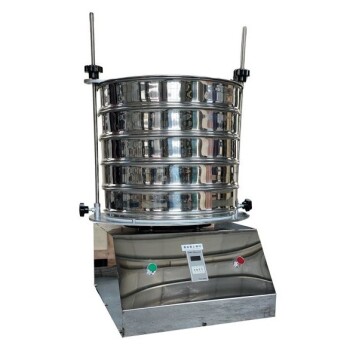
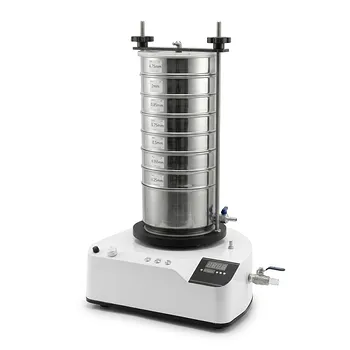
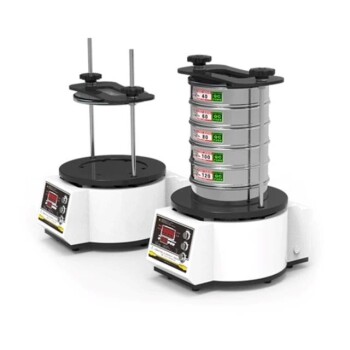
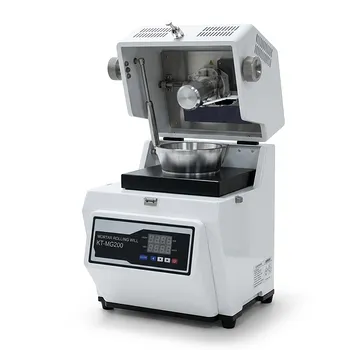
The primary purpose of using laboratory standard sieves during the pre-treatment of composting raw materials, such as pig manure and sawdust, is to establish strict uniformity in substrate particle sizes. This mechanical standardization ensures a consistent particle distribution, which is the foundational step for optimizing the biological and chemical efficiency of the composting process.
Core Takeaway: Sieving is not merely about sorting; it is a method to maximize the specific surface area available for microbial activity. By creating a homogeneous substrate, you ensure uniform biochemical reactions and enable precise control over critical variables like the carbon-to-nitrogen (C/N) ratio and moisture levels.
The Science of Particle Uniformity
Increasing Specific Surface Area
The mechanical breakdown and subsequent sieving of raw materials are designed to increase the specific surface area of the substrate.
By reducing materials to a specific, standardized size, you expose more physical material to the environment. This increased surface area provides a significantly larger landscape for necessary interactions to occur.
Enhancing Microbial Attachment
Composting is a biological process driven by the activity of bacteria and fungi.
Increasing the specific surface area directly enhances microbial attachment efficiency. A sieving process ensures that microorganisms have the maximum possible area to colonize, which accelerates the initiation of the composting cycle.
Promoting Uniform Biochemical Reactions
In a mixture with irregular particle sizes, decomposition happens at uneven rates—fast in some areas, slow in others.
Standard sieves ensure that biochemical reactions occur uniformly throughout the entire matrix. This consistency prevents the formation of "dead zones" where decomposition stalls due to particle size disparages.
Critical Process Controls
Precise Carbon-to-Nitrogen (C/N) Ratio
Successful composting requires a delicate chemical balance between carbon sources (like sawdust) and nitrogen sources (like manure).
Standardization is critical for the precise control of the C/N ratio. When particle sizes are uniform, these materials mix more homogeneously, ensuring the chemical balance is maintained consistently across the entire pile rather than fluctuating locally.
Managing Moisture Distribution
Water retention behavior changes drastically depending on the size of the material particles.
Using sieves ensures that moisture distribution remains consistent throughout the composting matrix. This prevents issues where some pockets of the substrate become waterlogged while others remain too dry to support microbial life.
Understanding the Trade-offs
Experimental Precision vs. Processing Effort
Implementing a sieving protocol increases the time and labor required during the pre-treatment phase.
You must balance the need for experimental repeatability against the throughput of your operation. For high-precision studies, this step is non-negotiable to ensure data accuracy; for industrial scale-up, strict laboratory-grade sieving may present a bottleneck.
The Necessity of Standardization
While beneficial for reaction rates, extreme standardization is primarily a tool for control and analysis.
If you are conducting general waste management without the need for data analysis, laboratory-standard precision may yield diminishing returns. However, for any scenario requiring predictable outcomes, bypassing this step introduces uncontrolled variables that can skew results.
Making the Right Choice for Your Goal
To determine if strict sieving protocols are necessary for your application, consider your end objectives:
- If your primary focus is scientific research: Prioritize sieving to ensure experimental repeatability, guaranteeing that your data reflects true biological changes rather than random variations in particle geometry.
- If your primary focus is process efficiency: Use sieving to maximize microbial colonization, allowing you to speed up the decomposition timeline by optimizing the surface area available to bacteria.
Standardization is the control mechanism that transforms a chaotic mixture of waste into a predictable, engineered biological system.
Summary Table:
| Key Benefit | Scientific Mechanism | Impact on Composting |
|---|---|---|
| Surface Area Optimization | Increases specific surface area | Maximizes landscape for biochemical reactions |
| Microbial Colonization | Enhances attachment efficiency | Accelerates the initiation of the decomposition cycle |
| Matrix Homogeneity | Eliminates particle size disparity | Ensures uniform reactions and prevents "dead zones" |
| Chemical Precision | Standardizes substrate mixing | Enables precise control over Carbon-to-Nitrogen (C/N) ratios |
| Moisture Management | Consistent water retention | Prevents localized waterlogging or dry pockets |
Elevate Your Laboratory Precision with KINTEK Solutions!
Consistency is the backbone of reliable research and industrial efficiency. Whether you are standardizing substrate particles with our high-precision sieving equipment or preparing raw materials using our advanced crushing and milling systems, KINTEK provides the engineered tools you need to ensure experimental repeatability.
From high-temperature furnaces and hydraulic presses to specialized laboratory consumables, KINTEK specializes in empowering research across composting, battery technology, and material science.
Ready to optimize your workflow and achieve predictable, high-quality results? Contact our technical experts today to find the perfect equipment for your specific application!
References
- Wenqing Yang, Zuliang Chen. Effects of Iron Nanoparticles Addition on Bacterial Community and Phytotoxicity in Aerobic Compost of Pig Manure. DOI: 10.3390/agronomy13051239
This article is also based on technical information from Kintek Solution Knowledge Base .
Related Products
- Laboratory Test Sieves and Sieving Machines
- Laboratory Vibratory Sieve Shaker Machine Slap Vibrating Sieve
- Laboratory Vibratory Sieve Shaker Machine for Dry and Wet Three-Dimensional Sieving
- Laboratory Test Sieves and Vibratory Sieve Shaker Machine
- Laboratory Wet Three-Dimensional Vibratory Sieve Shaker Machine
People Also Ask
- What are laboratory test sieves used for? A Guide to Particle Size Analysis
- How do you calculate the sieve test? Master Particle Size Distribution for Quality Control
- How does a lab test sieve contribute to biomass charcoal powder preparation? Achieve Uniform Particle Size
- What are the specifications for test sieves? A Guide to ASTM & ISO Standards for Accurate Particle Analysis
- What materials are required for sieving? Achieve Accurate Particle Size Analysis