Knowledge Why is it necessary to pass mixed graphene/alumina composite powder through a 200-mesh sieve after vacuum drying? Guide
Author avatar

Tech Team · Kintek Solution

Updated 3 days ago

Why is it necessary to pass mixed graphene/alumina composite powder through a 200-mesh sieve after vacuum drying? Guide


The post-drying processing stage is critical for material integrity. Passing mixed graphene/alumina composite powder through a 200-mesh sieve after vacuum drying is necessary to mechanically break up and remove large, hard agglomerates that form during the drying process. This step restores the powder to a fine, uniform consistency, ensuring it possesses the flowability required for effective mold filling.

Vacuum drying inherently causes particles to bind into hard clusters. Sieving is the essential corrective step that ensures the powder has the uniformity and flow characteristics required to achieve high density and structural homogeneity during the subsequent sintering phase.

The Impact of Vacuum Drying on Powder Quality

Formation of Hard Agglomerates

While vacuum drying is effective for removing moisture, it introduces a secondary issue: particle clustering. As the solvent evaporates under vacuum, the graphene and alumina particles are drawn together, hardening into large agglomerates.

The Problem with "As-Dried" Powder

You cannot use the powder immediately after drying. These hard agglomerates act like coarse rocks rather than a fluid powder, which severely impedes the material's ability to settle evenly.

The Function of the 200-Mesh Sieve

Restoring Flowability

The 200-mesh sieve acts as a mechanical regulator. By forcing the material through this specific mesh size, you break apart the hard clusters created during drying. This restores the powder's excellent flowability, allowing it to pour smoothly and fill mold cavities without bridging or clogging.

Ensuring Particle Size Uniformity

Consistnecy is key in composite materials. The sieving process guarantees a fine, uniform particle size distribution across the entire batch. This eliminates the size variance that leads to weak points in the final composite.

Implications for Sintering and Final Properties

Facilitating High Density

The ultimate goal of this process is usually hot-pressing sintering. To achieve high density, the starting powder must be packed as tightly as possible before heat is applied. Sieved, fine powder compacts much more efficiently than agglomerated powder, reducing porosity in the final part.

Achieving Structural Homogeneity

A uniform powder leads to a uniform microstructure. By removing large agglomerates, you ensure that the graphene and alumina are evenly distributed. This structural homogeneity is vital for the mechanical and thermal performance of the sintered composite.

Common Pitfalls to Avoid

The Risk of Incomplete Sieving

If the sieving process is rushed or omitted, large agglomerates will remain in the matrix. These act as defects during sintering, leading to uneven density and potential cracking in the final component.

Overlooking the "Hardness" Factor

It is important to recognize that vacuum-dried agglomerates are "hard." Soft sieving or shaking might not be enough; the process requires sufficient mechanical action to fracture these clusters back into their constituent particles without contaminating the mixture.

Making the Right Choice for Your Process

For successful composite fabrication, the sieving step is not optional—it is a prerequisite for quality.

  • If your primary focus is Mold Filling: Ensure the powder passes completely through the 200-mesh sieve to prevent voids and ensure the mold is filled evenly.
  • If your primary focus is Material Strength: Prioritize this step to guarantee the high density and structural homogeneity required for maximum mechanical performance during sintering.

Consistency in powder preparation is the foundation of high-performance composite materials.

Summary Table:

Processing Stage Key Issue/Requirement Benefit of 200-Mesh Sieving
Post-Vacuum Drying Formation of hard agglomerates Mechanically breaks clusters
Mold Filling Poor flowability and bridging Restores smooth powder flow
Sintering Prep Low packing density/voids Ensures high density & packing
Final Result Structural defects/cracking Guarantees structural homogeneity

Elevate Your Material Research with KINTEK

Achieve flawless structural homogeneity and high-density results in your graphene/alumina composites. KINTEK provides the precision tools required for every step of your workflow—from advanced crushing and milling systems and sieving equipment to professional-grade high-temperature furnaces (vacuum, CVD, atmosphere) and hydraulic presses.

Whether you need high-pressure reactors, PTFE products, or ceramics, we offer the reliable laboratory equipment and consumables essential for cutting-edge material science.

Contact KINTEK today to optimize your laboratory workflow!

Related Products

People Also Ask

Related Products

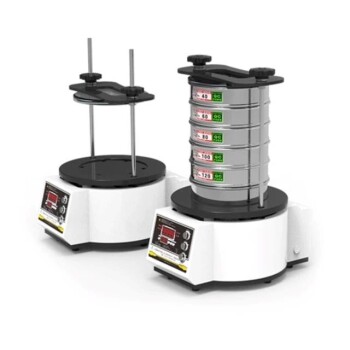
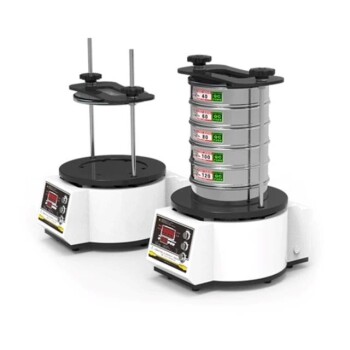
Laboratory Test Sieves and Vibratory Sieve Shaker Machine

Laboratory Test Sieves and Vibratory Sieve Shaker Machine

Efficiently process powders, granules, and small blocks with a high-frequency vibration sieve. Control vibration frequency, screen continuously or intermittently, and achieve accurate particle size determination, separation, and classification.

Custom PTFE Teflon Parts Manufacturer for PTFE Mesh F4 Sieve

Custom PTFE Teflon Parts Manufacturer for PTFE Mesh F4 Sieve

PTFE mesh sieve is a specialized test sieve designed for particle analysis in various industries, featuring a non-metallic mesh woven from PTFE filament. This synthetic mesh is ideal for applications where metal contamination is a concern . PTFE sieves are crucial for maintaining the integrity of samples in sensitive environments, ensuring accurate and reliable results in particle size distribution analysis.

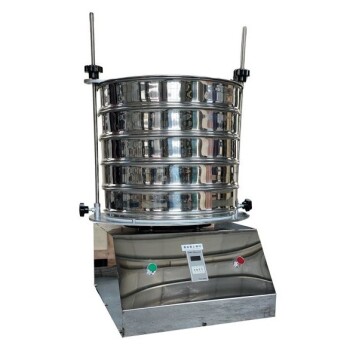
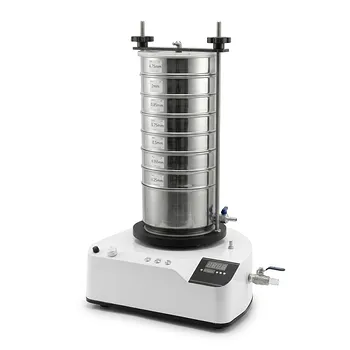
Vibratory Sieve Shaker Machine Dry Three-Dimensional Vibrating Sieve

Vibratory Sieve Shaker Machine Dry Three-Dimensional Vibrating Sieve

The KT-V200 product focuses on solving common sieving tasks in the laboratory. It is suitable for sieving 20g-3kg dry samples.

Laboratory Single Horizontal Jar Mill

Laboratory Single Horizontal Jar Mill

KT-JM3000 is a mixing and grinding instrument for placing a ball milling tank with a volume of 3000ml or less. It adopts frequency conversion control to realize timing, constant speed, direction change, overload protection and other functions.

Metallographic Specimen Mounting Machine for Laboratory Materials and Analysis

Metallographic Specimen Mounting Machine for Laboratory Materials and Analysis

Precision metallographic mounting machines for labs—automated, versatile, and efficient. Ideal for sample prep in research and quality control. Contact KINTEK today!

Laboratory Disc Rotary Mixer for Efficient Sample Mixing and Homogenization

Laboratory Disc Rotary Mixer for Efficient Sample Mixing and Homogenization

Efficient Laboratory Disc Rotary Mixer for Precise Sample Mixing, Versatile for Various Applications, DC Motor and Microcomputer Control, Adjustable Speed and Angle.

Laboratory manual slicer

Laboratory manual slicer

Manual microtome is a high-precision cutting device designed for laboratories, industry and medical fields. It is suitable for the preparation of thin slices of various materials such as paraffin samples, biological tissues, battery materials, food, etc.

Automatic Heated Hydraulic Press Machine with Heated Plates for Laboratory Hot Press 25T 30T 50T

Automatic Heated Hydraulic Press Machine with Heated Plates for Laboratory Hot Press 25T 30T 50T

Efficiently prepare your samples with our Automatic Heated Lab Press. With a pressure range up to 50T and precise control, it's perfect for various industries.

Small Vacuum Heat Treat and Tungsten Wire Sintering Furnace

Small Vacuum Heat Treat and Tungsten Wire Sintering Furnace

The small vacuum tungsten wire sintering furnace is a compact experimental vacuum furnace specially designed for universities and scientific research institutes. The furnace features a CNC welded shell and vacuum piping to ensure leak-free operation. Quick-connect electrical connections facilitate relocation and debugging, and the standard electrical control cabinet is safe and convenient to operate.

Laboratory Oscillating Orbital Shaker

Laboratory Oscillating Orbital Shaker

Mixer-OT orbital shaker uses brushless motor, which can run for a long time. It is suitable for vibration tasks of culture dishes, flasks and beakers.

Manual High Temperature Heated Hydraulic Press Machine with Heated Plates for Lab

Manual High Temperature Heated Hydraulic Press Machine with Heated Plates for Lab

The High Temperature Hot Press is a machine specifically designed for pressing, sintering and processing materials in a high temperature environment. It is capable of operating in the range of hundreds of degrees Celsius to thousands of degrees Celsius for a variety of high temperature process requirements.

Automatic Lab Cold Isostatic Press CIP Machine Cold Isostatic Pressing

Automatic Lab Cold Isostatic Press CIP Machine Cold Isostatic Pressing

Efficiently prepare samples with our Automatic Lab Cold Isostatic Press. Widely used in material research, pharmacy, and electronic industries. Provides greater flexibility and control compared to electric CIPs.

Automatic High Temperature Heated Hydraulic Press Machine with Heated Plates for Lab

Automatic High Temperature Heated Hydraulic Press Machine with Heated Plates for Lab

The High Temperature Hot Press is a machine specifically designed for pressing, sintering and processing materials in a high temperature environment. It is capable of operating in the range of hundreds of degrees Celsius to thousands of degrees Celsius for a variety of high temperature process requirements.

Lab Blown Film Extrusion Three Layer Co-Extrusion Film Blowing Machine

Lab Blown Film Extrusion Three Layer Co-Extrusion Film Blowing Machine

Lab blown film extrusion is mainly used to detect the feasibility of film blowing of polymer materials and the colloid condition in the materials, as well as the dispersion of colored dispersions, controlled mixtures, and extrudates;

Automatic Laboratory Hydraulic Pellet Press Machine for Lab Use

Automatic Laboratory Hydraulic Pellet Press Machine for Lab Use

Experience efficient sample preparation with our Automatic Lab Press Machine. Ideal for material research, pharmacy, ceramics, and more. Features a compact size and hydraulic press functionality with heating plates. Available in various sizes.

Laboratory Jaw Crusher

Laboratory Jaw Crusher

Discover the small jaw crusher for efficient, flexible, and affordable crushing in labs and small mines. Ideal for coal, ores, and rocks. Learn more now!

Custom PTFE Teflon Parts Manufacturer for Culture Dish and Evaporation Dish

Custom PTFE Teflon Parts Manufacturer for Culture Dish and Evaporation Dish

The PTFE culture dish evaporating dish is a versatile laboratory tool known for its chemical resistance and high-temperature stability. PTFE, a fluoropolymer, offers exceptional non-stick properties and durability, making it ideal for various applications in research and industry, including filtration, pyrolysis, and membrane technology.

Custom PTFE Teflon Parts Manufacturer for PTFE Buchner Funnel and Triangular Funnel

Custom PTFE Teflon Parts Manufacturer for PTFE Buchner Funnel and Triangular Funnel

The PTFE funnel is a piece of laboratory equipment used primarily for filtration processes, particularly in the separation of solid and liquid phases in a mixture. This setup allows for efficient and rapid filtration, making it indispensable in various chemical and biological applications.

Vacuum Hot Press Furnace Machine for Lamination and Heating

Vacuum Hot Press Furnace Machine for Lamination and Heating

Experience clean and precise lamination with Vacuum Lamination Press. Perfect for wafer bonding, thin-film transformations, and LCP lamination. Order now!

Custom PTFE Teflon Parts Manufacturer for PTFE Measuring Cylinder 10/50/100ml

Custom PTFE Teflon Parts Manufacturer for PTFE Measuring Cylinder 10/50/100ml

PTFE measuring cylinder are a rugged alternative to traditional glass cylinders. They are chemically inert over a wide temperature range (up to 260º C), have excellent corrosion resistance and maintain a low coefficient of friction, ensuring ease of use and cleaning.


Leave Your Message