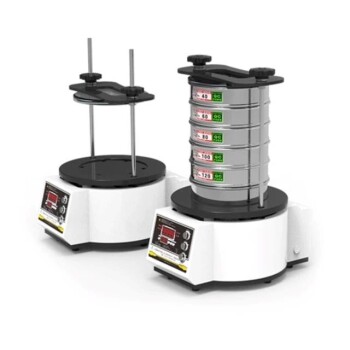
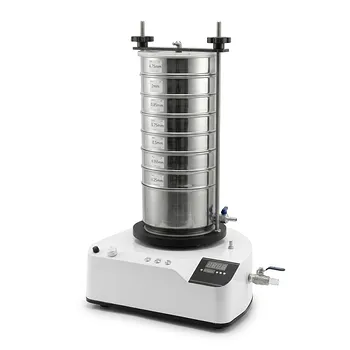
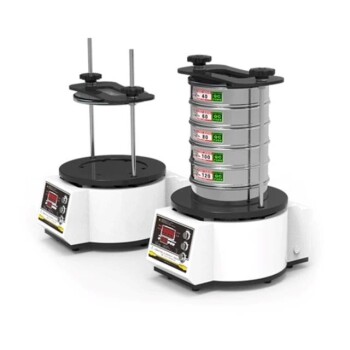
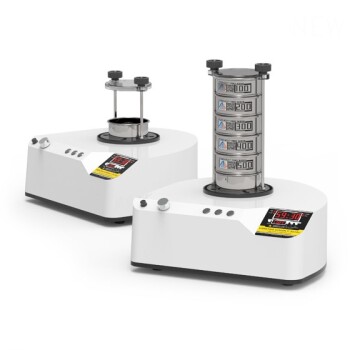
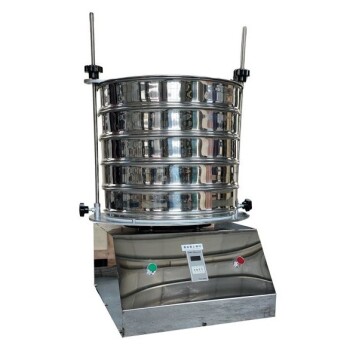
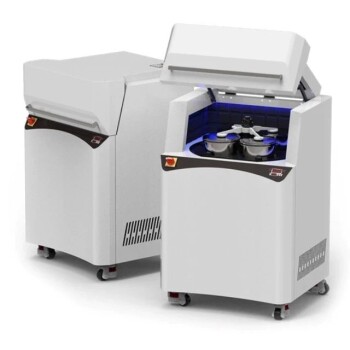
Standardizing particle size is the critical first step in biomass conversion. A laboratory electromagnetic vibratory sieve shaker is employed to strictly classify crushed walnut shell particles into a specific size range, such as 600 micrometers to 1.25 mm. This mechanical separation is essential to create uniform physical conditions for the subsequent chemical pretreatment and liquefaction experiments.
The primary purpose of the sieve shaker is to eliminate variables in reaction kinetics. By ensuring every particle falls within a precise size range, researchers guarantee that chemical reactions are driven by the reagent properties, rather than inconsistent surface areas.
The Role of Standardization in Pretreatment
Establishing Consistent Kinetic Conditions
The rate at which a chemical reaction occurs is heavily influenced by the surface area of the material involved.
If walnut shell particles vary wildly in size, smaller dust-like particles will react instantly, while larger chunks may remain unreacted in the center.
Using a sieve shaker ensures that the kinetic conditions remain consistent across the entire sample batch.
Facilitating Uniform Chemical Penetration
Subsequent steps involves subjecting the biomass to high-pressure and high-temperature environments, often in an autoclave.
The goal of this pretreatment is to disrupt the complex lignocellulosic structure of the shell.
Uniform particle size ensures that acid, alkali, or alcohol reagents can penetrate the crystalline regions of cellulose and degrade lignin at a predictable and equal rate for all particles.
Reducing Experimental Noise
In scientific experimentation, reproducibility is paramount.
Without sieving, random variations in particle size distributions could cause uneven reactions.
This would introduce "noise" into the data, making it difficult to determine if a successful liquefaction result was due to the chemical formula or simply a batch of finer particles.
Understanding the Operational Trade-offs
Precision vs. Material Yield
The sieve shaker operates by selecting a specific slice of the material (e.g., 600µm to 1.25 mm) and rejecting the rest.
This process inevitably leads to material loss, as "fines" (particles that are too small) and "overs" (particles that are too large) are discarded.
You are trading total biomass volume for data reliability.
Complexity vs. Throughput
Adding a vibratory sieving step increases the time and equipment required for sample preparation.
Precisely controlling vibration frequencies and durations adds complexity compared to simple grinding.
However, skipping this step risks incomplete reactions during the energy-intensive autoclave phase.
Optimizing Your Sample Preparation Strategy
To get the most out of your walnut shell pretreatment experiments, align your sieving parameters with your research goals:
- If your primary focus is rigorous kinetic study: Prioritize a narrow particle size range to minimize surface area variables and ensure the highest data precision.
- If your primary focus is process efficiency: Select a slightly wider size range to maximize material yield, provided it does not compromise the ability of the autoclave reagents to penetrate the biomass.
Mastering particle size distribution is the often-overlooked key to unlocking reproducible chemical conversion results.
Summary Table:
| Factor | Benefit of Sieving | Impact on Research |
|---|---|---|
| Surface Area | Ensures uniform exposure to reagents | Consistent reaction kinetics |
| Chemical Penetration | Facilitates even penetration of cellulose/lignin | Predictable degradation in autoclaves |
| Data Integrity | Reduces experimental noise and variability | High reproducibility of results |
| Process Control | Eliminates unreacted large chunks | Maximum efficiency in liquefaction |
Elevate Your Biomass Research with KINTEK Precision
Consistency in particle size is the foundation of reliable chemical pretreatment. KINTEK provides high-performance laboratory electromagnetic vibratory sieve shakers and sieving equipment designed to deliver the precise classification required for your most demanding biomass conversion studies.
From preparing walnut shells for high-pressure reactors and autoclaves to refining samples for crushing and milling systems, our comprehensive portfolio supports every stage of your lab workflow. We also offer specialized PTFE products, ceramics, and crucibles to withstand rigorous chemical environments.
Ready to eliminate variables and achieve reproducible data? Contact our experts today to find the perfect equipment solution for your laboratory needs!
References
- Nives Jovičić, Ana Matin. Toward sustainable bioproducts from lignocellulosic biomass: Influence of chemical pretreatments on liquefied walnut shells. DOI: 10.1515/opag-2022-0382
This article is also based on technical information from Kintek Solution Knowledge Base .
Related Products
- Vibratory Sieve Shaker Machine Dry Three-Dimensional Vibrating Sieve
- Laboratory Test Sieves and Vibratory Sieve Shaker Machine
- Laboratory Vibratory Sieve Shaker Machine for Dry and Wet Three-Dimensional Sieving
- Laboratory Vibratory Sieve Shaker Machine Slap Vibrating Sieve
- Laboratory Wet Three-Dimensional Vibratory Sieve Shaker Machine
People Also Ask
- How is a vibratory sieve shaker used in the particle size analysis of mechanically alloyed powders? Expert Guide
- Why use a vibratory sieve shaker for PET powder? Achieve Precise Particle Size Control for Chemical Research
- What is the principle of vibratory sieve shaker? Achieve Accurate Particle Size Analysis
- What is the function of a vibratory sieve shaker? Achieve Precise Particle Size Analysis
- What is the use of vibratory sieve shaker? Achieve Precise Particle Size Analysis for Your Lab