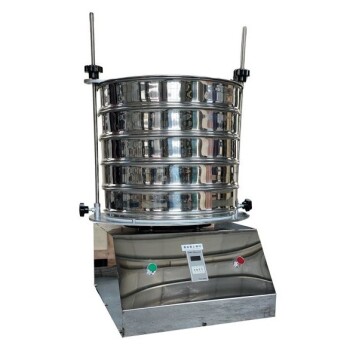
Standardization is the prerequisite for valid data. A standardized sieving system is necessary to extract elephant grass samples within a precise target particle size range using specific mesh openings. This ensures that every sample introduced to the experiment possesses physically consistent characteristics, preventing physical variables from distorting chemical results.
By eliminating variations in reaction kinetics caused by uneven particle sizes, sieving ensures that hemicellulose analysis remains consistent and reproducible across different experimental batches.
The Science Behind Sample Preparation
Ensuring Experimental Repeatability
In scientific research, the ability to replicate results is paramount. A standardized sieving system acts as a quality control filter for elephant grass samples.
It ensures that samples taken from different batches or at different times are physically identical regarding size. Without this step, data comparison becomes unreliable.
Controlling Reaction Kinetics
The physical size of a particle directly influences how it reacts chemically.
Reaction kinetics—the speed and efficiency of a chemical reaction—can fluctuate wildly if particle sizes vary. Smaller particles typically react faster due to higher surface area, while larger particles react slower.
A sieving system eliminates these fluctuations. It forces all samples to adhere to a specific mesh size, creating a baseline for stable reaction rates.
Impact on Chemical Analysis
Consistency in Cold Alkaline Extraction
The primary reference highlights the specific importance of sieving during cold alkaline extraction.
This process is used to analyze the hemicellulose content of the elephant grass. If the extraction kinetics vary due to size differences, the resulting hemicellulose data will be flawed.
Isolating the Variable
To understand the true chemical composition of the grass, you must isolate the chemical variables from the physical ones.
Standardized sieving ensures that any observed difference in hemicellulose content is a result of the sample's chemistry, not because one particle was larger than another.
Understanding the Trade-offs
The Cost of Precision
Implementing a standardized sieving system adds a layer of complexity and time to the preparation phase.
It requires specific equipment (screens and shakers) and meticulous attention to mesh opening sizes. This can slow down high-throughput testing environments.
The Risk of Skipping Standardization
However, the trade-off of bypassing this step is the generation of "noisy" data.
Without sieving, researchers risk false positives or negatives. Variations in reaction kinetics can mimic chemical changes, leading to incorrect conclusions about the elephant grass's properties.
Making the Right Choice for Your Research
To ensure your elephant grass research stands up to peer review, consider your specific analytical goals.
- If your primary focus is experimental repeatability: Strictly adhere to specific mesh openings to ensure every batch is physically comparable.
- If your primary focus is chemical analysis: Use sieving to normalize reaction kinetics, ensuring your hemicellulose data reflects true composition rather than physical inconsistencies.
Standardization transforms raw material into reliable scientific data.
Summary Table:
| Feature | Impact on Elephant Grass Research | Importance |
|---|---|---|
| Sample Consistency | Ensures physical uniformity across all experimental batches. | High |
| Reaction Kinetics | Stabilizes reaction speeds by normalizing surface area. | Critical |
| Hemicellulose Data | Prevents physical size from distorting chemical extraction results. | High |
| Repeatability | Allows other researchers to replicate results using identical mesh sizes. | Essential |
Elevate Your Biomass Research with KINTEK Precision
Don't let inconsistent particle sizes compromise your hemicellulose analysis. KINTEK specializes in high-performance laboratory equipment designed for the most demanding research environments. Whether you are prepping elephant grass or advanced materials, our comprehensive range of crushing and milling systems, standardized sieving equipment, and vacuum furnaces ensure your samples meet the highest scientific standards.
Why choose KINTEK?
- Unmatched Precision: Achieve the exact particle size distribution needed for stable reaction kinetics.
- Durable Equipment: Our sieves and milling systems are built for consistency and longevity.
- Expert Support: We help you select the right mesh openings and equipment to eliminate data noise.
Contact KINTEK today to optimize your sample preparation and ensure your research is both reproducible and peer-review ready!
References
- J.C. Garcı́a, F. López. Cold alkaline extraction of Elephant grass for optimal subsequent extraction of hemicelluloses and energy production. DOI: 10.1007/s13399-022-03054-3
This article is also based on technical information from Kintek Solution Knowledge Base .
Related Products
People Also Ask
- What are laboratory test sieves used for? A Guide to Particle Size Analysis
- How do you calculate the sieve test? Master Particle Size Distribution for Quality Control
- How does a lab test sieve contribute to biomass charcoal powder preparation? Achieve Uniform Particle Size
- What are the specifications for test sieves? A Guide to ASTM & ISO Standards for Accurate Particle Analysis
- What materials are required for sieving? Achieve Accurate Particle Size Analysis