Knowledge How does using a standard analytical sieve affect phenol photocatalytic degradation? Control Particle Size for Accuracy
Author avatar

Tech Team · Kintek Solution

Updated 2 days ago

How does using a standard analytical sieve affect phenol photocatalytic degradation? Control Particle Size for Accuracy


Using a standard analytical sieve is a critical step for ensuring data integrity in phenol photocatalytic degradation experiments. By filtering ground composite materials through a specific pore size, such as 149 microns, you ensure the catalyst powder achieves high particle size uniformity. This process standardizes the physical characteristics of your sample, directly leading to improved reproducibility and scientific reliability of your degradation data.

By standardizing particle size, you eliminate variables related to diffusion rates and light absorption. This ensures that your results reflect the true chemical efficiency of the photocatalyst, rather than physical inconsistencies in the powder.

The Mechanics of Particle Uniformity

Eliminating Diffusion Variances

Inconsistent particle sizes create unpredictable variables in how reactants move through your system. Large particles and small particles display differences in diffusion rates.

By using a standard analytical sieve, you strictly control the size distribution. This control eliminates these diffusion discrepancies, ensuring that the movement of phenol molecules to the catalyst surface is consistent across all experiments.

Standardizing Light Absorption

Photocatalytic degradation is driven by light; therefore, the exposed surface area is paramount. Varying particle sizes result in a fluctuating effective light-receiving area.

Sieving the material ensures that the surface area available for light absorption remains constant. This guarantees that changes in degradation rates are due to catalyst performance, not random variations in how much light the powder could capture.

The Impact on Experimental Integrity

Enhancing Reproducibility

The primary goal of any analytical experiment is the ability to repeat the result. If particle size varies from batch to batch, your data will fluctuate regardless of the chemical composition.

Using a sieve creates a reproducible baseline. It ensures that every run of your phenol degradation experiment starts with physically identical catalyst parameters.

Ensuring Scientific Reliability

Reliability is built on the isolation of variables. Without size control, physical irregularities can mask or exaggerate chemical activity.

The use of an analytical sieve removes this physical noise. It validates that your data is scientifically sound and that your conclusions regarding phenol degradation are accurate.

Common Pitfalls: The Cost of Inconsistency

Misinterpreting Data Artifacts

A common error in photocatalysis is attributing a change in reaction rate to chemical properties when it is actually a physical artifact.

Without sieving, diffusion rate differences caused by random particle sizes can mimic changes in catalytic activity. This leads to false conclusions about the effectiveness of your composite material.

Inconsistent Light Exposure

Neglecting particle size control leads to uneven light distribution. Larger clumps may shadow smaller particles, or vice versa, altering the total energy absorbed by the system.

This inconsistency makes it impossible to accurately compare the efficiency of different catalyst batches, as the effective light-receiving area is no longer a controlled variable.

Making the Right Choice for Your Goal

To ensure your phenol degradation experiments yield publication-quality data, apply the following standards:

  • If your primary focus is Data Accuracy: Use a standard analytical sieve (e.g., 149-micron) to eliminate diffusion rate errors caused by size variance.
  • If your primary focus is Experimental Reproducibility: Standardize your preparation process to ensure a consistent effective light-receiving area across all trial runs.

Control the physical variables of your catalyst today to ensure the chemical validity of your results tomorrow.

Summary Table:

Parameter Affected Impact of Sieving Benefit to Experiment
Particle Size Ensures high uniformity (e.g., 149μm) Eliminates physical inconsistencies
Diffusion Rates Standardizes reactant movement Removes unpredictable kinetic variables
Light Absorption Normalizes effective surface area Ensures consistent energy capture
Data Integrity Reduces "physical noise" Validates true chemical catalytic efficiency
Reproducibility Creates a standardized baseline Enables reliable batch-to-batch comparison

Elevate Your Photocatalytic Research with KINTEK Precision

Don't let physical inconsistencies compromise your chemical data. KINTEK specializes in high-performance laboratory equipment, providing the precision sieving equipment, crushing systems, and milling tools essential for achieving perfect catalyst uniformity.

Whether you are optimizing phenol degradation or developing advanced composite materials, our comprehensive range of analytical sieves, high-temperature furnaces, and hydraulic presses ensures your lab operates at the peak of scientific reliability.

Ready to achieve publication-quality reproducibility? Contact our laboratory experts today to find the perfect equipment solution for your specific research needs.

Related Products

People Also Ask

Related Products

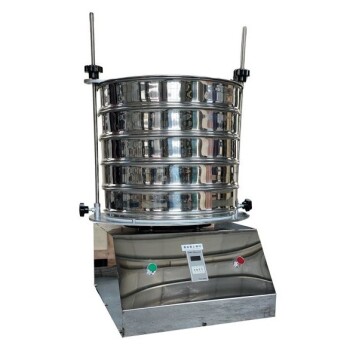
Laboratory Test Sieves and Sieving Machines

Laboratory Test Sieves and Sieving Machines

Precision lab test sieves & sieving machines for accurate particle analysis. Stainless steel, ISO-compliant, 20μm-125mm range. Request specs now!

Laboratory Test Sieves and Vibratory Sieve Shaker Machine

Laboratory Test Sieves and Vibratory Sieve Shaker Machine

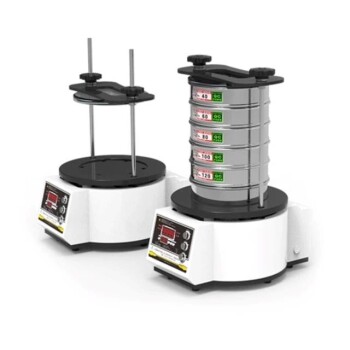
Efficiently process powders, granules, and small blocks with a high-frequency vibration sieve. Control vibration frequency, screen continuously or intermittently, and achieve accurate particle size determination, separation, and classification.

Custom PTFE Teflon Parts Manufacturer for PTFE Mesh F4 Sieve

Custom PTFE Teflon Parts Manufacturer for PTFE Mesh F4 Sieve

PTFE mesh sieve is a specialized test sieve designed for particle analysis in various industries, featuring a non-metallic mesh woven from PTFE filament. This synthetic mesh is ideal for applications where metal contamination is a concern . PTFE sieves are crucial for maintaining the integrity of samples in sensitive environments, ensuring accurate and reliable results in particle size distribution analysis.

Vibratory Sieve Shaker Machine Dry Three-Dimensional Vibrating Sieve

Vibratory Sieve Shaker Machine Dry Three-Dimensional Vibrating Sieve

The KT-V200 product focuses on solving common sieving tasks in the laboratory. It is suitable for sieving 20g-3kg dry samples.

Desktop Fast Laboratory Autoclave Sterilizer 20L 24L for Lab Use

Desktop Fast Laboratory Autoclave Sterilizer 20L 24L for Lab Use

The desktop fast steam sterilizer is a compact and reliable device used for rapid sterilization of medical, pharmaceutical, and research items.

Laboratory Sterilizer Lab Autoclave Vertical Pressure Steam Sterilizer for Liquid Crystal Display Automatic Type

Laboratory Sterilizer Lab Autoclave Vertical Pressure Steam Sterilizer for Liquid Crystal Display Automatic Type

Liquid crystal display automatic vertical sterilizer is a safe, reliable and automatic control sterilization equipment, which is composed of heating system, microcomputer control system and overheating and overvoltage protection system.

Desktop Fast Laboratory Autoclave Sterilizer 35L 50L 90L for Lab Use

Desktop Fast Laboratory Autoclave Sterilizer 35L 50L 90L for Lab Use

The desktop fast steam sterilizer is a compact and reliable device used for rapid sterilization of medical, pharmaceutical, and research items. It efficiently sterilizes surgical instruments, glassware, medicines, and resistant materials, making it suitable for various applications.

Laboratory manual slicer

Laboratory manual slicer

Manual microtome is a high-precision cutting device designed for laboratories, industry and medical fields. It is suitable for the preparation of thin slices of various materials such as paraffin samples, biological tissues, battery materials, food, etc.

Automatic Heated Hydraulic Press Machine with Heated Plates for Laboratory Hot Press 25T 30T 50T

Automatic Heated Hydraulic Press Machine with Heated Plates for Laboratory Hot Press 25T 30T 50T

Efficiently prepare your samples with our Automatic Heated Lab Press. With a pressure range up to 50T and precise control, it's perfect for various industries.

Automatic Lab Cold Isostatic Press CIP Machine Cold Isostatic Pressing

Automatic Lab Cold Isostatic Press CIP Machine Cold Isostatic Pressing

Efficiently prepare samples with our Automatic Lab Cold Isostatic Press. Widely used in material research, pharmacy, and electronic industries. Provides greater flexibility and control compared to electric CIPs.

Laboratory Disc Rotary Mixer for Efficient Sample Mixing and Homogenization

Laboratory Disc Rotary Mixer for Efficient Sample Mixing and Homogenization

Efficient Laboratory Disc Rotary Mixer for Precise Sample Mixing, Versatile for Various Applications, DC Motor and Microcomputer Control, Adjustable Speed and Angle.

Electric Lab Cold Isostatic Press CIP Machine for Cold Isostatic Pressing

Electric Lab Cold Isostatic Press CIP Machine for Cold Isostatic Pressing

Produce dense, uniform parts with improved mechanical properties with our Electric Lab Cold Isostatic Press. Widely used in material research, pharmacy, and electronic industries. Efficient, compact, and vacuum-compatible.

Small Vacuum Heat Treat and Tungsten Wire Sintering Furnace

Small Vacuum Heat Treat and Tungsten Wire Sintering Furnace

The small vacuum tungsten wire sintering furnace is a compact experimental vacuum furnace specially designed for universities and scientific research institutes. The furnace features a CNC welded shell and vacuum piping to ensure leak-free operation. Quick-connect electrical connections facilitate relocation and debugging, and the standard electrical control cabinet is safe and convenient to operate.

Laboratory Jaw Crusher

Laboratory Jaw Crusher

Discover the small jaw crusher for efficient, flexible, and affordable crushing in labs and small mines. Ideal for coal, ores, and rocks. Learn more now!

Lab Blown Film Extrusion Three Layer Co-Extrusion Film Blowing Machine

Lab Blown Film Extrusion Three Layer Co-Extrusion Film Blowing Machine

Lab blown film extrusion is mainly used to detect the feasibility of film blowing of polymer materials and the colloid condition in the materials, as well as the dispersion of colored dispersions, controlled mixtures, and extrudates;

Laboratory Oscillating Orbital Shaker

Laboratory Oscillating Orbital Shaker

Mixer-OT orbital shaker uses brushless motor, which can run for a long time. It is suitable for vibration tasks of culture dishes, flasks and beakers.

Custom PTFE Teflon Parts Manufacturer Grinding Bowl

Custom PTFE Teflon Parts Manufacturer Grinding Bowl

PTFE is renowned for its exceptional chemical resistance, thermal stability, and low friction properties, making it a versatile material in various industries. The PTFE grinding bowl, specifically, finds applications where these properties are crucial.

Custom PTFE Teflon Parts Manufacturer for Culture Dish and Evaporation Dish

Custom PTFE Teflon Parts Manufacturer for Culture Dish and Evaporation Dish

The PTFE culture dish evaporating dish is a versatile laboratory tool known for its chemical resistance and high-temperature stability. PTFE, a fluoropolymer, offers exceptional non-stick properties and durability, making it ideal for various applications in research and industry, including filtration, pyrolysis, and membrane technology.

Custom PTFE Teflon Parts Manufacturer for PTFE Measuring Cylinder 10/50/100ml

Custom PTFE Teflon Parts Manufacturer for PTFE Measuring Cylinder 10/50/100ml

PTFE measuring cylinder are a rugged alternative to traditional glass cylinders. They are chemically inert over a wide temperature range (up to 260º C), have excellent corrosion resistance and maintain a low coefficient of friction, ensuring ease of use and cleaning.

Manual High Temperature Heated Hydraulic Press Machine with Heated Plates for Lab

Manual High Temperature Heated Hydraulic Press Machine with Heated Plates for Lab

The High Temperature Hot Press is a machine specifically designed for pressing, sintering and processing materials in a high temperature environment. It is capable of operating in the range of hundreds of degrees Celsius to thousands of degrees Celsius for a variety of high temperature process requirements.


Leave Your Message