Knowledge Why is sieving with specific mesh sizes necessary for biomass pretreatment? Optimize Precision and Reagent Penetration
Author avatar

Tech Team · Kintek Solution

Updated 21 hours ago

Why is sieving with specific mesh sizes necessary for biomass pretreatment? Optimize Precision and Reagent Penetration


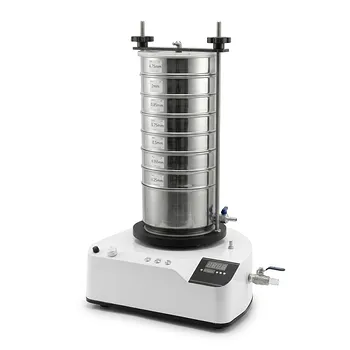
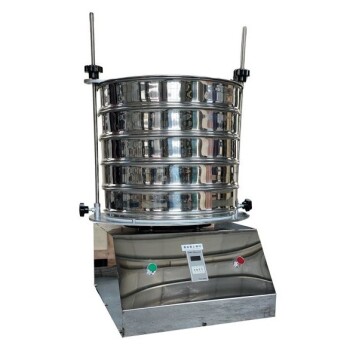
Sieving biomass to a specific mesh size is a fundamental quality control step that ensures physical uniformity across your raw material. This process—such as using a 2 mm aperture mesh—is necessary to standardize particle dimensions, which directly dictates how effectively reagents like ionic liquids can penetrate the biomass interior for efficient mass transfer.

The Core Takeaway Controlling particle size is not merely about mechanical reduction; it is about eliminating physical variability as a source of experimental error. Uniform particles ensure consistent chemical penetration and heat distribution, guaranteeing that your results reflect the true chemistry of the biomass rather than the randomness of the grinding process.

The Critical Role of Physical Uniformity

Facilitating Reagent Penetration

The primary reason for sieving is to facilitate the penetration of chemical agents into the biomass structure.

When using pretreatment solvents, such as ionic liquids, the solvent must diffuse into the biomass interior to be effective.

Uniform particle sizes ensure this diffusion happens at a consistent rate across the entire sample, leading to uniform mass transfer efficiency.

Preventing Uneven Reactions

Without sieving, a sample will contain a chaotic mix of large chunks and fine dust.

Large particles may not react fully in the allotted time, while fine dust may react too quickly or degrade.

Sieving ensures that every particle undergoes the reaction under the same physical conditions, preventing the skewed data that results from uneven reaction rates.

Enhancing Process Efficiency

Maximizing Specific Surface Area

Sieving to a finer range (e.g., 40 to 80 mesh or 0.1 to 0.4 mm) significantly increases the specific surface area of the material.

A higher surface area provides more contact points for biochemical and thermochemical reactions.

This leads to greater completeness in processes like acid hydrolysis and enhances the efficiency of solvent extraction.

Standardizing Heat and Moisture Transfer

In processes involving heat, such as hydrothermal reactions or thermogravimetric analysis, particle size dictates thermal behavior.

Uniform particles allow for even heat transfer and moisture penetration throughout the sample.

This consistency is vital for thermal stability and ensures that temperature gradients do not skew the reaction kinetics or analysis results.

Understanding the Trade-offs: The Cost of Inconsistency

The Impact on Reproducibility

The most significant risk of ignoring mesh size is the loss of experimental repeatability.

If particle size distribution varies between batches, your data becomes unreliable.

Sieving is the only way to ensure that differences in your results are caused by your experimental variables, not by inconsistencies in the raw material preparation.

Balancing Size vs. Processing Effort

While finer particles generally offer better reactivity, they require more energy to produce and sieve.

However, failing to sieve to a specific range (like the 0.1–0.4 mm standard for Prosopis juliflora) compromises the integrity of subsequent analyses.

You must balance the need for fine particles with the practical constraints of your preparation equipment, always prioritizing uniformity over mere smallness.

Making the Right Choice for Your Goal

To apply this to your project, align your sieving strategy with your specific experimental needs:

  • If your primary focus is Chemical Pretreatment (e.g., Ionic Liquids): Prioritize a specific aperture (e.g., 2 mm) to guarantee uniform mass transfer and solvent penetration into the biomass interior.
  • If your primary focus is Analytical Precision (e.g., TGA or Kinetics): Use a tighter, finer mesh range (e.g., 40–80 mesh) to maximize specific surface area and ensure flawless heat transfer uniformity.

Standardizing your mesh size is the single most effective step you can take to transform raw biomass into a reliable scientific variable.

Summary Table:

Key Factor Impact on Pretreatment Primary Benefit
Reagent Penetration Ensures uniform solvent diffusion Efficient mass transfer & chemical reaction
Surface Area Maximizes contact points for reactions Faster acid hydrolysis & solvent extraction
Thermal Behavior Standardizes heat and moisture transfer Consistent kinetics in hydrothermal processes
Reproducibility Eliminates physical variability Reliable, repeatable experimental data

Elevate Your Biomass Research with KINTEK

Precision in particle size is the foundation of reliable biomass analysis. KINTEK provides high-performance crushing and milling systems alongside professional sieving equipment to ensure your samples meet the exact specifications required for successful pretreatment.

Our comprehensive laboratory portfolio—including high-temperature reactors, autoclaves, and hydraulic presses—is engineered to help you achieve superior mass transfer and experimental reproducibility. Don't let inconsistent material preparation skew your results.

Contact KINTEK today to optimize your laboratory workflow and discover how our specialized tools can enhance your research efficiency.

References

  1. Ling Liang, Ning Sun. Scale-up of biomass conversion using 1-ethyl-3-methylimidazolium acetate as the solvent. DOI: 10.1016/j.gee.2018.07.002

This article is also based on technical information from Kintek Solution Knowledge Base .

Related Products

People Also Ask

Related Products

Laboratory Test Sieves and Sieving Machines

Laboratory Test Sieves and Sieving Machines

Precision lab test sieves & sieving machines for accurate particle analysis. Stainless steel, ISO-compliant, 20μm-125mm range. Request specs now!

Laboratory Test Sieves and Vibratory Sieve Shaker Machine

Laboratory Test Sieves and Vibratory Sieve Shaker Machine

Efficiently process powders, granules, and small blocks with a high-frequency vibration sieve. Control vibration frequency, screen continuously or intermittently, and achieve accurate particle size determination, separation, and classification.

Laboratory Vibratory Sieve Shaker Machine for Dry and Wet Three-Dimensional Sieving

Laboratory Vibratory Sieve Shaker Machine for Dry and Wet Three-Dimensional Sieving

KT-VD200 can be used for sieving tasks of dry and wet samples in the laboratory. The screening quality is 20g-3kg. The product is designed with a unique mechanical structure and an electromagnetic vibrating body with a vibration frequency of 3000 times per minute.

Laboratory Vibratory Sieve Shaker Machine Slap Vibrating Sieve

Laboratory Vibratory Sieve Shaker Machine Slap Vibrating Sieve

KT-T200TAP is a slapping and oscillating sieving instrument for laboratory desktop use, with 300 rpm horizontal circular motion and 300 vertical slapping motions to simulate manual sieving to help sample particles pass through better.

Powerful Plastic Crusher Machine

Powerful Plastic Crusher Machine

KINTEK's powerful plastic crusher machines process 60-1350 KG/H of diverse plastics, ideal for labs and recycling. Durable, efficient, and customizable.

Vibratory Sieve Shaker Machine Dry Three-Dimensional Vibrating Sieve

Vibratory Sieve Shaker Machine Dry Three-Dimensional Vibrating Sieve

The KT-V200 product focuses on solving common sieving tasks in the laboratory. It is suitable for sieving 20g-3kg dry samples.

Laboratory Ten-Body Horizontal Jar Mill for Lab Use

Laboratory Ten-Body Horizontal Jar Mill for Lab Use

The Ten-body horizontal jar mill is for 10 ball mill pots (3000ml or less). It has frequency conversion control, rubber roller movement, and PE protective cover.

Small Lab Rubber Calendering Machine

Small Lab Rubber Calendering Machine

Small lab rubber calendering machine is used for producing thin, continuous sheets of plastic or rubber materials. It is commonly employed in laboratories, small-scale production facilities, and prototyping environments to create films, coatings, and laminates with precise thickness and surface finish.

Lab Plastic PVC Calender Stretch Film Casting Machine for Film Testing

Lab Plastic PVC Calender Stretch Film Casting Machine for Film Testing

The cast film machine is designed for the molding of polymer cast film products and has multiple processing functions such as casting, extrusion, stretching, and compounding.

Lab Internal Rubber Mixer Rubber Kneader Machine for Mixing and Kneading

Lab Internal Rubber Mixer Rubber Kneader Machine for Mixing and Kneading

Lab internal rubber mixer is suitable for mixing, kneading and dispersing various chemical raw materials such as plastics, rubber, synthetic rubber, hot melt adhesive and various low-viscosity materials.

12 Inch 24 Inch High Precision Automatic Diamond Wire Cutting Machine Laboratory Saw Precision Wire EDM Cutting Machine

12 Inch 24 Inch High Precision Automatic Diamond Wire Cutting Machine Laboratory Saw Precision Wire EDM Cutting Machine

The high precision automatic diamond wire cutting machine is a versatile cutting tool that uses a diamond wire to cut through a wide range of materials, including conductive and non-conductive materials, ceramics, glass, rocks, gems, jade, meteorites, monocrystalline silicon, silicon carbide, polycrystalline silicon, refractory bricks, epoxy boards, and ferrite bodies. It is especially suitable for cutting various brittle crystals with high hardness, high value, and easy to break.

Metallographic Specimen Mounting Machine for Laboratory Materials and Analysis

Metallographic Specimen Mounting Machine for Laboratory Materials and Analysis

Precision metallographic mounting machines for labs—automated, versatile, and efficient. Ideal for sample prep in research and quality control. Contact KINTEK today!

Precision Wire Saw Laboratory Cutting Machine with 800mm x 800mm Workbench for Diamond Single Wire Circular Small Cutting

Precision Wire Saw Laboratory Cutting Machine with 800mm x 800mm Workbench for Diamond Single Wire Circular Small Cutting

Diamond wire cutting machines are mainly used for precision cutting of ceramics, crystals, glass, metals, rocks, thermoelectric materials, infrared optical materials, composite materials, biomedical materials and other material analysis samples. Especially suitable for precision cutting of ultra-thin plates with thickness up to 0.2mm.

Single Punch Electric Tablet Press Machine Laboratory Powder Tablet Punching TDP Tablet Press

Single Punch Electric Tablet Press Machine Laboratory Powder Tablet Punching TDP Tablet Press

The single-punch electric tablet press is a laboratory-scale tablet press suitable for corporate laboratories in pharmaceutical, chemical, food, metallurgical and other industries.

Heated Hydraulic Press Machine with Integrated Manual Heated Plates for Lab Use

Heated Hydraulic Press Machine with Integrated Manual Heated Plates for Lab Use

Efficiently process heat-pressing samples with our Integrated Manual Heated Lab Press. With a heating range up to 500°C, it's perfect for various industries.

Single Punch Electric Tablet Press Machine TDP Tablet Punching Machine

Single Punch Electric Tablet Press Machine TDP Tablet Punching Machine

The electric tablet punching machine is a laboratory equipment designed for pressing various granular and powdery raw materials into discs and other geometric shapes. It is commonly used in pharmaceutical, healthcare products, food, and other industries for small batch production and processing. The machine is compact, lightweight, and easy to operate, making it suitable for use in clinics, schools, laboratories, and research units.

Rubber Vulcanizer Vulcanizing Machine Plate Vulcanizing Press for Lab

Rubber Vulcanizer Vulcanizing Machine Plate Vulcanizing Press for Lab

The Plate vulcanizing press is a kind of equipment used in the production of rubber products, mainly used for the vulcanization of rubber products. Vulcanization is a key step in rubber processing.

Electric Split Lab Cold Isostatic Press CIP Machine for Cold Isostatic Pressing

Electric Split Lab Cold Isostatic Press CIP Machine for Cold Isostatic Pressing

Split cold isostatic presses are capable of providing higher pressures, making them suitable for testing applications that require high pressure levels.

Laboratory Sterilizer Lab Autoclave Herbal Powder Sterilization Machine for Plant

Laboratory Sterilizer Lab Autoclave Herbal Powder Sterilization Machine for Plant

The herbal powder sterilization autoclave machine for Chinese medicine uses saturated steam for effective sterilization. It utilizes the heat and penetrative properties of steam, achieves sterilization after heat preservation, and maintains a good drying effect with a dedicated drying system.

Single Punch Tablet Press Machine and Mass Production Rotary Tablet Punching Machine for TDP

Single Punch Tablet Press Machine and Mass Production Rotary Tablet Punching Machine for TDP

Rotary tablet punching machine is an automatic rotating and continuous tableting machine. It is mainly used for tablet manufacturing in the pharmaceutical industry, and is also suitable for industrial sectors such as food, chemicals, batteries, electronics, ceramics, etc. to compress granular raw materials into tablets.


Leave Your Message