Knowledge Role of Mechanical Disassembly and Sieving in Recycling Lithium Battery Anodes? Achieve 99%+ Purity Feedstock
Author avatar

Tech Team · Kintek Solution

Updated 1 day ago

Role of Mechanical Disassembly and Sieving in Recycling Lithium Battery Anodes? Achieve 99%+ Purity Feedstock


Mechanical disassembly and sieving systems function as the primary physical purification step in the recycling of spent lithium battery graphite anodes. These systems are specifically designed to isolate active graphite powder from current collector fragments—primarily copper and aluminum foils—resulting in a highly pure feedstock for regeneration.

Core Takeaway By utilizing high-precision industrial sieves, recyclers can physically separate graphite from metallic debris to achieve purity levels exceeding 99 percent. This mechanical pretreatment is essential for maximizing the surface area of the material, which significantly enhances the efficiency of subsequent chemical or biological purification processes.

The Mechanics of Material Separation

Isolating Graphite from Metallic Foils

The physical dismantling of lithium-ion batteries results in a heterogeneous mixture of electrode materials and structural components. Mechanical sieving systems process this mixture to segregate the desired active graphite powder from larger unwanted fragments.

Removing Current Collectors

The primary contaminants at this stage are fragments of the current collectors, specifically copper and aluminum foils. Because these metallic fragments are physically larger and more ductile than the brittle graphite anode material, industrial-grade sieves with specific pore sizes can effectively filter them out.

Precision and Purity Standards

The Critical Mesh Range

To maximize recovery rates and purity, the sieving process must operate within a specific precision range. Implementing sieving between 300 mesh and 600 mesh is identified as the optimal standard for graphite recovery.

Achieving High-Grade Purity

When this specific mesh range is applied, the separation process allows the recovered graphite powder to reach a purity level of greater than 99 percent. This high-quality raw material is a prerequisite for successful downstream purification and regeneration.

Enhancing Downstream Reactivity

Maximizing Surface Area

Beyond simple separation, the crushing and sieving process serves to reduce electrode materials into extremely fine powders, typically smaller than 75 micrometers. This reduction is critical for increasing the solid surface area of the material.

Improving Chemical and Biological Contact

A larger surface area facilitates better solid-liquid contact in subsequent processing stages. Whether utilizing chemical reagents or bioleaching microorganisms, finer particle sizes ensure faster and more uniform reaction rates, significantly improving the efficiency of metal leaching and surface regeneration.

Understanding the Limitations

Physical vs. Chemical Separation

While mechanical sieving achieves high purity (>99%), it remains a physical pretreatment method. It effectively removes bulk metallic fragments but cannot remove chemical binders or atomic-level impurities embedded within the graphite structure.

The Dependency on Downstream Processing

Mechanical separation is not a standalone solution for complete battery recycling. It produces a "clean" raw material, but this material must still undergo subsequent purification and regeneration processes to restore the electrochemical properties required for reuse in new batteries.

Making the Right Choice for Your Goal

To optimize your recycling pretreatment line, align your mechanical specifications with your downstream requirements:

  • If your primary focus is material purity: prioritize high-precision sieving systems capable of operating strictly between 300 and 600 mesh to ensure copper and aluminum are fully removed.
  • If your primary focus is reaction efficiency: ensure your crushing systems reduce particle sizes to <75 micrometers to maximize surface area for faster bioleaching or chemical treatment.

Effective mechanical pretreatment transforms mixed battery waste into a uniform, high-purity commodity ready for regeneration.

Summary Table:

Process Stage Goal / Action Key Specification
Material Separation Isolate graphite from Cu/Al foils Physical dismantling
Precision Sieving Achieve >99% graphite purity 300 - 600 mesh range
Particle Reduction Increase surface area for reactivity <75 micrometers
Pretreatment Benefit Optimize solid-liquid contact Enhanced leaching/regeneration

Maximize Your Graphite Recovery with KINTEK Precision Systems

Transform your spent lithium-ion battery recycling process with KINTEK’s industrial-grade crushing and milling systems and high-precision sieving equipment. Our solutions are engineered to achieve the critical 300-600 mesh range, ensuring you produce graphite feedstock with purity levels exceeding 99%.

Whether you are focusing on maximizing surface area for bioleaching or ensuring the complete removal of copper and aluminum foils, KINTEK provides the high-performance laboratory and industrial tools needed for efficient battery research and material regeneration. Our portfolio also includes hydraulic presses for pelletizing and advanced high-temperature furnaces for the final thermal treatment of your recovered materials.

Ready to optimize your recycling pretreatment line? Contact our experts at KINTEK today to find the perfect equipment for your laboratory or production needs.

Related Products

People Also Ask

Related Products

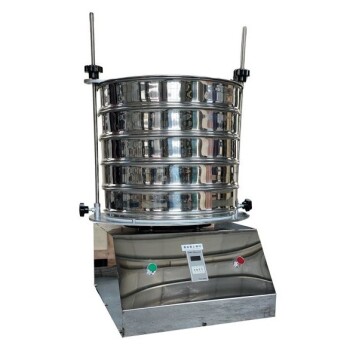
Laboratory Test Sieves and Vibratory Sieve Shaker Machine

Laboratory Test Sieves and Vibratory Sieve Shaker Machine

Efficiently process powders, granules, and small blocks with a high-frequency vibration sieve. Control vibration frequency, screen continuously or intermittently, and achieve accurate particle size determination, separation, and classification.

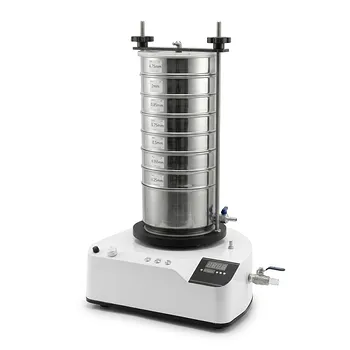
Laboratory Wet Three-Dimensional Vibratory Sieve Shaker Machine

Laboratory Wet Three-Dimensional Vibratory Sieve Shaker Machine

The wet three-dimensional vibrating sieving instrument focuses on solving the sieving tasks of dry and wet samples in the laboratory. It is suitable for sieving 20g - 3kg dry, wet or liquid samples.

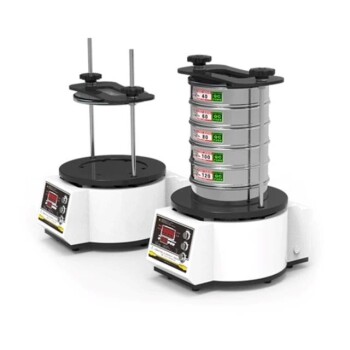
Three-dimensional electromagnetic sieving instrument

Three-dimensional electromagnetic sieving instrument

KT-VT150 is a desktop sample processing instrument for both sieving and grinding. Grinding and sieving can be used both dry and wet. The vibration amplitude is 5mm and the vibration frequency is 3000-3600 times/min.

Graphite Vacuum Furnace Negative Material Graphitization Furnace

Graphite Vacuum Furnace Negative Material Graphitization Furnace

Graphitization furnace for battery production has uniform temperature and low energy consumption. Graphitization furnace for negative electrode materials: an efficient graphitization solution for battery production and advanced functions to enhance battery performance.

Electric Split Lab Cold Isostatic Press CIP Machine for Cold Isostatic Pressing

Electric Split Lab Cold Isostatic Press CIP Machine for Cold Isostatic Pressing

Split cold isostatic presses are capable of providing higher pressures, making them suitable for testing applications that require high pressure levels.

Cold Isostatic Pressing Machine CIP for Small Workpiece Production 400Mpa

Cold Isostatic Pressing Machine CIP for Small Workpiece Production 400Mpa

Produce uniformly high-density materials with our Cold Isostatic Press. Ideal for compacting small workpieces in production settings. Widely used in powder metallurgy, ceramics, and biopharmaceutical fields for high-pressure sterilization and protein activation.

Polyethylene Separator for Lithium Battery

Polyethylene Separator for Lithium Battery

The polyethylene separator is a key component of lithium-ion batteries, located between the positive and negative electrodes. They allow the passage of lithium ions while inhibiting electron transport. The performance of the separator affects the capacity, cycle and safety of the battery.

Metallographic Specimen Mounting Machine for Laboratory Materials and Analysis

Metallographic Specimen Mounting Machine for Laboratory Materials and Analysis

Precision metallographic mounting machines for labs—automated, versatile, and efficient. Ideal for sample prep in research and quality control. Contact KINTEK today!

Heated Hydraulic Press Machine with Integrated Manual Heated Plates for Lab Use

Heated Hydraulic Press Machine with Integrated Manual Heated Plates for Lab Use

Efficiently process heat-pressing samples with our Integrated Manual Heated Lab Press. With a heating range up to 500°C, it's perfect for various industries.

Automatic Lab Cold Isostatic Press CIP Machine Cold Isostatic Pressing

Automatic Lab Cold Isostatic Press CIP Machine Cold Isostatic Pressing

Efficiently prepare samples with our Automatic Lab Cold Isostatic Press. Widely used in material research, pharmacy, and electronic industries. Provides greater flexibility and control compared to electric CIPs.

Warm Isostatic Press WIP Workstation 300Mpa for High Pressure Applications

Warm Isostatic Press WIP Workstation 300Mpa for High Pressure Applications

Discover Warm Isostatic Pressing (WIP) - A cutting-edge technology that enables uniform pressure to shape and press powdered products at a precise temperature. Ideal for complex parts and components in manufacturing.

Single Punch Electric Tablet Press Machine TDP Tablet Punching Machine

Single Punch Electric Tablet Press Machine TDP Tablet Punching Machine

The electric tablet punching machine is a laboratory equipment designed for pressing various granular and powdery raw materials into discs and other geometric shapes. It is commonly used in pharmaceutical, healthcare products, food, and other industries for small batch production and processing. The machine is compact, lightweight, and easy to operate, making it suitable for use in clinics, schools, laboratories, and research units.

Engineering Advanced Fine Ceramics Head Tweezers with Pointed Elbow Zirconia Ceramic Tip

Engineering Advanced Fine Ceramics Head Tweezers with Pointed Elbow Zirconia Ceramic Tip

Zirconia ceramic tweezers are a high-precision tool made of advanced ceramic materials, especially suitable for operating environments that require high precision and corrosion resistance. This type of tweezers not only has excellent physical properties, but is also popular in the medical and laboratory fields because of its biocompatibility.

Lab Blown Film Extrusion Three Layer Co-Extrusion Film Blowing Machine

Lab Blown Film Extrusion Three Layer Co-Extrusion Film Blowing Machine

Lab blown film extrusion is mainly used to detect the feasibility of film blowing of polymer materials and the colloid condition in the materials, as well as the dispersion of colored dispersions, controlled mixtures, and extrudates;

Benchtop Laboratory Freeze Dryer for Lab Use

Benchtop Laboratory Freeze Dryer for Lab Use

Premium benchtop laboratory freeze dryer for lyophilization, preserving samples with ≤ -60°C cooling. Ideal for pharmaceuticals & research.

Small Injection Molding Machine for Lab Use

Small Injection Molding Machine for Lab Use

The small injection molding machinehas fast and stable movements; good controllability and repeatability, super energy saving; the product can be automatically dropped and formed; the machine body is low, convenient for feeding, easy to maintain, and no height restrictions on the installation site.

Custom PTFE Teflon Parts Manufacturer Laboratory High Temperature Mixing Paddle Mixer

Custom PTFE Teflon Parts Manufacturer Laboratory High Temperature Mixing Paddle Mixer

The PTFE mixing paddle mixer is a versatile and robust tool designed for laboratory use, particularly in environments requiring high resistance to chemicals and extreme temperatures. Crafted from high-quality PTFE, this mixer boasts several key features that enhance its functionality and durability.

Laboratory manual slicer

Laboratory manual slicer

Manual microtome is a high-precision cutting device designed for laboratories, industry and medical fields. It is suitable for the preparation of thin slices of various materials such as paraffin samples, biological tissues, battery materials, food, etc.

High Purity Zinc Foil for Battery Lab Applications

High Purity Zinc Foil for Battery Lab Applications

There are very few harmful impurities in the chemical composition of zinc foil, and the surface of the product is straight and smooth; it has good comprehensive properties, processability, electroplating colorability, oxidation resistance and corrosion resistance, etc.


Leave Your Message