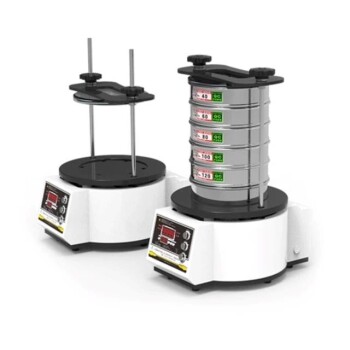
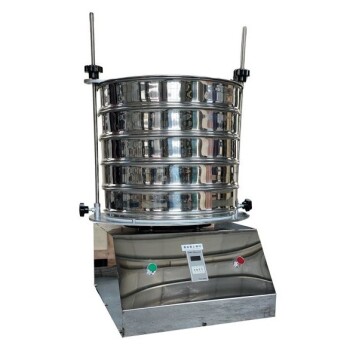
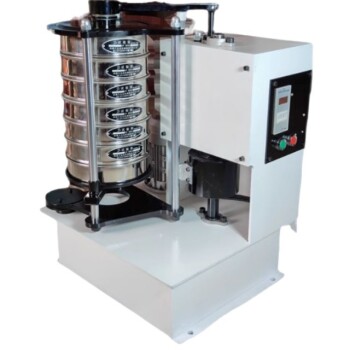
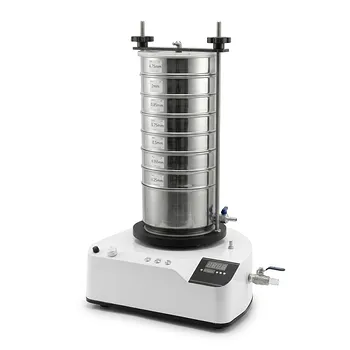
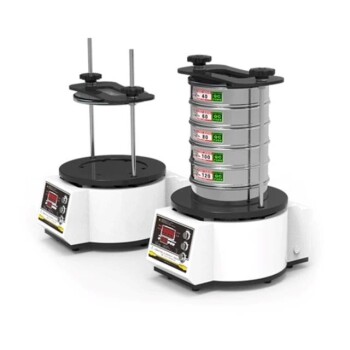
The primary purpose of using a standard sieve, such as a 40-mesh screen, is to perform precise particle size grading on ground natural kaolin powder. This mechanical separation ensures that the base material achieves a specific fineness and a uniform particle distribution, which are prerequisites for consistent chemical behavior in later processing stages.
Core Takeaway Sieving is not merely about physical separation; it is a critical standardization step that guarantees a stable contact area between the kaolin carrier and reaction reagents. This uniformity optimizes subsequent acidification and impregnation processes, directly enhancing the overall activity and efficiency of the final catalyst.
The Role of Uniformity in Catalyst Preparation
Establishing Baseline Consistency
Natural kaolin, even after grinding, often contains a wide range of particle sizes. Using a standard sieve filters out oversized particles and ensures the powder meets a specified fineness.
This grading process creates a homogeneous base material. Without this step, random variations in particle size would lead to unpredictable results in the final catalyst structure.
Optimizing Surface Contact
The chemical reactivity of a catalyst carrier is heavily dependent on its accessible surface area. A consistent particle size guarantees a stable contact area throughout the bulk of the material.
This stability is vital when the carrier interacts with chemical agents. It ensures that every unit of the carrier is exposed to the same conditions, preventing "hot spots" or dead zones during reaction.
Impact on Chemical Processing
Enhancing Acidification and Impregnation
The preparation of kaolin carriers involves complex chemical steps, specifically acidification and impregnation. These processes modify the internal structure of the clay to activate it.
If particle sizes are irregular, reagents penetrate the material unevenly. Sieving ensures that acids and active metal precursors distribute uniformly, leading to a consistent chemical composition across the entire batch.
Maximizing Catalytic Activity
The ultimate goal of particle grading is to enhance the overall activity of the catalyst.
By standardizing the physical dimensions of the carrier, you maximize the efficiency of the active sites. This results in a final product that performs more effectively in industrial applications.
Understanding the Trade-offs
Balancing Diffusion and Pressure Drop
While finer particles offer more surface area, they can cause issues in reactor dynamics. Extremely fine powders may lead to excessive pressure drops across a reactor bed, impeding flow.
Conversely, particles that are too large (which the sieve removes) suffer from internal diffusion limitations. This means reagents cannot reach the center of the particle effectively, rendering the inner volume useless and skewing kinetic data.
The Necessity of Grading
Omitting the sieving step introduces significant variables. Inconsistent packing can occur within fixed-bed reactors, leading to channeling where fluids bypass portions of the catalyst entirely.
Therefore, the sieve acts as the gatekeeper, balancing the need for high surface area against the hydraulic requirements of the reactor system.
Making the Right Choice for Your Goal
Selecting the correct mesh size and strictly adhering to sieving protocols determines the reliability of your catalyst.
- If your primary focus is Maximizing Chemical Activity: Prioritize a finer mesh size to increase the surface-area-to-volume ratio, ensuring reagents can fully penetrate the carrier during impregnation.
- If your primary focus is Process Stability: Focus on a narrow particle size distribution (rejecting both fines and coarse particles) to ensure uniform packing and predictable pressure drops in the reactor.
Uniformity in the physical carrier is the foundation of predictability in chemical performance.
Summary Table:
| Feature | Purpose in Kaolin Preparation | Impact on Catalyst Performance |
|---|---|---|
| Particle Grading | Removes oversized particles and ensures specific fineness | Ensures stable and predictable chemical behavior |
| Surface Area | Standardizes contact area for reagents | Optimizes acidification and impregnation efficiency |
| Uniformity | Prevents "hot spots" or dead zones during reaction | Increases overall catalytic activity and yield |
| Flow Control | Balances diffusion and pressure drop | Prevents reactor channeling and flow resistance |
Elevate Your Material Preparation with KINTEK Precision Solutions
Consistency in particle size is the foundation of high-performance catalyst research. KINTEK specializes in premium laboratory equipment designed to meet the rigorous demands of material science. From high-precision sieving equipment and crushing systems to our advanced high-temperature furnaces (muffle, tube, vacuum) and high-pressure reactors, we provide the tools you need for uniform results.
Whether you are preparing kaolin carriers or developing next-generation battery materials, our comprehensive portfolio—including PTFE consumables, ceramic crucibles, and hydraulic presses—ensures your lab operates at peak efficiency.
Ready to standardize your results? Contact KINTEK today for expert guidance and tailored equipment solutions!
References
- Sunday Jatau, Ahsan Hafiz Muhammad. Acidic Influence in Conversion of Hospital Plastic Waste into Liquid Fuel using Kaolin Base-supported Catalysts. DOI: 10.4314/jasem.v27i4.6
This article is also based on technical information from Kintek Solution Knowledge Base .
Related Products
- Custom PTFE Teflon Parts Manufacturer for PTFE Mesh F4 Sieve
- Three-dimensional electromagnetic sieving instrument
- Vibratory Sieve Shaker Machine Dry Three-Dimensional Vibrating Sieve
- Laboratory Test Sieves and Sieving Machines
- Laboratory Vibratory Sieve Shaker Machine Slap Vibrating Sieve
People Also Ask
- What are the primary reasons for selecting PTFE as a matrix? Enhance Composites with Carbon Nanotube Reinforcement
- How is PTFE utilized for insulation in Alloy 22 corrosion setups? Ensure Signal Purity & Accuracy
- Is PTFE corrosion resistant? Discover the Ultimate Chemical Resistance for Your Lab
- What are the specific applications of PTFE in micro-batch slug flow systems? Enhance Your Microfluidic Reaction Purity
- What is the mesh size of a sieve? A Guide to Particle Size and Sieve Selection