The primary purpose of sieving $\text{Al}_2\text{O}_3/\text{ZrO}_2$ ceramic powders is to ensure structural uniformity. During the drying phase, fine ceramic powders inevitably form large, hard clumps known as agglomerates. You must pass the powder through a standard sieve (typically 150-mesh or finer) to break up or remove these clumps, ensuring the material entering the mold is consistent in size and capable of packing tightly.
Why this matters: Without sieving, large agglomerates act as structural contaminants. They prevent the powder from packing densely and evenly, leading to "fatal" defects in the final ceramic part—specifically internal pores, density gradients, and uneven shrinkage during sintering.
The Origin of the Problem: Agglomeration
The Side Effect of Drying
When ultra-fine ceramic powders undergo drying—particularly vacuum drying—they naturally stick together.
Hard Agglomerates
This process creates hard agglomerates, which are clusters of particles bound tightly together.
The Uniformity Gap
If left untreated, these clumps create a mixture of fine dust and large "rocks." This lack of uniformity makes it impossible to achieve a consistent fill within the mold.
The Impact on Mold Performance
Improving Packing Density
Sieving forces the powder to conform to a specific maximum particle size (e.g., passing through a 150-mesh screen).
Eliminating Voids
By removing large particles, the remaining powder can pack together much more closely. This maximizes the packing density inside the mold.
Preventing Density Gradients
When powder size is inconsistent, some areas of the mold become denser than others. Sieving ensures the density is uniform throughout the entire volume of the part.
The Consequence for the Final Product
Stopping Internal Pores
The primary reference highlights that uneven packing leads to internal pores in the final sintered body. Sieving is the most effective preventative measure for this defect.
Ensuring Even Sintering
If the green body (the molded powder) has uneven density, it will shrink unevenly when fired.
Structural Reliability
A sieved powder results in a final ceramic body with high overall density and no large-scale defects, which is critical for the material's mechanical strength.
Common Pitfalls and Considerations
Mesh Size Selection
While the primary reference suggests a 150-mesh sieve, supplementary data indicates that finer screens (such as 200-mesh) may offer even better fluidity and density.
The Trade-off
Using a finer sieve (higher mesh number) removes smaller agglomerates but increases processing time. You must balance the need for extreme purity against production speed.
Flowability vs. Density
Sieving does not just improve density; it also improves flowability. Poorly sieved powder may bridge or stick during mold filling, creating voids before pressure is even applied.
Making the Right Choice for Your Goal
To ensure the highest quality $\text{Al}_2\text{O}_3/\text{ZrO}_2$ ceramics, apply the following guidelines:
- If your primary focus is eliminating structural defects: Use a finer sieve (e.g., 200-mesh) to aggressively remove even small agglomerates, ensuring the highest possible sintered density.
- If your primary focus is process consistency: Standardize your sieving step (e.g., 150-mesh) to guarantee that every batch has the same flowability and packing characteristics before molding.
Consistency in the powder phase is the only way to guarantee integrity in the sintered phase.
Summary Table:
| Factor | Without Sieving (Agglomerated) | With Sieving (Standardized) |
|---|---|---|
| Particle Uniformity | Inconsistent (Clumps + Fine Dust) | Highly Uniform (Controlled Max Size) |
| Packing Density | Low & Uneven (Structural Voids) | High & Consistent (Tight Packing) |
| Flowability | Poor (Bridging & Sticking) | Excellent (Smooth Mold Filling) |
| Sintering Result | Uneven Shrinkage & Internal Pores | High Density & Structural Integrity |
Elevate Your Ceramic Research with KINTEK Precision Solutions
Don't let powder agglomeration compromise the structural integrity of your advanced ceramics. KINTEK specializes in providing high-performance laboratory equipment designed for precision material processing. From industrial-grade sieving equipment and crushing systems to high-pressure hydraulic pellet presses and vacuum sintering furnaces, we offer the complete toolkit needed to achieve zero-defect Al2O3 and ZrO2 components.
Whether you are refining powder flowability or scaling up production, our experts are ready to provide the right consumables—including high-purity ceramics, crucibles, and PTFE products—to ensure your lab achieves consistent, high-density results every time.
Ready to optimize your ceramic workflow? Contact KINTEK today for a customized quote!
Related Products
- Custom PTFE Teflon Parts Manufacturer for PTFE Mesh F4 Sieve
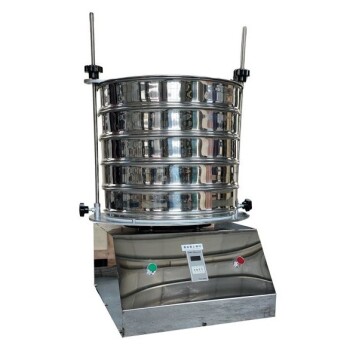
- Laboratory Test Sieves and Sieving Machines
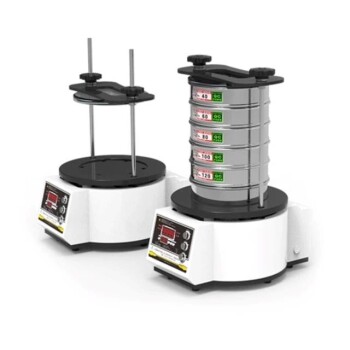
- Three-dimensional electromagnetic sieving instrument
- Vibratory Sieve Shaker Machine Dry Three-Dimensional Vibrating Sieve
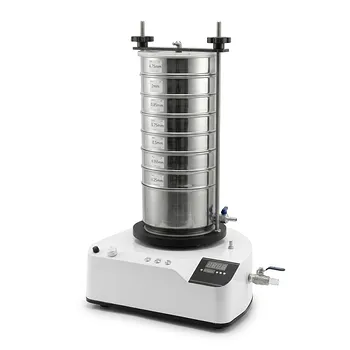
- Laboratory Vibratory Sieve Shaker Machine for Dry and Wet Three-Dimensional Sieving
People Also Ask
- What are the primary reasons for selecting PTFE as a matrix? Enhance Composites with Carbon Nanotube Reinforcement
- How is PTFE utilized for insulation in Alloy 22 corrosion setups? Ensure Signal Purity & Accuracy
- Is PTFE corrosion resistant? Discover the Ultimate Chemical Resistance for Your Lab
- What are the specific applications of PTFE in micro-batch slug flow systems? Enhance Your Microfluidic Reaction Purity
- What is the mesh size of a sieve? A Guide to Particle Size and Sieve Selection