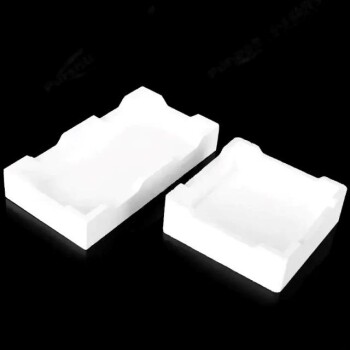
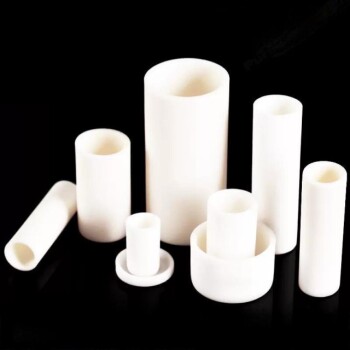
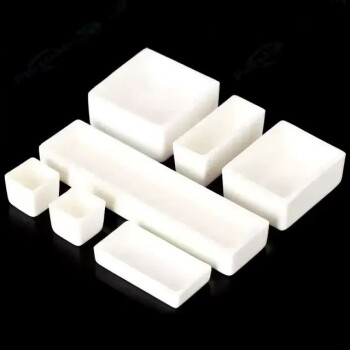
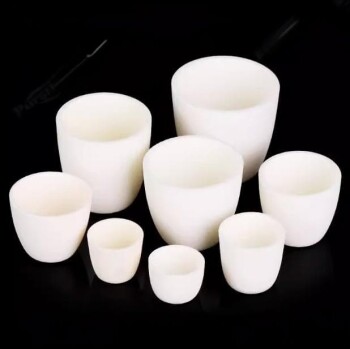
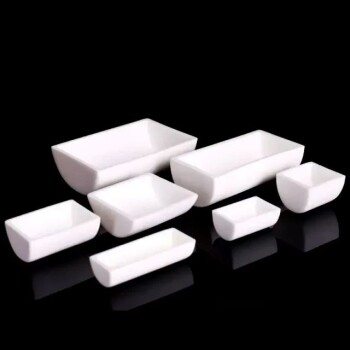
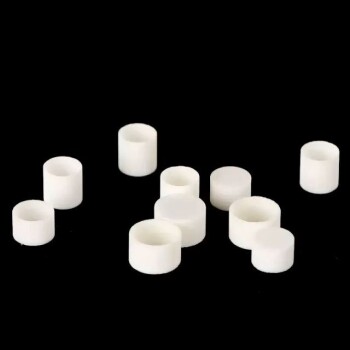
Alumina ceramic liners are the critical defense mechanism in Supercritical Water Gasification (SCWG) reactors, designed to shield the vessel's metal walls from the aggressive hydrothermal environment. They serve a dual purpose: physically protecting the reactor's structural integrity from corrosion and chemically isolating the biomass reaction to prevent contamination from leaching metal ions.
The Core Insight Supercritical water creates a harsh environment that rapidly degrades standard metals and leaches impurities into the reaction. Alumina liners solve this by providing a thermally stable, chemically inert barrier that preserves both the equipment lifespan and the chemical purity of the gasification process.
The Challenge of the Supercritical Environment
Combating Hydrothermal Corrosion
The conditions required for Supercritical Water Gasification involve high temperatures and high pressures. In this state, water becomes an extremely aggressive solvent.
Without protection, these hydrothermal conditions attack the metal surfaces of the reactor walls. This leads to rapid degradation of the reactor's structural material, significantly shortening the equipment's service life.
The Role of the Physical Barrier
Alumina ceramic acts as an isolation shield. By placing this liner inside the reactor, engineers ensure that the corrosive reaction media never makes direct contact with the load-bearing metal walls.
This design effectively decouples the structural requirements (held by the metal) from the chemical resistance requirements (handled by the ceramic).
Why Alumina is the Material of Choice
Exceptional Thermal Stability
SCWG processes operate under intense thermal stress. Alumina ceramic is selected specifically for its ability to withstand these temperatures without losing its physical properties.
Unlike many protective coatings that might peel or degrade under heat, a solid alumina liner maintains its structural integrity, ensuring continuous protection throughout the reaction cycle.
Chemical Inertness and Purity
Beyond protecting the vessel, the liner protects the science of the reaction. Metal reactor walls can release metal ions into the mixture as they corrode.
Alumina is chemically inert in this environment. It prevents these metal impurities from leaching into the biomass slurry, ensuring the reaction products are not contaminated by the reactor material itself.
Common Pitfalls: The Risk of Catalytic Interference
Understanding Unwanted Catalysis
A critical, often overlooked reason for using alumina liners is the prevention of "catalytic interference."
The metal ions found in standard reactor alloys (such as nickel or iron) are not passive; they can act as catalysts. If these ions leach into the biomass mixture, they can artificially alter the reaction pathway, skewing data and yielding unpredictable gasification results.
Preserving Reaction Accuracy
By isolating the metal wall, the alumina liner ensures that the gasification acts solely on the biomass and any intentional catalysts added by the researcher.
This guarantees that the results observed are due to the experimental parameters, not the degradation of the reactor hardware.
Making the Right Choice for Your Project
When designing or selecting a reactor for SCWG, the inclusion of an alumina liner is a strategic decision based on your specific operational goals.
- If your primary focus is Equipment Longevity: The liner is essential to prevent rapid wall thinning and failure caused by corrosive hydrothermal fluids.
- If your primary focus is Data Accuracy: The liner is non-negotiable to eliminate catalytic interference from leached metal ions that would otherwise skew your chemical results.
Summary: The alumina liner is not just a protective shield; it is a prerequisite for maintaining the chemical integrity of the biomass conversion process.
Summary Table:
| Feature | Benefit of Alumina Ceramic Liner in SCWG |
|---|---|
| Corrosion Resistance | Shields metal walls from aggressive hydrothermal fluids, extending reactor life. |
| Thermal Stability | Maintains structural integrity under the extreme temperatures of supercritical water. |
| Chemical Inertness | Prevents metal ion leaching, ensuring reaction products remain uncontaminated. |
| Catalytic Control | Eliminates unwanted catalytic interference from reactor wall alloys like nickel or iron. |
| Design Function | Decouples structural load-bearing (metal) from chemical resistance (ceramic). |
Upgrade Your Research with KINTEK Precision Engineering
Don't let hydrothermal corrosion or metal contamination compromise your supercritical water gasification results. KINTEK specializes in advanced laboratory solutions, offering high-performance high-temperature high-pressure reactors and autoclaves equipped with specialized liners to protect your investment and your data.
Whether you need robust crushing and milling systems, PTFE products, or customized high-temperature furnaces, our team provides the high-quality equipment and consumables necessary for rigorous biomass and battery research.
Maximize your lab's efficiency and ensure data accuracy today.
Contact KINTEK Experts to Find Your Solution
References
- Daniele Castello, Luca Fiori. Supercritical Water Gasification of Biomass in a Ceramic Reactor: Long-Time Batch Experiments. DOI: 10.3390/en10111734
This article is also based on technical information from Kintek Solution Knowledge Base .
Related Products
- Customizable High Pressure Reactors for Advanced Scientific and Industrial Applications
- High Pressure Laboratory Autoclave Reactor for Hydrothermal Synthesis
- Stainless High Pressure Autoclave Reactor Laboratory Pressure Reactor
- Customizable Laboratory High Temperature High Pressure Reactors for Diverse Scientific Applications
- Advanced Engineering Fine Ceramics Alumina Ceramic Saggar for Fine Corundum
People Also Ask
- What is the function of high-pressure reactors in the synthesis of MFI-type zeolites? Master Dry Gel Conversion.
- Graphene Fiber Synthesis: Key High-Pressure Reactor Processing Conditions Explained
- What reactor is used for high pressure reactions? Select the Right Autoclave for Your Lab
- What is the primary function of a high-pressure reactor in NiMoO4 preparation? Optimize Hydrothermal Catalyst Synthesis
- What are the hazards of high pressure reactors? A Guide to Managing Explosive Risks