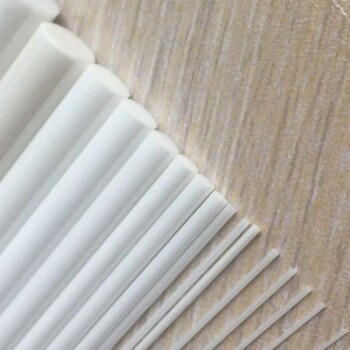
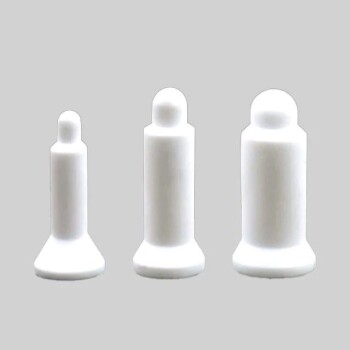
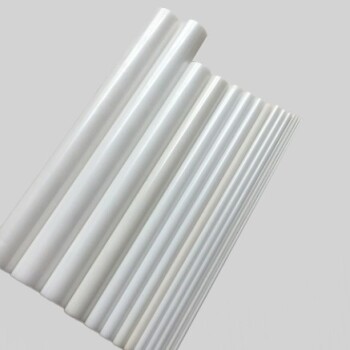
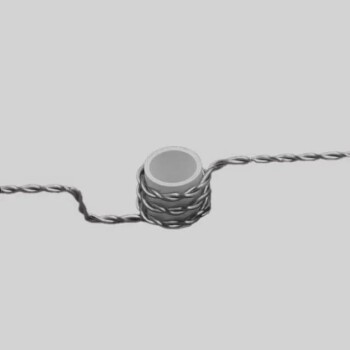
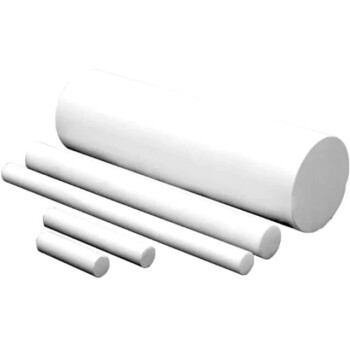
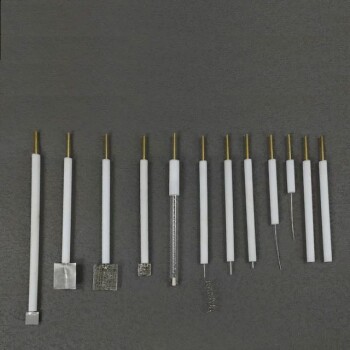
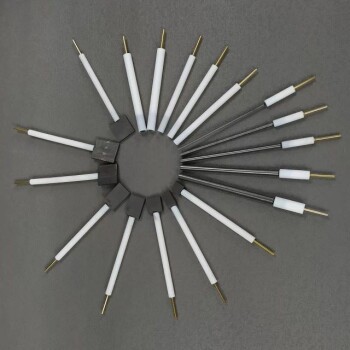
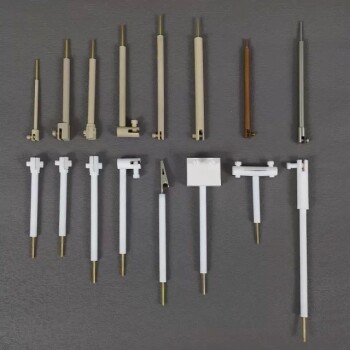
Spring-loaded alumina ceramic rods serve a dual purpose: they provide essential mechanical stability and ensure electrical isolation within point-contact electrode assemblies. Their primary function is to maintain precise, constant physical pressure of fine wire electrodes (such as 0.5 mm copper or platinum) against an electrolyte surface, even during the expansion and contraction of high-temperature thermal cycling.
The core value of this component lies in its ability to decouple mechanical support from electrical interference. By adapting to thermal changes while preventing signal loss, these rods guarantee that the data collected represents pure reaction kinetics rather than environmental artifacts.
Mechanisms of Mechanical Stability
Adapting to Thermal Cycling
The most significant challenge in high-temperature testing is the physical expansion and contraction of materials.
The spring-loaded mechanism actively compensates for these dimensional changes.
This ensures that the contact pressure between the electrode and the electrolyte remains constant throughout the entire heating and cooling process.
Supporting Delicate Components
Point-contact assemblies often rely on very fine wires, typically around 0.5 mm in diameter.
Alumina ceramic rods provide the rigid structural backbone necessary to support these delicate copper or platinum wires.
Without this support, maintaining the specific geometry required for accurate point-contact testing would be impossible.
Ensuring Signal Integrity
High-Temperature Electrical Insulation
Alumina ceramic is selected specifically for its superior insulating properties in extreme heat.
It prevents electrical current from leaking into the support structure, which could cause short circuits or signal degradation.
Preserving Reaction Purity
The ultimate goal of the assembly is to capture accurate reaction kinetics signals.
By eliminating signal loss and preventing shorts, the alumina rods ensure the purity of the data collection.
This allows researchers to attribute changes in signal directly to the electrochemical reaction, rather than equipment interference.
Understanding the Operational Risks
The Consequence of Pressure Variance
If the spring-loading mechanism fails to maintain constant pressure, the data becomes unreliable.
Fluctuating physical contact alters the contact area, introducing noise into the kinetic measurements.
The Risk of Insulation Failure
At high temperatures, inferior materials can lose their insulating, dielectric strength.
This failure leads to "ghost signals" or complete short circuits that render the test data useless.
Ensuring Data Reliability in Your Setup
To maximize the effectiveness of your point-contact electrode test assembly, consider the following specific goals:
- If your primary focus is signal purity: Ensure the alumina ceramic used is of high purity to maximize high-temperature insulation and prevent signal loss.
- If your primary focus is mechanical longevity: Verify that the spring tension is calibrated to accommodate the full range of thermal expansion for your specific electrode material (Cu or Pt).
The fidelity of your electrochemical data relies heavily on the passive, yet critical, stability provided by these ceramic components.
Summary Table:
| Function | Mechanism | Benefit to Researcher |
|---|---|---|
| Mechanical Stability | Spring-loaded tensioning | Compensates for thermal expansion/contraction |
| Structural Support | Rigid alumina backbone | Prevents deformation of fine 0.5mm wires (Cu/Pt) |
| Signal Integrity | High-temp insulation | Prevents current leakage and "ghost signals" |
| Data Accuracy | Constant contact pressure | Ensures measurements reflect pure reaction kinetics |
Elevate Your Electrochemical Research Precision with KINTEK
Don't let mechanical instability or signal leakage compromise your high-temperature data. KINTEK specializes in advanced laboratory solutions, providing high-purity electrolytic cells and electrodes alongside our renowned range of high-temperature furnaces (muffle, vacuum, CVD) and PTFE or ceramic consumables.
Whether you are conducting battery research or studying reaction kinetics, our precision-engineered components ensure your setup maintains structural integrity under the most demanding thermal cycles.
Ready to optimize your point-contact test assembly? Contact our technical experts today to discover how our comprehensive portfolio of lab equipment and consumables can deliver the reliability your research deserves.
References
- Shay A. Robinson, Truls Norby. Comparison of Cu and Pt point-contact electrodes on proton conducting BaZr0.7Ce0.2Y0.1O3−. DOI: 10.1016/j.ssi.2017.02.014
This article is also based on technical information from Kintek Solution Knowledge Base .
Related Products
- Engineering Advanced Fine Alumina Al2O3 Ceramic Rod Insulated for Industrial Applications
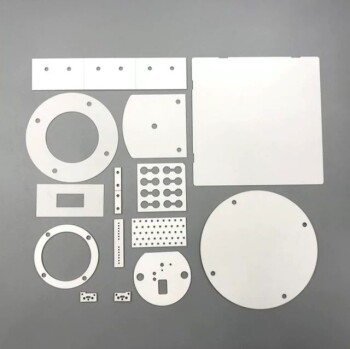
- Custom-Made Alumina Zirconia Special-Shaped Ceramic Plates for Engineering Advanced Fine Ceramics Processing
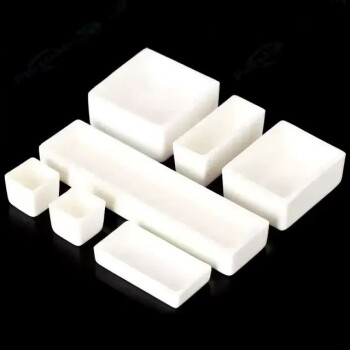
- Engineering Advanced Fine Ceramics Alumina Crucibles (Al2O3) for Thermal Analysis TGA DTA
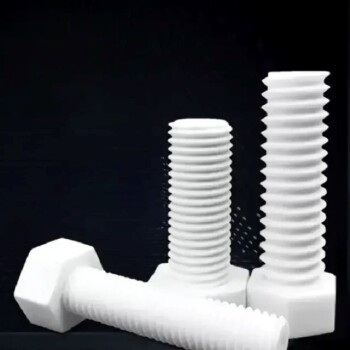
- High Quality Alumina Ceramic Screw for Engineering Advanced Fine Ceramics with High Temperature Resistance and Insulation
- Engineering Advanced Fine Alumina Al2O3 Ceramic Crucible for Laboratory Muffle Furnace
People Also Ask
- Why are high-purity alumina rods used in LOCA experiments? Simulating Nuclear Fuel Gap and Steam Starvation
- How is alumina ceramic made? A Guide to Manufacturing Methods and Material Properties
- What ceramics are used for insulation? Choose the Right Material for Thermal or Electrical Needs
- Why are alumina insulation discs used as sample supports in CCPN? Ensure Arcing-Free, Uniform Plasma Nitriding
- How do alumina ceramic tubes address technical challenges in electrochemical devices? Ensure Peak Signal Integrity.