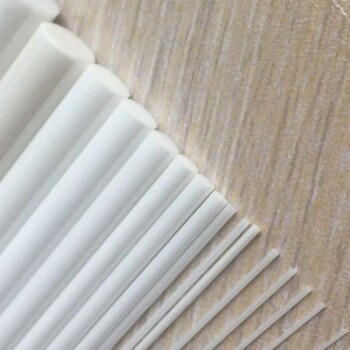
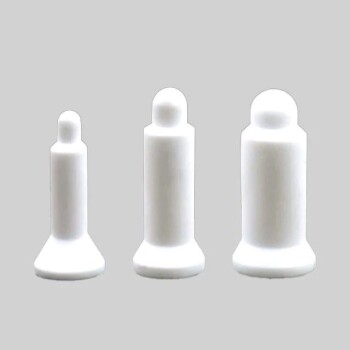
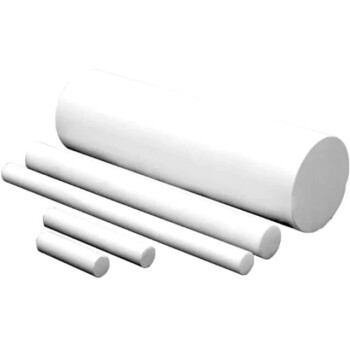
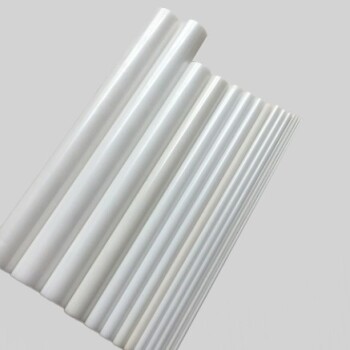
High-purity alumina support rods function primarily as inert, thermally stable sample holders essential for maintaining the integrity of supercritical carbon dioxide (sCO2) experiments. They act as a neutral barrier that physically secures metal samples while preventing chemical contamination, specifically designed to survive extreme conditions such as temperatures of 650°C and pressures of 20.7 MPa.
In high-stakes material testing, the goal is to test the sample against the environment, not against the sample holder. High-purity alumina rods provide the necessary isolation to ensure that any observed degradation is strictly a result of the sCO2 exposure, eliminating false positives caused by equipment interaction.
Ensuring Structural Integrity Under Stress
Withstanding Extreme Conditions
The primary mechanical function of these rods is to maintain physical rigidity in environments that would compromise lesser materials.
sCO2 experiments often operate at 650°C and 20.7 MPa, conditions where standard support materials might deform or lose structural integrity.
Consistent Sample Positioning
High-purity alumina leverages its inherent high-temperature structural strength to act as a reliable anchor.
By resisting thermal creep and deformation, the rods ensure samples remain in the correct position and orientation throughout the duration of the exposure test.
Preserving Chemical Purity and Data Accuracy
Preventing Interdiffusion
The most critical scientific function of the alumina rod is to act as a chemical firewall between the holder and the test subject.
When metal samples are held by metal supports at high temperatures, atoms can migrate between materials, known as interdiffusion.
Alumina rods eliminate this variable, preventing the support material from altering the composition of the metal sample.
Maintaining an Inert Environment
To obtain objective experimental results, the "exposure environment" must consist only of the sCO2 and the sample.
High-purity alumina is chemically inert, meaning it will not react with the sCO2 or the metal sample.
This guarantees that the purity of the test environment is maintained, ensuring data accuracy regarding corrosion and material performance.
Understanding the Operational Trade-offs
Handling Constraints
While alumina offers superior thermal and chemical resistance, it functions differently than metal supports regarding ductility.
As a ceramic material, high-purity alumina is rigid and brittle; it does not yield like metal.
This requires careful handling during the loading and unloading of samples to prevent brittle fracture of the support rods themselves.
Making the Right Choice for Your Experiment
To maximize the reliability of your supercritical CO2 exposure data, select your support materials based on the specific threats to your data validity.
- If your primary focus is High-Temperature Mechanical Stability: Rely on high-purity alumina to prevent structural failure or deformation at temperatures reaching 650°C.
- If your primary focus is Chemical Composition and Corrosion Analysis: Use alumina rods to eliminate the risk of interdiffusion and cross-contamination between the sample and the holder.
By utilizing high-purity alumina, you transform the sample holder from a potential variable into a constant, ensuring your results reflect reality.
Summary Table:
| Feature | Function in sCO2 Experiments |
|---|---|
| Material Purity | Prevents chemical interdiffusion and sample contamination. |
| Thermal Stability | Maintains structural rigidity at temperatures up to 650°C. |
| Chemical Inertness | Ensures no reaction with supercritical CO2 or metal samples. |
| Mechanical Strength | Resists thermal creep to ensure consistent sample positioning. |
| Pressure Resistance | Withstands extreme experimental pressures up to 20.7 MPa. |
Elevate Your Material Research with KINTEK Precision
Don't let sample-holder interactions compromise your critical data. KINTEK specializes in high-performance laboratory solutions designed for the most demanding environments. Whether you are conducting supercritical CO2 studies or advanced thermal processing, our high-purity alumina rods and ceramics provide the inert stability you need.
From high-temperature high-pressure reactors and muffle furnaces to specialized crucibles and PTFE products, KINTEK delivers the tools essential for precision engineering and battery research.
Ready to eliminate variables and achieve superior experimental accuracy? Contact KINTEK today to consult with our experts on the ideal consumables and equipment for your laboratory.
References
- Lizhen Tan, Todd R. Allen. Corrosion of austenitic and ferritic-martensitic steels exposed to supercritical carbon dioxide. DOI: 10.1016/j.corsci.2011.06.002
This article is also based on technical information from Kintek Solution Knowledge Base .
Related Products
- Engineering Advanced Fine Alumina Al2O3 Ceramic Rod Insulated for Industrial Applications
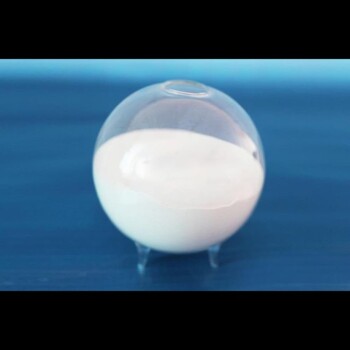
- High Purity Alumina Granulated Powder for Engineering Advanced Fine Ceramics
- High Temperature Wear-Resistant Alumina Al2O3 Plate for Engineering Advanced Fine Ceramics
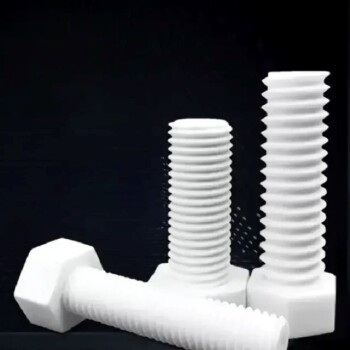
- High Quality Alumina Ceramic Screw for Engineering Advanced Fine Ceramics with High Temperature Resistance and Insulation
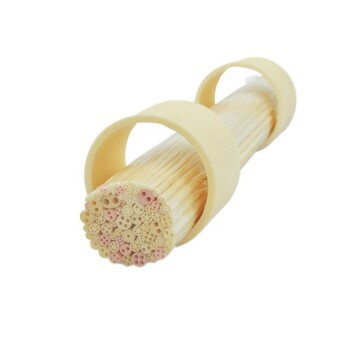
- High Temperature Aluminum Oxide (Al2O3) Protective Tube for Engineering Advanced Fine Ceramics
People Also Ask
- Why are high-purity alumina rods used in LOCA experiments? Simulating Nuclear Fuel Gap and Steam Starvation
- How is alumina ceramic made? A Guide to Manufacturing Methods and Material Properties
- What ceramics are used for insulation? Choose the Right Material for Thermal or Electrical Needs
- Why are alumina insulation discs used as sample supports in CCPN? Ensure Arcing-Free, Uniform Plasma Nitriding
- How do alumina ceramic tubes address technical challenges in electrochemical devices? Ensure Peak Signal Integrity.