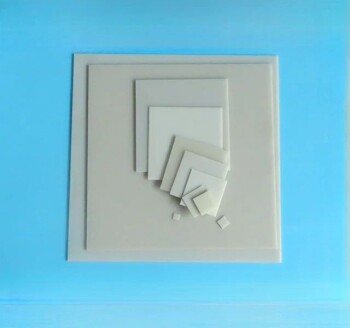
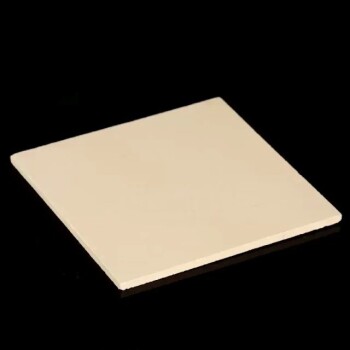
The distinct process advantage of using an alumina plate lies in its dual function as a chemically inert barrier and a physical limiting agent. By placing the alumina plate facing the copper substrate, you create a constrained environment that dictates how the reaction solution interacts with the copper, ensuring high-purity synthesis without introducing external contaminants.
The primary value of the alumina plate is its ability to act as a neutral physical boundary. It forces CuO crystals to grow preferentially along specific planes, resulting in highly crystalline, neatly arranged quadrilateral nanosheet films.
The Mechanism of Spatial Confinement
Establishing a Two-Dimensional Microspace
The alumina plate provides a critical physical constraint against the copper plate.
By limiting the volume between the two surfaces, the alumina creates a two-dimensional microspace. This confined environment fundamentally alters the diffusion and interaction of the reaction solution compared to an open bulk solution.
Preventing Reaction Contamination
A major challenge in nanofilm synthesis is maintaining the purity of the chemical environment.
The alumina plate is selected specifically because it serves as a chemically inert substrate. It does not react with the solution or release interfering impurities, ensuring that the chemical composition of the developing film remains compromised only by the intended reactants.
Impact on Nanofilm Morphology
Directing Crystal Orientation
The spatial constraints imposed by the alumina plate are not merely physical barriers; they actively guide the growth mechanism.
This setup ensures that CuO crystals grow preferentially along specific crystal planes. The confinement restricts random 3D growth, forcing the lattice to expand in a controlled, directional manner.
Achieving Uniform Geometry
The ultimate physical result of this process is superior structural uniformity.
Because of the directed growth and lack of impurities, the resulting CuO films are characterized by high crystallinity. The morphology manifests as neatly arranged quadrilateral nanosheets rather than disordered or irregular structures.
Understanding the Operational Dependencies
The Necessity of the "Sandwich" Structure
It is important to recognize that the alumina plate is not a passive component; it is an active structural variable.
The success of this synthesis relies entirely on the geometry of the microspace. If the physical constraint is removed or the spacing is irregular, the preferential growth along specific planes will not occur, and the uniformity of the quadrilateral nanosheets will be lost.
Making the Right Choice for Your Goal
To maximize the quality of your CuO nanofilms, consider your specific priorities when setting up the substrate assembly:
- If your primary focus is Chemical Purity: Rely on the alumina plate's inert properties to eliminate the risk of introducing foreign ions that could dope or defect the CuO lattice.
- If your primary focus is Structural Uniformity: Ensure the physical constraint between the alumina and copper is precise, as this gap defines the microspace necessary for forming neatly arranged quadrilateral nanosheets.
By leveraging the inert and constraining nature of alumina, you transform a standard chemical reaction into a precision engineering process.
Summary Table:
| Feature | Advantage in CuO Synthesis |
|---|---|
| Material Property | Chemically inert; prevents contamination and unwanted doping. |
| Spatial Constraint | Creates a 2D microspace for controlled diffusion and reaction. |
| Growth Guidance | Forces preferential growth along specific crystal planes. |
| Film Morphology | Produces neatly arranged, highly crystalline quadrilateral nanosheets. |
| Process Stability | Provides a neutral physical boundary for uniform film thickness. |
Elevate Your Nanomaterial Synthesis with KINTEK
Precision in CuO nanofilm production requires the highest quality materials and equipment. At KINTEK, we specialize in providing researchers and industrial labs with the essential tools needed for advanced material engineering. Whether you require high-purity ceramics and alumina substrates to act as inert barriers, or high-temperature furnaces and autoclaves to maintain the perfect reaction environment, we have you covered.
Our extensive portfolio includes:
- Consumables: High-grade PTFE products, ceramics, and crucibles.
- Thermal Processing: Muffle, tube, vacuum, and CVD furnaces for precise heat treatment.
- Lab Equipment: Hydraulic presses, crushing systems, and cooling solutions.
Don't compromise on your research results. Contact KINTEK today to discuss your specific laboratory needs and find the perfect equipment for your workflow!
References
- Mitsunori Yada, Yuko Inoue. Synthesis of CuO Quadrilateral Nanoplate Thin Films by Controlled Crystal Growth in a Two-Dimensional Microspace. DOI: 10.3390/asec2023-15364
This article is also based on technical information from Kintek Solution Knowledge Base .
Related Products
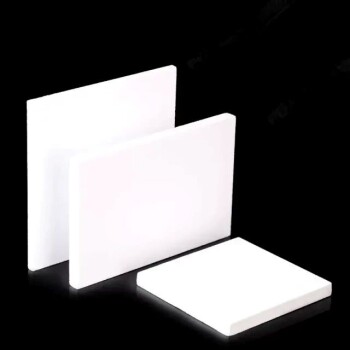
- High Temperature Wear-Resistant Alumina Al2O3 Plate for Engineering Advanced Fine Ceramics
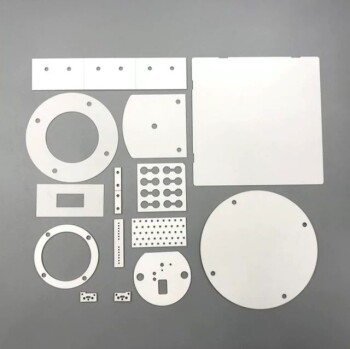
- Custom-Made Alumina Zirconia Special-Shaped Ceramic Plates for Engineering Advanced Fine Ceramics Processing
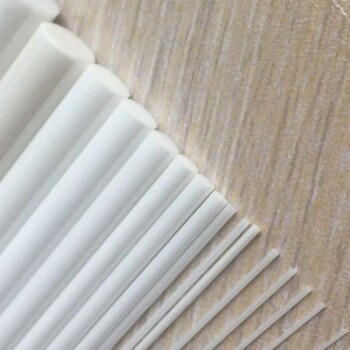
- Engineering Advanced Fine Alumina Al2O3 Ceramic Rod Insulated for Industrial Applications
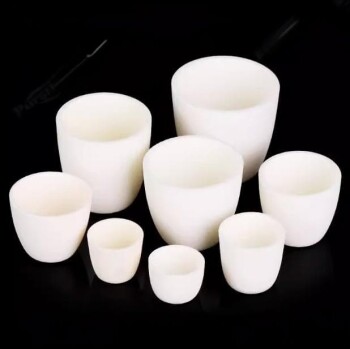
- Arc-Shaped Alumina Ceramic Crucible High Temperature Resistant for Engineering Advanced Fine Ceramics
- Engineering Advanced Fine Alumina (Al₂O₃) Ceramic Positioning Pin Straight Bevel for Precision Applications
People Also Ask
- What function do alumina ceramic plates serve as supports in the preparation of molecular sieve membranes?
- How is alumina ceramic made? A Guide to Manufacturing Methods and Material Properties
- Why use high-purity alumina plates for sintering porous stainless steel? Ensure Purity & Precision
- What is the function of alumina setter plates for LATP? Protect Material Purity & Prevent Adhesion
- What is the purpose of using high-purity alumina plates during the sintering of AlN mats? Ensure Precision & Purity