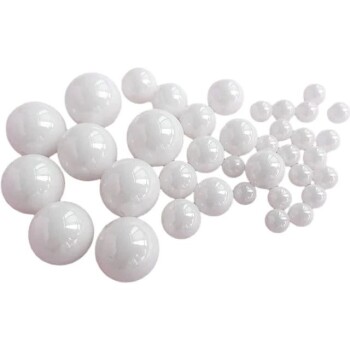
Alumina (Al2O3) ceramic balls function as the standardized counterface material in high-temperature friction and wear testing. They act as the "opponent" against which MAX phase materials are rubbed to rigorously evaluate durability, friction coefficients, and self-lubricating capabilities under extreme thermal stress.
In high-temperature ball-on-disk experiments, the alumina ball serves as a chemically stable and extremely hard constant. This stability ensures that any changes in friction or wear are attributable to the MAX phase material itself, rather than the degradation of the testing tool.
The Mechanics of the Test Setup
The Ball-on-Disk Configuration
In this testing scenario, the alumina ball acts as the stationary element while the MAX phase ceramic disk rotates beneath it. This creates a controlled dry sliding friction environment to simulate harsh operating conditions.
Simulating Extreme Environments
The setup allows researchers to apply specific loads, such as 5N, and elevate temperatures to levels like 800°C.
This replication of extreme heat and pressure is essential for understanding how MAX phase materials will perform in real-world high-temperature applications.
Why Alumina is the Industry Standard
Unyielding Hardness
Alumina is selected because of its extreme hardness.
To accurately measure the wear resistance of the MAX phase specimen, the counterface (the ball) must resist deformation. If the ball were to wear down significantly, it would skew the data regarding the durability of the material being tested.
Chemical Stability at High Heat
At temperatures approaching 800°C, many materials react chemically or soften.
Alumina maintains its structural integrity and chemical stability at these temperatures. This ensures that the friction measured is a result of physical interaction, not a chemical breakdown of the testing equipment.
Critical Data Revealed by the Alumina Interface
Evaluating Wear Resistance
By grinding the hard alumina ball against the MAX phase surface, engineers can measure how much volume is lost from the specimen.
This data provides a direct metric of the material's longevity and structural integrity under stress.
Measuring the Friction Coefficient
The interaction between the alumina and the MAX phase generates a specific resistance to motion.
Monitoring this resistance allows researchers to calculate the friction coefficient, determining how "slippery" or efficient the material is during operation.
Assessing Self-Lubricating Properties
MAX phase materials are often prized for their ability to form lubricating oxide layers at high temperatures.
The alumina ball test confirms whether these self-lubricating properties effectively reduce friction and protect the material when external lubricants cannot be used.
Understanding the Trade-offs
The Risk of Abrasive Wear
Because alumina is significantly harder than most MAX phases, it creates an aggressive tribological environment.
If the MAX phase fails to generate a protective lubricating layer, the alumina ball can act as a plow, causing severe abrasive wear. This is not a flaw in the test, but a harsh reality check for the material's limits.
Hardness Differential
The extreme hardness of alumina means it does not perfectly simulate contact against softer mating materials.
It represents a "worst-case scenario" contact, which is excellent for stress testing but may be more aggressive than some specific real-world applications.
Making the Right Choice for Your Goal
When analyzing data from these tests, focus on the metrics that align with your specific engineering requirements.
- If your primary focus is component longevity: Prioritize the wear rate data to understand how quickly the material degrades under the 5N load.
- If your primary focus is energy efficiency: Look closely at the friction coefficient to ensure the material remains slippery at 800°C.
- If your primary focus is reliability in dry environments: Examine the self-lubricating behavior to confirm the material can protect itself without external oil or grease.
The alumina ball test is the definitive method for separating theoretical potential from actual high-temperature performance.
Summary Table:
| Feature | Function in High-Temperature Testing |
|---|---|
| Material | High-purity Alumina (Al2O3) ceramic ball |
| Test Setup | Stationary counterface in Ball-on-Disk configuration |
| Hardness | Provides extreme resistance to deformation/wear |
| Thermal Stability | Maintains chemical integrity at 800°C+ environments |
| Key Metric 1 | Friction Coefficient (evaluating energy efficiency) |
| Key Metric 2 | Wear Rate (measuring material longevity/volume loss) |
| Key Metric 3 | Self-Lubrication (confirming oxide layer formation) |
Optimize Your Material Testing with KINTEK
Ready to elevate your lab's performance? KINTEK specializes in premium laboratory equipment and high-performance consumables. From high-temperature furnaces (muffle, vacuum, CVD) to crushing and milling systems and specialized ceramics and crucibles, we provide the tools necessary for rigorous material science research.
Whether you are testing MAX phase ceramics or developing new alloys, our high-precision solutions ensure reliable, repeatable data.
Contact us today to find the perfect equipment for your laboratory needs
Related Products
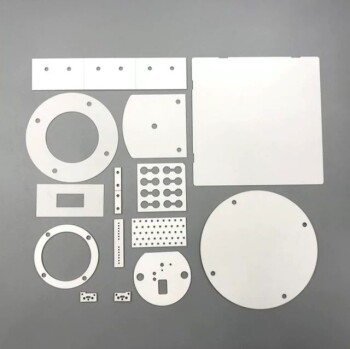
- Custom-Made Alumina Zirconia Special-Shaped Ceramic Plates for Engineering Advanced Fine Ceramics Processing
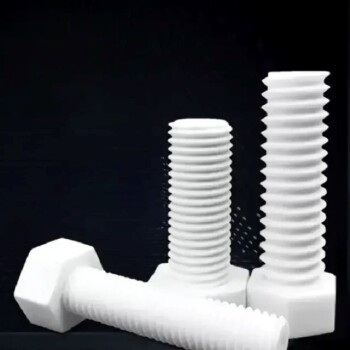
- High Quality Alumina Ceramic Screw for Engineering Advanced Fine Ceramics with High Temperature Resistance and Insulation
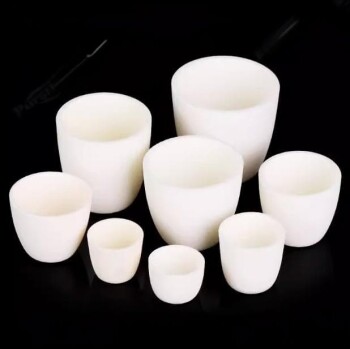
- Arc-Shaped Alumina Ceramic Crucible High Temperature Resistant for Engineering Advanced Fine Ceramics
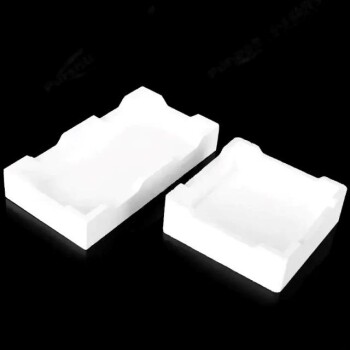
- Advanced Engineering Fine Ceramics Alumina Ceramic Saggar for Fine Corundum
- Engineering Advanced Fine Alumina (Al₂O₃) Ceramic Positioning Pin Straight Bevel for Precision Applications
People Also Ask
- What function do alumina ceramic plates serve as supports in the preparation of molecular sieve membranes?
- Why are ceramics more resistant to corrosion? Unlock the Secret to Unmatched Chemical Stability
- What are the process advantages of selecting an alumina plate for CuO nanofilm synthesis? Achieve Superior Purity
- How is alumina ceramic made? A Guide to Manufacturing Methods and Material Properties
- What are the applications of zirconia ceramics? Unlock High-Performance Solutions for Extreme Environments