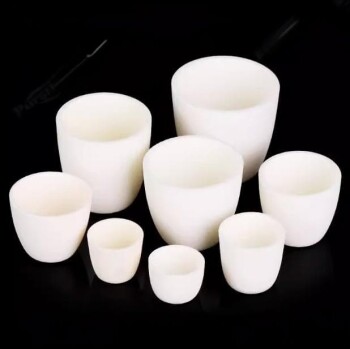
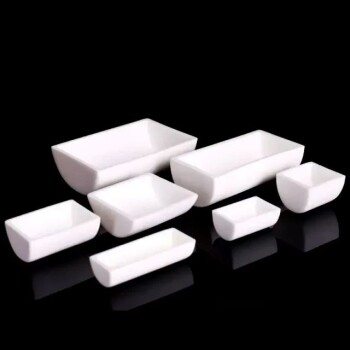
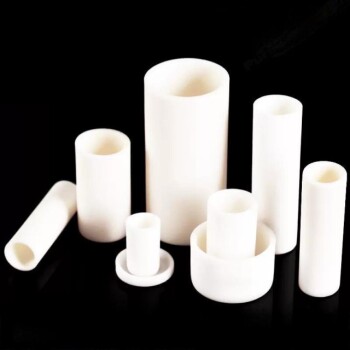
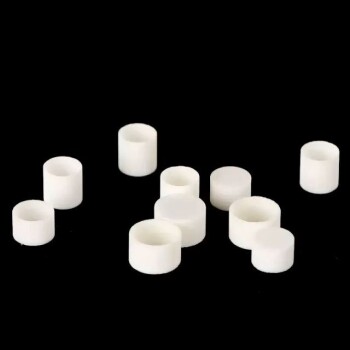
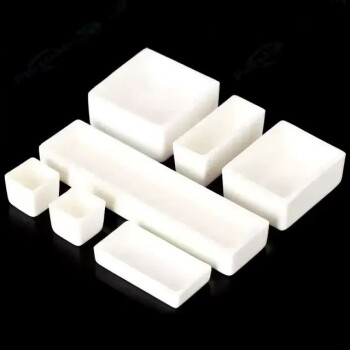
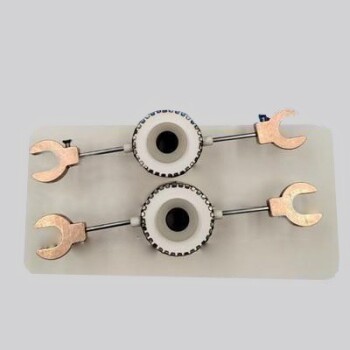
Alumina crucibles are the definitive choice for wood-plastic composite thermal decomposition tests because of their ability to maintain absolute structural and chemical integrity at temperatures reaching 1000°C. While the composite material breaks down, the alumina container remains completely neutral, ensuring that the experimental environment does not artificially influence the sample.
The critical value of alumina lies in its isolation of the variable of interest. By preventing chemical reactions and mass fluctuations within the container itself, alumina guarantees that all recorded data points are exclusively derived from the decomposition of the wood-plastic sample.
The Principles of High-Temperature Integrity
Superior Thermal Stability
Wood-plastic composite testing often requires heating samples to 1000°C to fully analyze decomposition behaviors.
Alumina (aluminum oxide) is selected because it withstands these extremes without exhibiting deformation or structural failure.
While other materials might soften or warp, alumina remains rigid, preserving the geometry of the sample holder throughout the entire heating cycle.
Chemical Inertness
As wood-plastic composites decompose, they release various degradation products, including volatile gases and carbonaceous residues.
Alumina is chemically inert, meaning it does not react with the composite material or its breakdown byproducts.
This lack of reactivity prevents the formation of secondary compounds that could skew chemical analysis or alter the mass of the residue.
Zero Mass Interference
In thermogravimetric analysis, the primary measurement is the change in mass.
Because alumina does not suffer from mass loss (such as evaporation) or mass gain (such as oxidation) at these temperatures, the crucible maintains a stable tare weight.
This ensures that any detected weight change is attributed solely to the sample's decomposition, maintaining the purity of the dataset.
Critical Considerations for Data Validity
Avoiding Signal Corruption
The primary pitfall in thermal analysis is the "phantom signal"—mass changes caused by the equipment rather than the sample.
If a crucible were to react with the sample, the resulting mass change would be indistinguishable from the sample's actual decomposition profile.
Using alumina eliminates this variable, providing a clean baseline for analysis.
Suitability for Extended Ranges
While the specific requirement is 1000°C, high-purity alumina is effective even beyond this point.
It retains its stability in oxidation tests up to 1200°C, providing a safety margin for standard decomposition protocols.
This robust thermal ceiling ensures the crucible never becomes the limiting factor in the experiment.
Ensuring Experimental Success
To apply this to your specific testing requirements:
- If your primary focus is Data Accuracy: Rely on alumina to eliminate false mass readings caused by container-sample interactions.
- If your primary focus is High-Temperature Analysis: Utilize alumina for any protocols exceeding standard ranges (1000°C–1200°C) to ensure the vessel remains physically stable.
Alumina transforms the sample container from a potential variable into a reliable constant.
Summary Table:
| Feature | Alumina Crucible Benefit | Impact on Thermal Testing |
|---|---|---|
| Thermal Stability | Resists deformation at 1000°C+ | Maintains sample geometry and safety |
| Chemical Inertness | Non-reactive with decomposition products | Prevents sample contamination/secondary reactions |
| Mass Stability | Zero oxidation or evaporation | Guarantees accurate thermogravimetric data |
| Operating Range | Effective up to 1200°C+ | Provides a safety margin for high-temp protocols |
Elevate Your Laboratory Precision with KINTEK
Don't let equipment variables compromise your research. KINTEK specializes in high-performance laboratory solutions, providing the high-purity alumina crucibles and ceramic consumables essential for accurate thermal decomposition and mass analysis.
Whether you are conducting wood-plastic composite testing or complex high-temperature material synthesis, our comprehensive portfolio—ranging from muffle and vacuum furnaces to precision crushing systems and PTFE consumables—is designed to meet the rigorous demands of modern science.
Ready to optimize your experimental accuracy? Contact our technical experts today to find the perfect equipment and consumables tailored to your specific research needs.
References
- Gamzenur Özsin. An Investigation on the Thermal Degradation Kinetics of Wood-Polymer Composites Used in Interior Automobile Panels via Non-Isothermal Thermogravimetry. DOI: 10.30939/ijastech..1445222
This article is also based on technical information from Kintek Solution Knowledge Base .
Related Products
- Arc-Shaped Alumina Ceramic Crucible High Temperature Resistant for Engineering Advanced Fine Ceramics
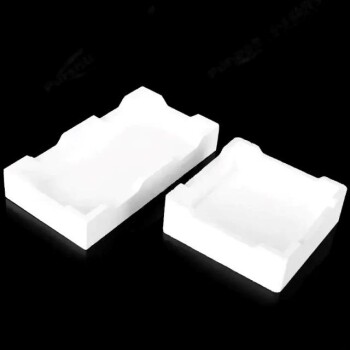
- Alumina Al2O3 Ceramic Crucible Semicircle Boat with Lid for Engineering Advanced Fine Ceramics
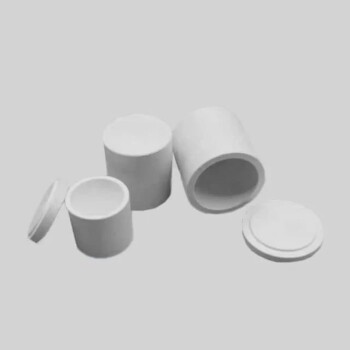
- Engineering Advanced Fine Ceramics Alumina Al2O3 Crucible With Lid Cylindrical Laboratory Crucible
- Engineering Advanced Fine Ceramics Alumina Crucibles (Al2O3) for Thermal Analysis TGA DTA
- Engineering Advanced Fine Alumina Al2O3 Ceramic Crucible for Laboratory Muffle Furnace
People Also Ask
- Why Use Alumina Crucibles & Powder Burial for NaSICON? Ensure Phase Purity and Prevent Elemental Volatilization
- What is the primary purpose of using alumina crucibles for LLTO ceramics? Optimize Your High-Temperature Sintering
- Why are alumina crucibles and mother powder essential for LATP sintering? Optimize Your Solid Electrolyte Performance
- Why are high-purity alumina crucibles used for liquid lead corrosion experiments? Ensure Data Accuracy at 550°C
- Primary considerations for choosing alumina crucibles and quartz tubes in indium intercalation: Ensure Material Purity