Knowledge What is the purpose of using an alumina crucible with a lid for g-C3N4 synthesis? Optimize Your Nanosheet Production
Author avatar

Tech Team · Kintek Solution

Updated 2 weeks ago

What is the purpose of using an alumina crucible with a lid for g-C3N4 synthesis? Optimize Your Nanosheet Production


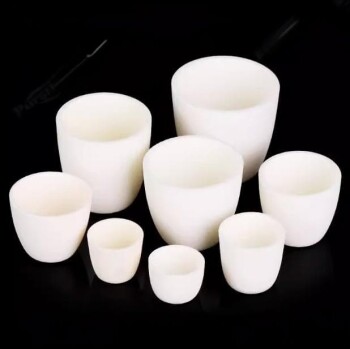
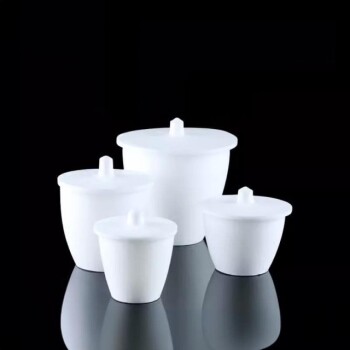
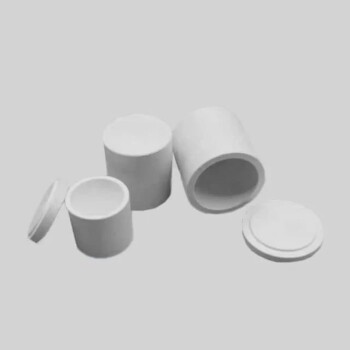
The primary purpose of using an alumina crucible with a lid is to generate a self-regulating, micro-positive pressure environment essential for shaping the material's nanostructure. While the alumina crucible itself provides the necessary thermal and chemical stability to withstand high-temperature pyrolysis, the lid traps evolved gases—specifically ammonia and carbon dioxide—forcing them to act as active agents in the synthesis rather than escaping as waste.

The lid transforms the synthesis from simple heating into a self-templating reaction. By retaining generated gases, it prevents material aggregation and directly facilitates the formation of high-surface-area, two-dimensional g-C3N4 nanosheets.

The Role of the Containment Environment

Thermal and Chemical Stability

The foundation of this setup is the alumina crucible itself. It is selected for its extreme resistance to heat and chemical interactions.

This stability ensures that the vessel remains inert during the aggressive heating process. It prevents the container from degrading or introducing impurities into the sensitive g-C3N4 precursors.

Establishing Micro-Positive Pressure

The addition of the lid is the critical variable. As the precursor materials (such as melamine) undergo pyrolysis, they release gases.

The lid restricts the immediate escape of these gases. This restriction builds a localized atmosphere of "micro-positive pressure" within the crucible, which is distinct from the ambient pressure of the furnace.

Mechanism of Nanosheet Formation

Capturing Dynamic Templates

The gases trapped by the lid are primarily ammonia and carbon dioxide. In an open vessel, these would vanish; in a lidded vessel, they remain to interact with the solid material.

These gases function as dynamic templates. They physically occupy space between the forming layers of carbon nitride.

Preventing Over-Aggregation

The primary challenge in bulk g-C3N4 synthesis is the tendency of melamine condensates to fuse into thick, blocky masses.

The captured gases disrupt this fusion. By maintaining pressure and chemical interaction, the gases prevent over-aggregation, effectively acting as a wedge that stops the layers from stacking too densely.

Promoting 2D Structure and Surface Area

Because aggregation is inhibited, the material acts to form two-dimensional layered nanosheets.

This structural shift dramatically increases the specific surface area of the final product. A higher surface area typically correlates with better performance in applications like photocatalysis.

Understanding the Trade-offs

Process Sensitivity

While effective, this method relies on self-generated pressure. The "tightness" of the lid's fit can influence the internal pressure, potentially leading to variability between batches if the crucible geometry varies.

Safety and Pressure Release

The term "micro-positive pressure" implies a delicate balance. The lid allows for a controlled environment but must not be hermetically sealed, as excessive pressure buildup from gas evolution could damage the vessel.

Making the Right Choice for Your Goal

When designing your synthesis protocol for graphitic carbon nitride, consider the following:

  • If your primary focus is maximizing specific surface area: You must use a lid to trap gases; an open crucible will likely result in bulk, low-surface-area material.
  • If your primary focus is obtaining thin, 2D morphologies: The lidded crucible is required to utilize ammonia and CO2 as natural delamination agents during crystal growth.

By simply adding a lid, you convert your crucible from a passive container into an active reactor that engineers the nanostructure of your material.

Summary Table:

Feature Purpose in g-C3N4 Synthesis Benefit to Final Material
Alumina Material High thermal & chemical stability Prevents contamination; ensures durability
Crucible Lid Traps evolved gases (NH3, CO2) Creates micro-positive pressure environment
Gas Retention Acts as a dynamic template Inhibits aggregation & facilitates 2D structure
Controlled Environment Self-regulating reaction space Dramatically increases specific surface area

Elevate Your Nanomaterial Research with KINTEK

Precise material synthesis begins with the right environment. KINTEK specializes in high-performance laboratory equipment and consumables designed for demanding applications like g-C3N4 synthesis. From our premium alumina crucibles and ceramic products to advanced high-temperature furnaces (muffle, tube, vacuum) and high-pressure reactors, we provide the tools you need to ensure consistent, high-surface-area results.

Whether you are scaling up 2D material production or exploring catalytic performance, our team is here to support your lab with reliable cooling solutions, crushing systems, and essential consumables.

Ready to optimize your synthesis protocol? Contact KINTEK today to find the perfect equipment for your research goals!

References

  1. Sepideh Pourhashem, Davood Mohammady Maklavany. Developing a new method for synthesizing amine functionalized g-C3N4 nanosheets for application as anti-corrosion nanofiller in epoxy coatings. DOI: 10.1007/s42452-018-0123-7

This article is also based on technical information from Kintek Solution Knowledge Base .

Related Products

People Also Ask

Related Products

Engineering Advanced Fine Ceramics Alumina Al2O3 Crucible With Lid Cylindrical Laboratory Crucible

Engineering Advanced Fine Ceramics Alumina Al2O3 Crucible With Lid Cylindrical Laboratory Crucible

Cylindrical Crucibles Cylindrical crucibles are one of the most common crucible shapes, suitable for melting and processing a wide variety of materials, and are easy to handle and clean.

Arc-Shaped Alumina Ceramic Crucible High Temperature Resistant for Engineering Advanced Fine Ceramics

Arc-Shaped Alumina Ceramic Crucible High Temperature Resistant for Engineering Advanced Fine Ceramics

In the journey of scientific exploration and industrial production, every detail is crucial. Our arc-shaped alumina ceramic crucibles, with their excellent high temperature resistance and stable chemical properties, have become a powerful assistant in laboratories and industrial fields. They are made of high-purity alumina materials and manufactured through precision processes to ensure excellent performance in extreme environments.

Engineering Advanced Fine Ceramics Alumina Crucibles (Al2O3) for Thermal Analysis TGA DTA

Engineering Advanced Fine Ceramics Alumina Crucibles (Al2O3) for Thermal Analysis TGA DTA

TGA/DTA thermal analysis vessels are made of aluminum oxide (corundum or aluminum oxide). It can withstand high temperature and is suitable for analyzing materials that require high temperature testing.

Engineering Advanced Fine Alumina Al2O3 Ceramic Crucible for Laboratory Muffle Furnace

Engineering Advanced Fine Alumina Al2O3 Ceramic Crucible for Laboratory Muffle Furnace

Alumina ceramic crucibles are used in some materials and metal melting tools, and flat-bottomed crucibles are suitable for melting and processing larger batches of materials with better stability and uniformity.

Evaporation Crucible for Organic Matter

Evaporation Crucible for Organic Matter

An evaporation crucible for organic matter, referred to as an evaporation crucible, is a container for evaporating organic solvents in a laboratory environment.

Carbon Graphite Boat -Laboratory Tube Furnace with Cover

Carbon Graphite Boat -Laboratory Tube Furnace with Cover

Covered Carbon Graphite Boat Laboratory Tube Furnaces are specialized vessels or vessels made of graphite material designed to withstand extreme high temperatures and chemically aggressive environments.

Portable High Pressure Laboratory Autoclave Steam Sterilizer for Lab Use

Portable High Pressure Laboratory Autoclave Steam Sterilizer for Lab Use

Portable autoclave sterilization pressure is a device that uses pressure saturated steam to quickly and effectively sterilize items.

Automatic Laboratory Hydraulic Pellet Press Machine for Lab Use

Automatic Laboratory Hydraulic Pellet Press Machine for Lab Use

Experience efficient sample preparation with our Automatic Lab Press Machine. Ideal for material research, pharmacy, ceramics, and more. Features a compact size and hydraulic press functionality with heating plates. Available in various sizes.

Benchtop Laboratory Freeze Dryer for Lab Use

Benchtop Laboratory Freeze Dryer for Lab Use

Premium benchtop laboratory freeze dryer for lyophilization, preserving samples with ≤ -60°C cooling. Ideal for pharmaceuticals & research.

Electron Beam Evaporation Coating Conductive Boron Nitride Crucible BN Crucible

Electron Beam Evaporation Coating Conductive Boron Nitride Crucible BN Crucible

High-purity and smooth conductive boron nitride crucible for electron beam evaporation coating, with high temperature and thermal cycling performance.

Custom PTFE Teflon Parts Manufacturer for Hydrothermal Synthesis Reactor Polytetrafluoroethylene Carbon Paper and Carbon Cloth Nano-growth

Custom PTFE Teflon Parts Manufacturer for Hydrothermal Synthesis Reactor Polytetrafluoroethylene Carbon Paper and Carbon Cloth Nano-growth

Acid and alkali resistant polytetrafluoroethylene experimental fixtures meet different requirements. The material is made of brand new polytetrafluoroethylene material, which has excellent chemical stability, corrosion resistance, airtightness, high lubricity and non-stickiness, electrical corrosion and good anti-aging ability, and can work for a long time at temperatures from -180℃ to +250℃.

Laboratory Oscillating Orbital Shaker

Laboratory Oscillating Orbital Shaker

Mixer-OT orbital shaker uses brushless motor, which can run for a long time. It is suitable for vibration tasks of culture dishes, flasks and beakers.

Desktop Fast Laboratory Autoclave Sterilizer 35L 50L 90L for Lab Use

Desktop Fast Laboratory Autoclave Sterilizer 35L 50L 90L for Lab Use

The desktop fast steam sterilizer is a compact and reliable device used for rapid sterilization of medical, pharmaceutical, and research items. It efficiently sterilizes surgical instruments, glassware, medicines, and resistant materials, making it suitable for various applications.

Automatic Heated Hydraulic Press Machine with Heated Plates for Laboratory Hot Press 25T 30T 50T

Automatic Heated Hydraulic Press Machine with Heated Plates for Laboratory Hot Press 25T 30T 50T

Efficiently prepare your samples with our Automatic Heated Lab Press. With a pressure range up to 50T and precise control, it's perfect for various industries.

Laboratory High Pressure Steam Sterilizer Vertical Autoclave for Lab Department

Laboratory High Pressure Steam Sterilizer Vertical Autoclave for Lab Department

Vertical pressure steam sterilizer is a kind of sterilization equipment with automatic control, which is composed of heating system, microcomputer control system and overheating and overpressure protection system.

Automatic Lab Cold Isostatic Press CIP Machine Cold Isostatic Pressing

Automatic Lab Cold Isostatic Press CIP Machine Cold Isostatic Pressing

Efficiently prepare samples with our Automatic Lab Cold Isostatic Press. Widely used in material research, pharmacy, and electronic industries. Provides greater flexibility and control compared to electric CIPs.

Laboratory Ten-Body Horizontal Jar Mill for Lab Use

Laboratory Ten-Body Horizontal Jar Mill for Lab Use

The Ten-body horizontal jar mill is for 10 ball mill pots (3000ml or less). It has frequency conversion control, rubber roller movement, and PE protective cover.

Engineering Advanced Fine Ceramics Aluminum Oxide Al2O3 Heat Sink for Insulation

Engineering Advanced Fine Ceramics Aluminum Oxide Al2O3 Heat Sink for Insulation

The hole structure of the ceramic heat sink increases the heat dissipation area in contact with the air, which greatly enhances the heat dissipation effect, and the heat dissipation effect is better than that of super copper and aluminum.

Precision Machined Yttrium Stabilized Zirconia Ceramic Rod for Engineering Advanced Fine Ceramics

Precision Machined Yttrium Stabilized Zirconia Ceramic Rod for Engineering Advanced Fine Ceramics

Zirconia ceramic rods are prepared by isostatic pressing, and a uniform, dense and smooth ceramic layer and transition layer are formed at high temperature and high speed.

Bomb Type Probe for Steelmaking Production Process

Bomb Type Probe for Steelmaking Production Process

Bomb-type probe for precise steelmaking control: measures carbon content (±0.02%) and temperature (20℃ accuracy) in 4-8s. Boost efficiency now!


Leave Your Message