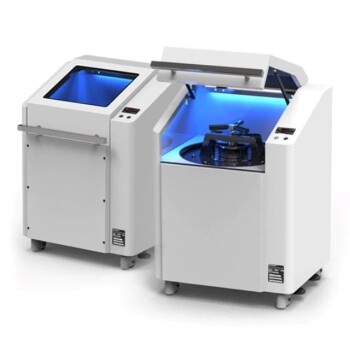
The primary purpose of combining an industrial grinder with a 400-mesh sieve is to produce coconut shell powder with a strictly controlled, fine, and uniform particle size. This mechanical processing is essential to increase the material's specific surface area, creating the optimal physical state required for subsequent chemical modifications.
The grinding and sieving process is the foundational step that dictates the quality of the final modified quartz sand. By ensuring a high-surface-area powder, you enable a more effective alkali activation reaction, resulting in a continuous coating that defines the filter media's wettability and adsorption performance.
The Role of Mechanical Preparation
Achieving Particle Uniformity
The industrial grinder breaks down the raw coconut shell structure, but the grinder alone results in a wide range of particle sizes.
The 400-mesh sieve acts as a critical quality control gate. It ensures that only particles of a specific, microscopic size pass through, eliminating coarse fragments that would otherwise disrupt the consistency of the final product.
Maximizing Surface Area
The effectiveness of coconut shell powder in this application relies heavily on its surface area.
Grinding the material to pass through a 400-mesh sieve significantly increases the specific surface area exposed to the environment. This physical transformation is a prerequisite for the chemical steps that follow.
Impact on Final Material Performance
Facilitating Alkali Activation
The prepared powder is not used in its raw state; it undergoes an alkali activation reaction.
Because the powder has a high surface area, the alkali agents can penetrate and react with the material much more efficiently. This thorough activation is necessary to transform the inert shell powder into a functional coating agent.
Ensuring Coating Continuity
The ultimate goal is to coat quartz sand with this modified material.
If the particles were coarse or uneven, the coating on the sand would be patchy or weak. The fine 400-mesh powder allows for the formation of a continuous and uniform coating across the quartz sand surface.
Determining Adsorption Capabilities
The physical properties of the coating directly dictate the performance of the filter media.
A uniform coating ensures consistent special wettability and high adsorption performance. Without the initial grinding and sieving, the final filter media would fail to adsorb contaminants effectively.
Understanding the Trade-offs
Process Efficiency vs. Quality
Using a 400-mesh sieve represents a significant bottleneck in processing speed compared to coarser sieves (e.g., 100 or 200 mesh).
However, prioritizing speed by using larger particles is a false economy. While production might be faster, the resulting powder will react unevenly during activation, leading to a defective coating and poor filtration performance.
Material Loss and Yield
Grinding to such a fine mesh size inevitably results in some material loss or recirculation of oversize particles.
You must accept a lower initial yield or higher energy input for regrinding to achieve the necessary fineness. This is an acceptable cost for ensuring the functional integrity of the modified quartz sand.
Making the Right Choice for Your Project
To ensure your modified quartz sand performs as intended, consider your specific goals:
- If your primary focus is Adsorption Performance: Strictly adhere to the 400-mesh requirement to guarantee the high surface area needed for maximum contaminant removal.
- If your primary focus is Coating Durability: Ensure the grinder output is consistently uniform to prevent weak points or breaks in the coating layer on the quartz sand.
Precision in the initial mechanical preparation is the single most important factor in securing the chemical effectiveness of the final product.
Summary Table:
| Process Component | Primary Function | Impact on Final Product |
|---|---|---|
| Industrial Grinder | Mechanical breakdown of raw shells | Increases specific surface area for chemical reactivity |
| 400-Mesh Sieve | Strict particle size filtration | Ensures uniform, microscopic fineness for continuous coating |
| Alkali Activation | Chemical modification of powder | Transforms inert shell into a functional, high-adsorption agent |
| Quartz Sand Coating | Application of modified powder | Creates filter media with specialized wettability and performance |
Elevate Your Material Preparation with KINTEK Precision
Ready to achieve the perfect particle size for your research? KINTEK specializes in high-performance crushing and milling systems, sieving equipment, and laboratory essentials designed for demanding materials like coconut shell and quartz.
Whether you require precise high-temperature furnaces for activation, hydraulic presses for sample prep, or advanced shakers and sieves, we provide the tools to ensure your coatings are uniform and your adsorption performance is unmatched.
Contact us today to find the ideal equipment for your lab's success!
References
- Bigui Wei, Gang Wang. Quartz Sand Filter Media with Special Wettability for Continuous and Efficient Oil/Water Separation and Dye Adsorption. DOI: 10.3390/pr8091083
This article is also based on technical information from Kintek Solution Knowledge Base .
Related Products
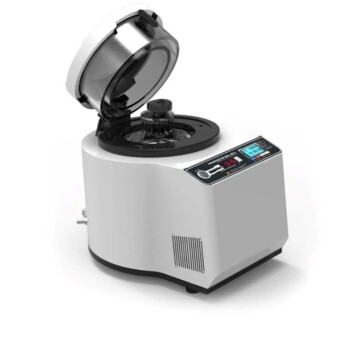
- Laboratory High Throughput Tissue Grinding Mill Grinder
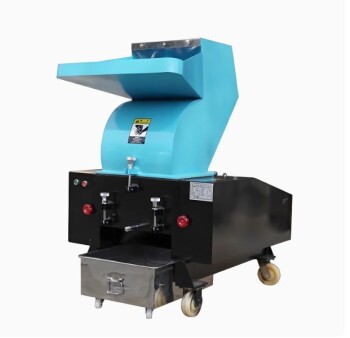
- Powerful Plastic Crusher Machine
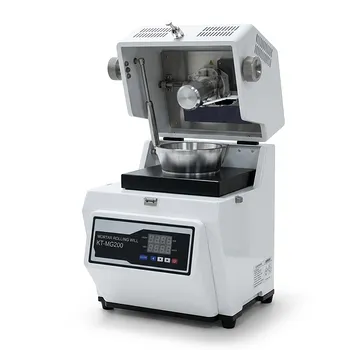
- Laboratory Grinding Mill Mortar Grinder for Sample Preparation
- High Energy Planetary Ball Mill Milling Machine for Laboratory
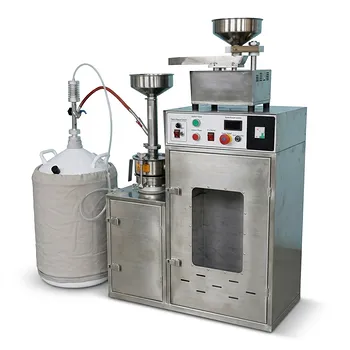
- Liquid Nitrogen Cryogenic Grinder Mill Cryomill with Screw Feeder
People Also Ask
- What is the purpose of using a laboratory grinder and standard sieves? Unlock Precise Rice Husk Pretreatment
- What is the purpose of using a laboratory grinder with specific mesh sieves for oat straw? Optimize Pellet Quality
- What is the role of laboratory-grade grinders and sieves in sample prep? Ensure High-Precision Corrosion Analysis
- How do laboratory grinders and standard sieving systems ensure the quality of feedstock for torrefaction?
- What does a grinder do in a laboratory? Achieve Homogeneous Sample Preparation for Accurate Analysis