The application of 200-mesh sieving is a fundamental quality control step designed to ensure that ground powders possess a uniform and fine particle size before they enter the synthesis phase. This mechanical classification maximizes the effective contact area between reactants, which is a prerequisite for achieving efficient and consistent chemical reactions.
Core Insight Controlling particle size through precision sieving directly dictates the success of heterogeneous reactions. By increasing the surface area available for interaction, this process accelerates reaction rates and ensures the formation of stable, high-purity magnesium and zinc borate crystal phases.
Optimizing Heterogeneous Reactions
Increasing Effective Contact Area
The primary goal of sieving ground powders is to increase the specific surface area of the solid reactants.
In a hydrothermal reaction environment, the reaction occurs at the interface between the solid powder and the liquid medium.
By reducing particles to a fine, uniform size (via 200-mesh sieving), you significantly expand the effective contact area where the chemical transformation takes place.
Enhancing Reaction Kinetics
Speed and uniformity are critical in chemical synthesis.
When raw materials are sieved to a consistent size, they dissolve or react at a predictable and synchronized rate.
This uniformity eliminates "hot spots" or lagging reaction zones, effectively enhancing the overall rate of the heterogeneous reaction.
Impact on Crystal Formation
Driving Reaction Efficiency
Efficiency in synthesis is defined by how completely and quickly reactants convert to the desired product.
Fine, sieved powders ensure that the maximum amount of raw material is active in the reaction at any given time.
This leads to higher overall reaction efficiency, minimizing wasted precursor material.
Stabilizing Crystal Phases
The ultimate quality of magnesium and zinc borates depends on their crystal structure.
Inconsistent starting materials can lead to mixed phases or unstable structures.
Using sieved powders promotes a controlled growth environment, directly facilitating the formation of more stable crystal phases in the final product.
The Risks of Skipping Sieving (Trade-offs)
Inconsistent Reactivity
If powders are not sieved, the batch will contain a mix of coarse and fine particles.
Coarse particles react much slower than fine ones, leading to incomplete reactions and heterogeneous mixtures.
Compromised Product Stability
Omitting the sieving step introduces variables that are difficult to control during hydrothermal synthesis.
This lack of control often results in lower-quality borates with unpredictable physical properties and less stable crystal structures.
Making the Right Choice for Your Synthesis
To ensure the reproducibility and quality of your magnesium and zinc borates, strictly adhering to particle size control is non-negotiable.
- If your primary focus is Reaction Speed: Prioritize sieving to maximize surface area, which directly accelerates the kinetics of the heterogeneous reaction.
- If your primary focus is Product Purity: Use precision sieving to ensure uniform reactants, which promotes the formation of stable and consistent crystal phases.
Uniform input materials are the single most effective variable for guaranteeing high-efficiency synthesis and superior structural stability.
Summary Table:
| Factor | Impact of 200-Mesh Sieving | Benefit for Synthesis |
|---|---|---|
| Particle Size | Ensures fine, uniform distribution | Maximizes specific surface area |
| Reaction Kinetics | Synchronizes dissolution and reaction | Accelerates overall reaction rate |
| Material Efficiency | Minimizes unreacted precursor waste | High conversion efficiency |
| Crystal Structure | Controls growth environment | Forms more stable, high-purity phases |
| Batch Consistency | Eliminates coarse particle variability | Guarantees reproducible results |
Elevate Your Material Synthesis with Precision Control
Achieving the perfect crystal phase requires more than just high-quality precursors—it demands the right tools for preparation and processing. KINTEK specializes in advanced laboratory solutions designed to optimize your workflow, from initial sample preparation to high-temperature synthesis.
Our comprehensive portfolio supports every stage of your research, including:
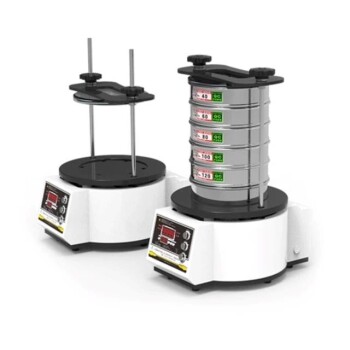
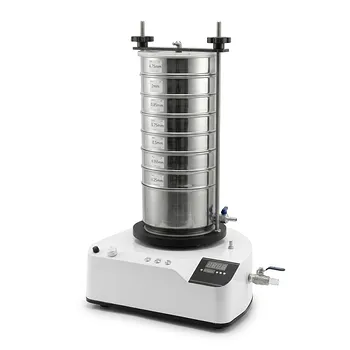
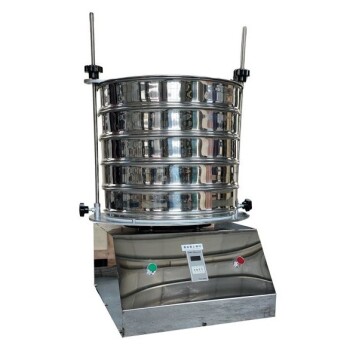
- Sieving & Crushing Systems: Precision sieving equipment and high-efficiency milling tools to achieve the exact particle size distribution required for your reactions.
- High-Temperature Solutions: A full range of muffle, tube, and vacuum furnaces, alongside high-temperature high-pressure reactors and autoclaves for hydrothermal synthesis.
- Laboratory Essentials: High-purity ceramics, crucibles, and hydraulic presses for pellet preparation.
Don't let inconsistent particle sizes compromise your results. Partner with KINTEK for reliable equipment that ensures uniform input and superior structural stability. Contact our technical experts today to find the perfect tools for your laboratory's specific needs!
References
- Azmi Seyhun Kıpçak, Sabriye Pişkin. Effect of Magnesium Borates on the Fire-Retarding Properties of Zinc Borates. DOI: 10.1155/2014/512164
This article is also based on technical information from Kintek Solution Knowledge Base .
Related Products
- Vibratory Sieve Shaker Machine Dry Three-Dimensional Vibrating Sieve
- Laboratory Vibratory Sieve Shaker Machine Slap Vibrating Sieve
- Three-dimensional electromagnetic sieving instrument
- Custom PTFE Teflon Parts Manufacturer for PTFE Mesh F4 Sieve
- Laboratory Vibratory Sieve Shaker Machine for Dry and Wet Three-Dimensional Sieving
People Also Ask
- How is a vibratory sieve shaker used in the particle size analysis of mechanically alloyed powders? Expert Guide
- Why use a vibratory sieve shaker for PET powder? Achieve Precise Particle Size Control for Chemical Research
- What is the principle of vibratory sieve shaker? Achieve Accurate Particle Size Analysis
- What is the function of a vibratory sieve shaker? Achieve Precise Particle Size Analysis
- What is the use of vibratory sieve shaker? Achieve Precise Particle Size Analysis for Your Lab