The primary purpose of using a standard sieve in preliminary rice straw processing is to guarantee particle size uniformity. By screening crushed material through a specific industrial-grade mesh (such as a 60-mesh sieve), you eliminate size-based variations that otherwise skew data. This step is essential for ensuring that subsequent biological or thermal experiments yield reproducible, scientifically valid results.
Core Takeaway Sieving is not merely a sorting mechanism; it is a critical variable control. By standardizing particle dimensions, you ensure that physical, chemical, and biological reactions occur synchronously across the entire sample, eliminating data noise caused by "size effects."
The Critical Role of Uniformity
Eliminating Size Effects
In biomass research, size effects are a significant source of experimental error. Raw crushed straw contains a chaotic mix of dust and large fibers.
Without sieving, these distinct sizes behave differently under stress. Standardizing the particle size creates a consistent baseline, ensuring that any observed changes are due to the experimental conditions, not the random size of the straw.
Improving Reproducibility
Scientific rigor demands that an experiment can be repeated with the same results.
By removing the variable of irregular particle size, you significantly improve the reproducibility of your data. This allows for accurate comparison between different batches or different studies.
Optimizing Downstream Processes
Synchronized Heat Conduction
For thermal experiments, such as Thermogravimetric Analysis (TGA), how heat moves through the material is paramount.
If particles vary in size, heat penetrates them at different rates, leading to uneven decomposition. Sieving ensures synchronized heat conduction, providing clean, interpretable thermal data.
Uniform Fungal Colonization
In biological processing, the available surface area dictates how organisms interact with the biomass.
Uniform particles allow for uniform fungal colonization. This ensures that biological degradation or fermentation proceeds at the same rate across the entire sample, preventing "hot spots" of activity.
Eliminating Diffusion Limitations
While the primary reference focuses on thermal and fungal properties, consistent particle size also aids chemical interactions.
Standardization prevents diffusion limitations, ensuring that reagents or enzymes can penetrate the biomass structure evenly. This prevents scenarios where the outside of a particle is over-processed while the core remains untouched.
Understanding the Trade-offs
Representative Sampling vs. Precision
Strict sieving prioritizes experimental precision over the "natural" state of the material.
By excluding particles that are too large or too small, you create a highly controlled sample that may not perfectly reflect the bulk raw material found in large-scale field operations.
Processing Efficiency
Introducing a sieving stage adds a distinct step to the workflow, requiring specialized equipment like a laboratory grinder and shaker.
However, this upfront investment in time is generally outweighed by the reduction in experimental errors and the avoidance of repeated tests due to noisy data.
Making the Right Choice for Your Goal
To select the appropriate processing protocol, consider your specific experimental needs:
- If your primary focus is Thermal Analysis (TGA): Prioritize fine meshes (e.g., 60-mesh) to ensure perfect synchronization of heat conduction.
- If your primary focus is Biological/Fungal Growth: Use a standard sieve to ensure surface area consistency, which guarantees even colonization rates.
- If your primary focus is Chemical Kinetics: Ensure the particle range (e.g., 1.40–2.36 mm) is narrow enough to allow uniform liquid impregnation without diffusion barriers.
Standardizing your input material is the single most effective way to secure the reliability of your output data.
Summary Table:
| Factor | Impact of Standard Sieving | Key Benefit |
|---|---|---|
| Particle Size | Eliminates size-based variations | Uniform experimental baseline |
| Heat Conduction | Synchronizes heat penetration | Accurate Thermogravimetric Analysis (TGA) |
| Biological Growth | Standardizes surface area | Uniform fungal colonization and degradation |
| Chemical Kinetics | Removes diffusion limitations | Consistent reagent/enzyme penetration |
| Data Integrity | Reduces experimental noise | High reproducibility and scientific rigor |
Precision Processing Starts with KINTEK
Elevate your research accuracy with KINTEK’s professional-grade crushing, milling, and sieving equipment. Designed for the rigorous demands of biomass processing and material science, our laboratory solutions ensure the perfect particle uniformity required for reproducible results in thermal and biological experiments.
Whether you need high-performance grinders or precision test sieves, KINTEK provides the tools to eliminate experimental error. Contact us today to optimize your laboratory workflow!
References
- Meng Li, Zhenzhong Gao. Synergistic effect of mixed fungal pretreatment on thermogravimetric characteristics of rice straw. DOI: 10.15376/biores.16.2.3978-3990
This article is also based on technical information from Kintek Solution Knowledge Base .
Related Products
- Custom PTFE Teflon Parts Manufacturer for PTFE Mesh F4 Sieve
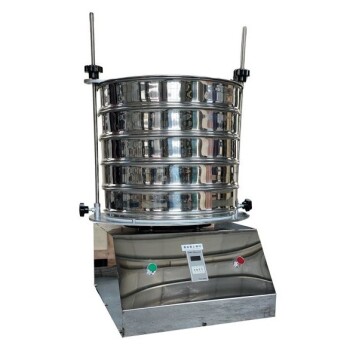
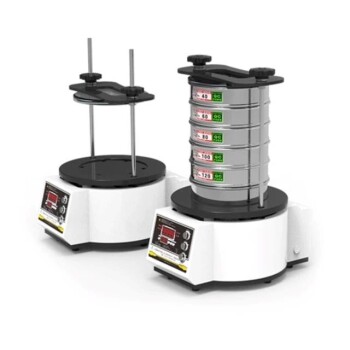
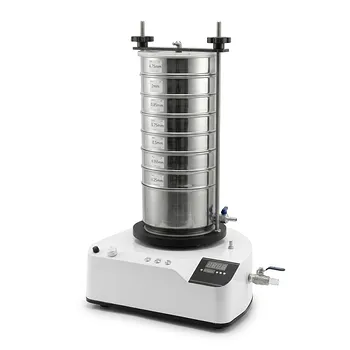
- Laboratory Test Sieves and Sieving Machines
- Vibratory Sieve Shaker Machine Dry Three-Dimensional Vibrating Sieve
- Laboratory Vibratory Sieve Shaker Machine for Dry and Wet Three-Dimensional Sieving
- Laboratory Vibratory Sieve Shaker Machine Slap Vibrating Sieve
People Also Ask
- What are the primary reasons for selecting PTFE as a matrix? Enhance Composites with Carbon Nanotube Reinforcement
- How is PTFE utilized for insulation in Alloy 22 corrosion setups? Ensure Signal Purity & Accuracy
- Is PTFE corrosion resistant? Discover the Ultimate Chemical Resistance for Your Lab
- What are the specific applications of PTFE in micro-batch slug flow systems? Enhance Your Microfluidic Reaction Purity
- What is the mesh size of a sieve? A Guide to Particle Size and Sieve Selection