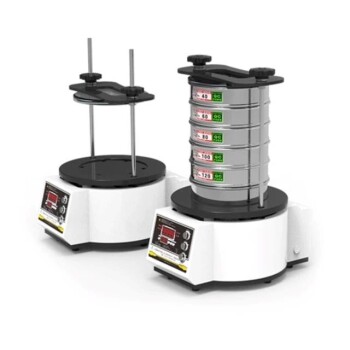
The primary function of a 200-mesh sieve in this context is to act as a critical mechanical filter that separates coarse residual fibers and unreacted solid biomass from the liquid hydrolysate. This preliminary step ensures the liquid is sufficiently clear before it undergoes complex separation processes or sensitive chemical analysis.
By filtering out large particulate impurities immediately after hydrolysis, the 200-mesh sieve serves a dual purpose: it optimizes the efficiency of magnetic nanoparticle recovery and protects delicate High-Performance Liquid Chromatography (HPLC) equipment from physical damage.
Ensuring Sample Clarity and Purity
Removing Unreacted Solids
Hydrolysis processes rarely result in the complete breakdown of biomass. The 200-mesh sieve effectively captures the coarse residual fibers and solid particles that failed to react, preventing them from contaminating the downstream liquid.
Establishing a Baseline for Analysis
Standardizing particle size is essential for consistent results. By passing the mixture through a specific mesh size, you ensure that the liquid entering the analysis phase possesses a uniform consistency, free from random large debris.
Optimizing Downstream Recovery
Facilitating Magnetic Separation
Many advanced hydrolysis protocols utilize magnetic nanoparticles as catalysts which must be recovered and reused. Large biomass particles can physically block or entrap these nanoparticles, making recovery difficult.
preventing Interference
A clear liquid medium is required for the magnetic separation stage to function correctly. Removing large solid impurities prevents them from interfering with the magnetic field or clogging the separation vessels, ensuring a higher recovery rate of the nanoparticles.
Safeguarding Analytical Equipment
Protecting HPLC Columns
High-Performance Liquid Chromatography (HPLC) columns are expensive and extremely sensitive to particulates. Injecting a sample containing even microscopic solids can irreversibly clog the column, leading to expensive repairs or replacement.
Preventing System Overpressure
When particulates accumulate in an HPLC system, they cause dangerous spikes in backpressure. The 200-mesh sieve acts as the first line of defense, removing the materials most likely to cause these pressure issues and ensuring the longevity of the instrument.
Understanding Potential Trade-offs
Process Bottlenecks
While a 200-mesh sieve provides excellent filtration, it can slow down the workflow. Biomass hydrolysis liquids are often viscous; forcing them through a fine mesh can be time-consuming and may require vacuum assistance or pressure to maintain throughput.
Potential Sample Loss
There is always a risk of volume loss during physical filtration. Some of the target liquid hydrolysate may remain trapped within the wet solid cake retained by the sieve, slightly reducing the total yield available for analysis.
Making the Right Choice for Your Workflow
To apply this to your specific project, consider your immediate priorities:
- If your primary focus is equipment longevity: Prioritize the 200-mesh sieve step strictly to prevent HPLC column clogging and backpressure failures.
- If your primary focus is catalyst economy: Use the sieve to ensure the hydrolysis liquid is clear enough to maximize the recovery rate of magnetic nanoparticles.
Effective component analysis relies on sample integrity; proper filtration is the foundational step that ensures both data accuracy and equipment safety.
Summary Table:
| Function | Key Benefit | Technical Impact |
|---|---|---|
| Particle Filtration | Removes coarse fibers | Prevents contamination of liquid hydrolysate |
| Equipment Safety | Protects HPLC columns | Prevents clogging and system overpressure |
| Catalyst Recovery | Aids magnetic separation | Maximizes recovery rate of magnetic nanoparticles |
| Sample Prep | Ensures uniform consistency | Establishes a standardized baseline for analysis |
Elevate Your Laboratory Precision with KINTEK
Don't let particulates compromise your research or damage expensive analytical equipment. KINTEK specializes in high-performance laboratory solutions, providing the precise sieving equipment, crushing and milling systems, and hydraulic presses needed to ensure perfect sample preparation. Whether you are performing biomass hydrolysis or advanced materials research, our comprehensive range of equipment—including high-temperature furnaces, vacuum reactors, and HPLC-compatible consumables—is designed to deliver accuracy and durability.
Ready to optimize your biomass workflow and protect your lab's investment? Contact KINTEK today for expert guidance and premium equipment solutions!
References
- D. Wang, Keith L. Hohn. Acid-Functionalized Nanoparticles for Pretreatment of Wheat Straw. DOI: 10.4236/jbnb.2012.33032
This article is also based on technical information from Kintek Solution Knowledge Base .
Related Products
- Vibratory Sieve Shaker Machine Dry Three-Dimensional Vibrating Sieve
- Laboratory Vibratory Sieve Shaker Machine Slap Vibrating Sieve
- Custom PTFE Teflon Parts Manufacturer for PTFE Mesh F4 Sieve
- Three-dimensional electromagnetic sieving instrument
- Laboratory Test Sieves and Sieving Machines
People Also Ask
- How is a vibratory sieve shaker used in the particle size analysis of mechanically alloyed powders? Expert Guide
- Why use a vibratory sieve shaker for PET powder? Achieve Precise Particle Size Control for Chemical Research
- What is the principle of vibratory sieve shaker? Achieve Accurate Particle Size Analysis
- What is the function of a vibratory sieve shaker? Achieve Precise Particle Size Analysis
- What is the use of vibratory sieve shaker? Achieve Precise Particle Size Analysis for Your Lab