Processing dried Silicon Carbide (SiC) mixed powders through sieving equipment is mandatory to mechanically crush and eliminate hard agglomerates that naturally form during the drying phase. This step is critical for restoring the powder's flowability and ensuring the particle consistency required for high-quality ceramic forming.
Core Insight: Drying removes moisture but creates structural inconsistencies in the form of hard clusters. Sieving is not merely a separation task; it is a conditioning step that homogenizes the powder's bulk density to prevent hidden structural weaknesses in the final product.
The Physical Necessity of Sieving
Breaking Down Hard Agglomerates
During the drying process, liquid evaporation often causes particles to bind together, forming hard agglomerates.
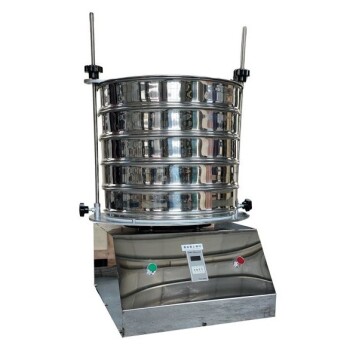
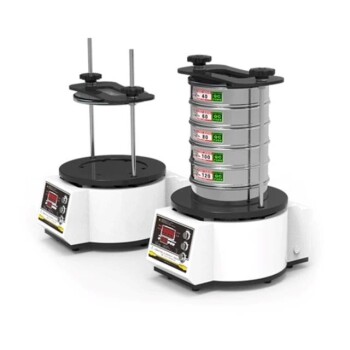
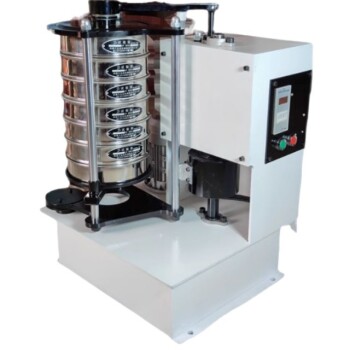
A standard 60-mesh sieve is typically employed to crush these clusters. This returns the material to a discrete powder state rather than a mixture of dust and hard chunks.
Restoring Flowability
Agglomerated powders have high inter-particle friction and resist movement, leading to clogging or uneven filling during processing.
Sieving breaks these bonds, ensuring the powder possesses excellent flowability. This allows the material to fill molds evenly and quickly without bridging or creating voids.
Establishing Bulk Density Uniformity
For a ceramic part to be reliable, the density of the loose powder must be consistent throughout the entire batch.
Sieving ensures bulk density uniformity by standardizing the particle size distribution. This consistency is the foundation for predictable behavior under pressure.
Impact on Dry Pressing and the "Green Body"
Preventing Density Gradients
If the powder has inconsistent density when loaded into a mold, the pressure applied during dry pressing will not be distributed evenly.
Sieving mitigates this by ensuring a uniform fill, which prevents density gradients—areas of varying hardness and compaction—within the pressed part.
Eliminating Internal Defects
Hard agglomerates that remain in the powder act as stress concentrators or inclusions within the pressed compact (the "green body").
By removing these prior to pressing, you prevent the formation of internal defects such as cracks or pores that would compromise the structural integrity of the final product.
Understanding the Trade-offs
Mesh Size Selection
The primary reference recommends a 60-mesh sieve for SiC, whereas finer powders like AlN or TiB2 might require 200-mesh screens.
Using a mesh that is too coarse (lower number) increases throughput but risks letting smaller agglomerates pass through. Conversely, using a mesh that is too fine for the specific material can slow production significantly and potentially separate out larger particles that are intended to be part of the mix.
Processing Efficiency vs. Quality
Sieving adds a step to the manufacturing line, which increases time and labor costs.
However, skipping this step to save time creates a high risk of rejecting final parts due to internal flaws. The "cost" of sieving is an investment in yield rate and material reliability.
Making the Right Choice for Your Goal
- If your primary focus is Mold Filling: Prioritize sieving to maximize flowability, ensuring complex mold geometries are filled completely without air pockets.
- If your primary focus is Structural Integrity: Focus on the removal of hard agglomerates to ensure the green body has a perfectly uniform density distribution.
Uniform powder preparation is the single most controllable factor in preventing defects in advanced ceramic components.
Summary Table:
| Factor | Impact of Sieving | Benefit to Final Product |
|---|---|---|
| Agglomerates | Breaks down hard clusters from drying | Eliminates internal defects and cracks |
| Flowability | Reduces inter-particle friction | Ensures even and rapid mold filling |
| Bulk Density | Homogenizes particle distribution | Prevents density gradients in green bodies |
| Particle Size | Standardizes discrete powder state | Guarantees predictable behavior under pressure |
Elevate Your Advanced Ceramic Production with KINTEK
Precision in powder preparation is the foundation of high-performance ceramics. KINTEK specializes in high-tier laboratory equipment, providing the sieving equipment, crushing and milling systems, and hydraulic pellet presses you need to transform raw Silicon Carbide into flawless components.
Our comprehensive range also includes high-temperature vacuum and atmosphere furnaces for sintering, as well as essential PTFE and ceramic consumables to support your entire workflow.
Don't let hidden agglomerates compromise your structural integrity. Contact us today to discover how KINTEK’s specialized tools can optimize your laboratory or production line for maximum yield and reliability.
Related Products
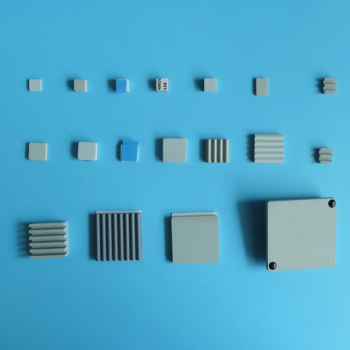
- Silicon Carbide (SIC) Ceramic Sheet Flat Corrugated Heat Sink for Engineering Advanced Fine Ceramics
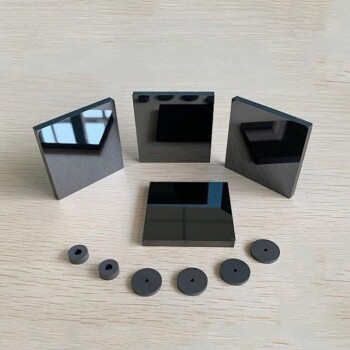
- Silicon Carbide (SIC) Ceramic Sheet Wear-Resistant Engineering Advanced Fine Ceramics
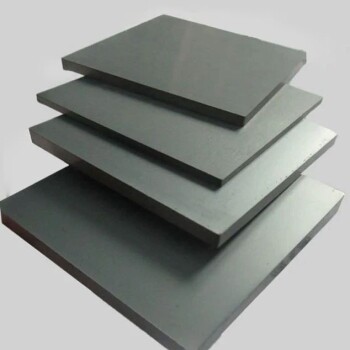
- Silicon Carbide (SIC) Ceramic Plate for Engineering Advanced Fine Ceramics
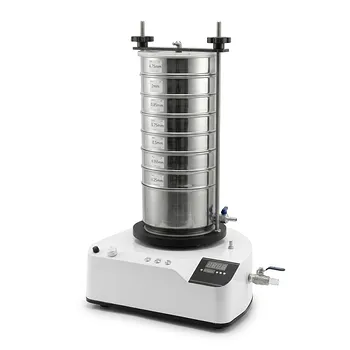
- Laboratory Vibratory Sieve Shaker Machine for Dry and Wet Three-Dimensional Sieving
- Three-dimensional electromagnetic sieving instrument
People Also Ask
- What are the properties and applications of silicon carbide ceramics? Solve Extreme Engineering Challenges
- What is the strongest ceramics? Silicon Carbide Leads in Hardness & Thermal Strength
- What are the uses of silicon carbide ceramics in different industries? Master Extreme Performance in Aerospace, Semiconductors & More
- What are the properties of SiC? Unlock High-Temperature, High-Frequency Performance
- Why is silicon carbide more efficient? Unlock Higher Power Density with SiC's Superior Material Properties