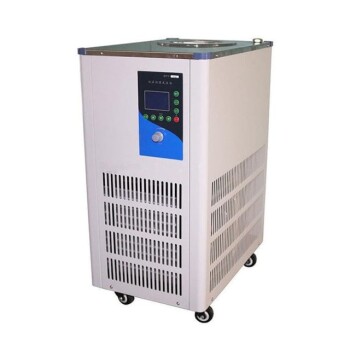
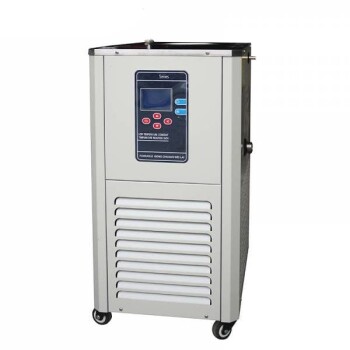
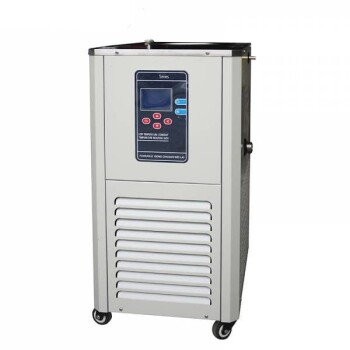
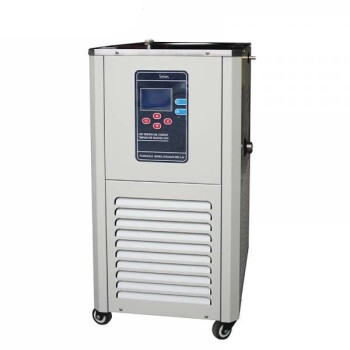
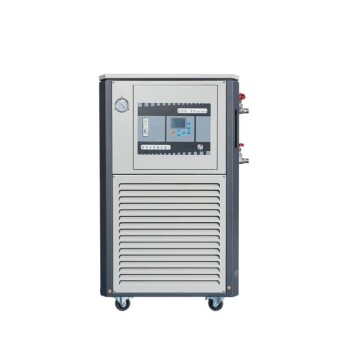
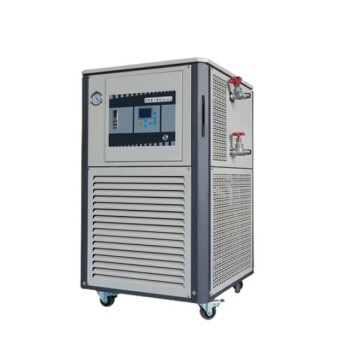
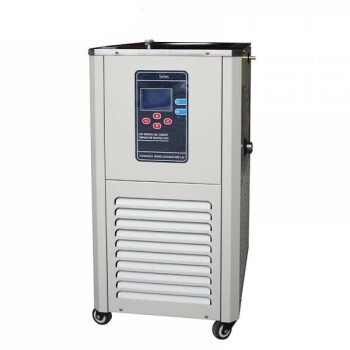
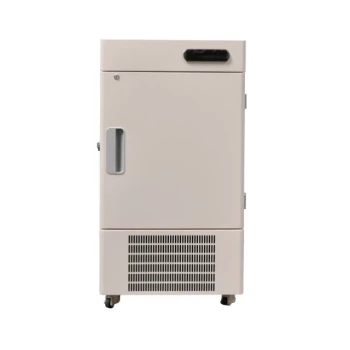
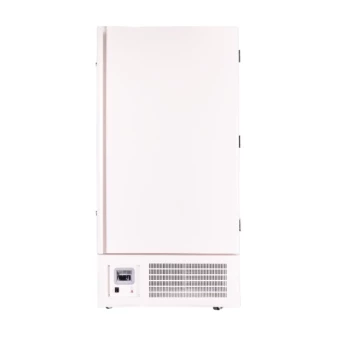
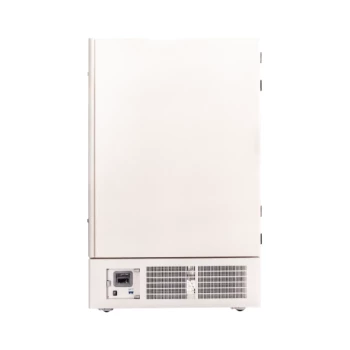
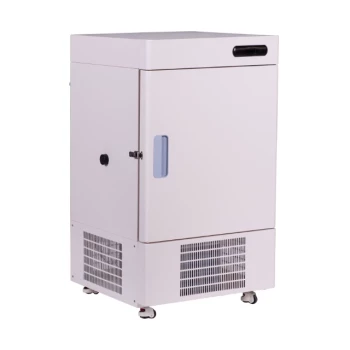
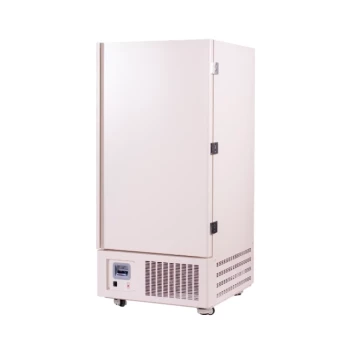
Constant temperature refrigeration equipment serves as the foundational control mechanism for validating deep-sea radioactive waste disposal methods. By utilizing laboratory-grade freezers to maintain a precise environment of 6°C (± 0.2°C), researchers can strictly simulate the thermal reality of a deep-sea disposal site, rather than relying on standard ambient laboratory conditions.
Core Takeaway The primary function of this equipment is to prove that the solidified waste body performs better in its actual destination environment than in warmer lab conditions. By enforcing strict low-temperature parameters, the equipment demonstrates that radionuclide diffusion slows significantly, resulting in a higher Leaching Index ($L_x$) and verifying long-term containment safety.
Simulating the Deep-Sea Environment
Precision Thermal Control
To obtain valid data, the simulation must replicate the exact environmental stresses of the disposal site. Constant temperature refrigeration equipment is calibrated to hold a steady state, eliminating thermal fluctuations that could skew diffusion data.
The Target Temperature
The equipment is specifically set to maintain a temperature of 6°C. This setpoint represents the realistic low-temperature conditions found in deep-sea environments where the solidified bodies are destined for disposal.
Minimizing Variables
By keeping the temperature variation within a tight margin of ± 0.2°C, the equipment ensures that any changes in leaching behavior are attributed solely to the waste matrix properties, not external environmental inconsistencies.
Impact on Radionuclide Kinetics
Altering Diffusion Kinetics
Temperature is a primary driver of kinetic energy. The refrigeration equipment allows researchers to quantify exactly how much the drop in thermal energy affects the movement of molecules within the waste form.
Reduced Ion Migration
At the simulated 6°C environment, the rate of ion migration decreases significantly. The equipment validates that radioactive ions move much slower through the solidified body in the cold deep sea than they would at room temperature.
Solubility Changes
The refrigeration unit also allows for the observation of solubility changes. Lower temperatures often affect the solubility of various compounds, further influencing how likely radionuclides are to leach out of the solid matrix.
Verifying Safety Through Data
The Leaching Index ($L_x$)
The ultimate metric for success in these experiments is the Leaching Index ($L_x$). The refrigeration equipment facilitates the demonstration that the solidified body exhibits a higher $L_x$ in low-temperature environments.
Interpreting the Index
A higher Leaching Index indicates superior containment performance. It proves that the solidified waste holds onto radioactive material more effectively in the cold.
Confirming Long-Term Safety
By empirically proving reduced migration and a higher $L_x$ under these controlled conditions, the equipment provides the physical evidence necessary to verify the long-term safety and viability of the deep-sea disposal method.
Critical Control Factors (Trade-offs)
The Cost of Fluctuation
While the equipment is essential, its value depends entirely on stability. Even minor deviations outside the ± 0.2°C range can invalidate the simulation of "steady-state" deep-sea conditions.
Equipment Sensitivity
Laboratory-grade refrigeration used for these experiments must be far more sensitive than standard industrial cooling. The trade-off for this precision is often higher maintenance requirements to ensure the sensors remain calibrated over long observation periods.
Making the Right Choice for Your Experiment
To ensure your data effectively supports your safety case, consider the following regarding your thermal control strategy:
- If your primary focus is Regulatory Verification: Prioritize equipment with documented stability logs to prove the 6 ± 0.2°C standard was never breached during the test duration.
- If your primary focus is Material Design: Use the equipment to test the waste matrix at various setpoints (e.g., 4°C, 6°C, 8°C) to establish a comprehensive temperature sensitivity profile for the Leaching Index.
Ultimately, the reliability of your safety claim rests on the ability of your equipment to relentlessly maintain the thermal reality of the deep ocean.
Summary Table:
| Feature | Parameter Setting | Impact on Experiment |
|---|---|---|
| Target Temperature | 6°C | Replicates deep-sea thermal reality |
| Precision Control | ± 0.2°C | Minimizes variables, ensures data validity |
| Kinetic Effect | Low Thermal Energy | Reduces ion migration and molecular movement |
| Safety Metric | Higher Leaching Index ($L_x$) | Proves superior containment performance in cold |
| Observation Goal | Solubility Changes | Validates long-term radioactive waste stability |
Optimize Your Environmental Simulation with KINTEK Precision
Reliable radioactive leaching data requires unwavering thermal stability. KINTEK specializes in advanced laboratory solutions, including high-precision cooling systems, ULT freezers, and cold traps designed to maintain the rigorous ± 0.2°C standards essential for deep-sea simulations.
From high-temperature furnaces and pressure reactors to specialized electrolytic cells and battery research tools, KINTEK provides the high-performance equipment needed for critical material science and safety verification.
Ensure the integrity of your safety claims today. Contact our specialists to find the perfect thermal control solution for your lab.
References
- Samir B. Eskander, Magda E. Tawfik. Immobilization of radioactive sulphate waste simulate in polymer–cement composite based on recycled expanded polystyrene foam: evaluation of the final waste form resistance for Cs-134 and Co-60 leachability. DOI: 10.1007/s10967-024-09437-2
This article is also based on technical information from Kintek Solution Knowledge Base .
Related Products
- 100L Chilling Circulator Cooling Water Circulator for Low Temperature Constant Temperature Reaction Bath Water Bath Cooling
- 40L Chiller Water Bath Cooling Circulator Low Temperature Constant Temperature Reaction Bath
- 30L Chiller Water Bath Cooling Circulator Low Temperature Constant Temperature Reaction Bath
- 50L Heating Chilling Circulator Cooling Water Bath Circulator for High and Low Temperature Constant Temperature Reaction
- 5L Chilling Circulator Cooling Water Bath Circulator for Low Temperature Constant Temperature Reaction Bath
People Also Ask
- What function does a circulating cooling chiller perform during the gas adsorption isotherm testing of nanoporous carbon?
- Why is a circulating water chiller required for Prussian Blue nanoparticles? Ensure Stability & Batch Reproducibility
- What is the purpose of a cooling circulation water bath system in electrochemical experiments? Enhance Lab Precision
- How does a constant temperature circulator support the leaching reaction of gold scrap? Optimize Gold Recovery Results
- How do constant temperature circulators impact weight-loss immersion tests? Ensure Precision in Corrosion Analysis